The media loves a parade. When the White House invites the titans of industry—Huang from Nvidia, Cook from Apple, Calhoun from Boeing—to join a presidential envoy to Beijing, the narrative is always the same: "Economic diplomacy in action." Reporters treat these trips like a high-stakes version of The Avengers, where the combined might of Silicon Valley and American manufacturing will somehow charm the Chinese Communist Party (CCP) into fairer trade practices.
It is a fantasy.
These executives aren't there to represent American interests. They are there to protect their own supply chains from the very government they are traveling with. The "lazy consensus" suggests that having CEOs in the room adds leverage to U.S. negotiations. In reality, it does the exact opposite. It signals to Beijing that the U.S. government is tethered to the quarterly earnings reports of a handful of over-leveraged tech giants.
By bringing Nvidia and Apple to the table, the White House isn't showing strength. It’s showing who holds the leash.
The Myth of the CEO Statesman
Let’s be clear about what a CEO’s job is: fiduciary duty to shareholders. Not to the Constitution, and certainly not to the long-term geopolitical stability of the Pacific.
When Tim Cook lands in Beijing, he isn't thinking about intellectual property theft or the South China Sea. He is thinking about the 18% of Apple’s revenue that comes from Greater China and the millions of workers in Zhengzhou who make the hardware that keeps his stock price afloat.
I have seen companies blow millions on these "diplomatic" junkets, thinking they are buying a seat at the table. What they are actually buying is a target on their back. The moment a CEO joins a presidential delegation, they become a pawn in a game they are not equipped to play. They provide the CCP with a direct line of pressure: "If your government doesn't drop these chip export restrictions, your local factories might face a sudden safety inspection."
Nvidia and the Silicon Trap
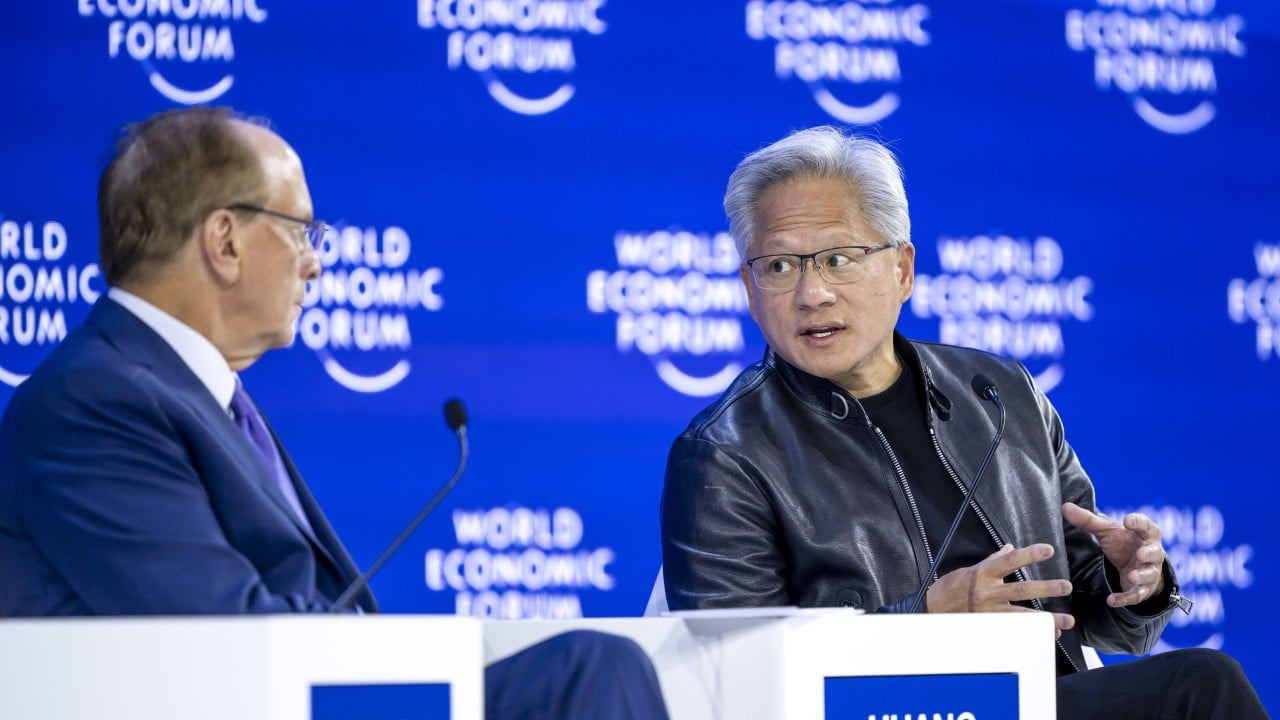
Jensen Huang’s inclusion is particularly egregious. The current administration has spent the last two years tightening the screws on advanced GPU exports to China. Nvidia, meanwhile, has been frantically redesigning its hardware—stripping out performance to create "China-compliant" chips like the H20.
Bringing Huang on a state trip is a slap in the face to the concept of national security. On one hand, the Department of Commerce says Nvidia’s tech is too dangerous for China to have. On the other hand, the President invites him to go sell more of it.
This isn't "nuanced trade policy." It’s incoherence.
If we were serious about decoupling or "de-risking," we wouldn't be parading our most sensitive assets through the Great Hall of the People. We are handing Beijing a menu of our most critical dependencies. Every CEO on that plane represents a specific vulnerability that China can exploit.
- Apple: Dependency on consumer markets and low-cost assembly.
- Boeing: Dependency on massive state-level orders to compete with Airbus.
- Nvidia: Dependency on a global supply chain that still flows through the mainland's sphere of influence.
Boeing and the Bankruptcy of Leverage
Including Boeing in this mix is almost comedic if it weren't so tragic. Boeing is a company currently defined by its failures—quality control issues, a tarnished reputation, and a desperate need for the 737 MAX to be fully embraced in the Chinese market.
In any negotiation, the party that wants the deal more is the party that loses. By bringing Boeing, the U.S. is signaling that it needs Chinese orders to keep its premier aerospace company from circling the drain. It is an admission of weakness.
The CCP knows that Boeing’s lobbyists will go back to Washington and scream for "stability" and "cooperation" because their survival depends on it. These CEOs aren't diplomats; they are the CCP’s most effective lobbyists in the U.S. Capitol.
The Cost of Corporate Complicity
The fundamental misunderstanding here is that the interests of "Big Tech" and "Big Industry" align with the interests of the American taxpayer. They don't.
For the last three decades, American C-suites have outsourced the country’s industrial base to achieve higher margins. Now that the bill is coming due, they want the government to protect their investments while they continue to profit from the very entity that is threatening those investments.
Consider the "People Also Ask" obsession with "How will this trip affect the stock market?" It’s the wrong question. A temporary bump in the S&P 500 isn't worth the further erosion of the American technological moat. We should be asking: "Why is our foreign policy being dictated by the supply chain requirements of companies that refuse to diversify?"
The Contrarian Path: Leave Them Home
If the U.S. wanted to actually disrupt the status quo and regain the upper hand, the strategy would be simple: Stop bringing the CEOs.
- Separate Trade from Statecraft: If a company wants to do business in China, let them handle their own negotiations. The U.S. government should not be the concierge for corporate interests.
- Focus on the Future, Not the Incumbents: The companies on this list represent the status quo. They are the ones with everything to lose. A real disruptive policy would focus on the startups and the mid-market firms that are building the next generation of localized manufacturing and decentralized AI—the ones who aren't dependent on Beijing's favor.
- Acknowledge the Conflict: Stop pretending that what is good for Apple’s quarterly earnings is good for the American worker or national security. Often, they are in direct opposition.
Imagine a scenario where the President goes to China and says: "I don't care about the Boeing order or the iPhone sales. Those are private matters. We are here to talk about the theft of sovereign data and the weaponization of the supply chain."
That is a conversation Beijing isn't prepared for. But as long as the CEOs are in the room, the conversation will always be about the price of a plane or the availability of a chip.
The Reality of the "Invite"
This isn't an invitation to lead. It’s an invitation to be managed.
When Trump or any other leader brings these CEOs along, they are effectively creating a human shield of billionaires. They think it makes them look like a dealmaker. In reality, it makes them a hostage negotiator.
The CCP doesn't see "partners." They see "dependencies." Every time we showcase our biggest companies in China, we are just reminding them where to apply the pressure. We are showing them which wires to cut if things get heated.
The most powerful thing the U.S. could do is show up with a team of career diplomats, trade experts, and security officials—and not a single person whose bonus depends on the goodwill of the Chinese government.
Until that happens, these trips are just expensive photo ops where the U.S. pays for the privilege of being undermined by its own corporate elite.
Stop looking at the guest list as a sign of strength. It’s a roster of the people we’ve already lost.
The C-suite has no business in the situation room.