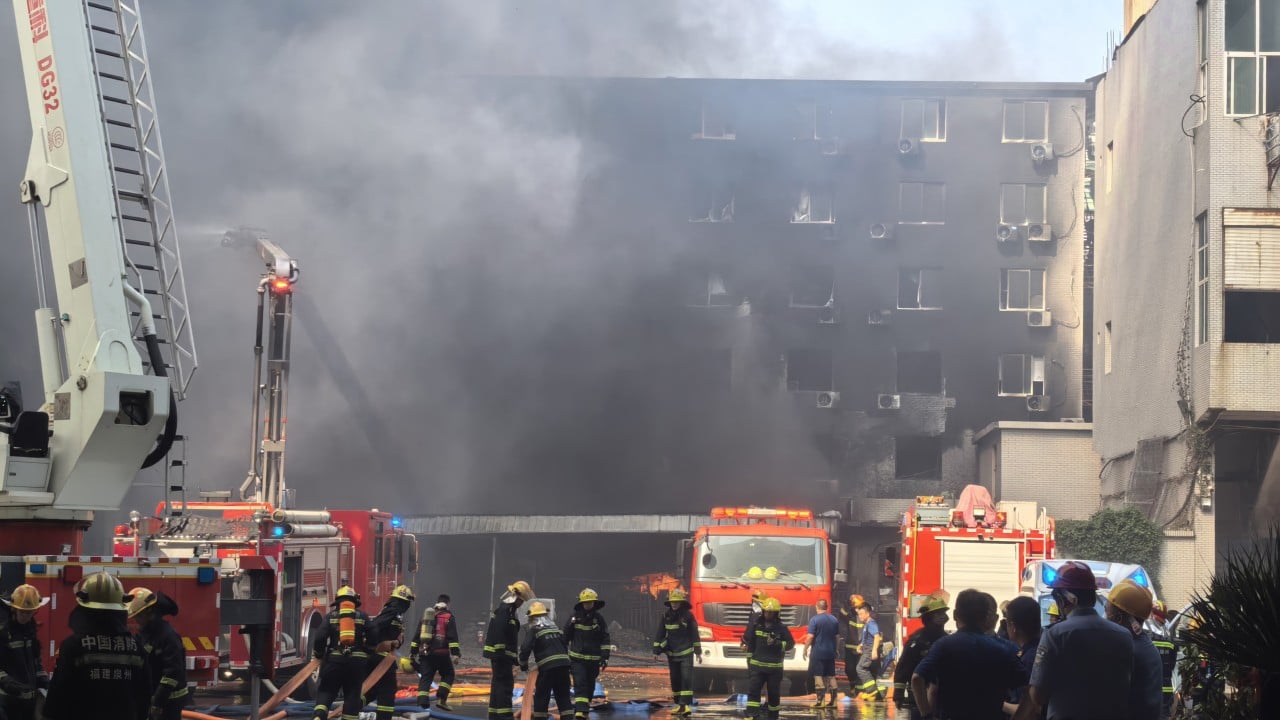
A five-story concrete building on Kaituo Road East shouldn't become a furnace in less than ten minutes. Yet on July 9, 2026, that's exactly what happened in Jiangtou village. The Huiteng shoe factory, nestled in the Chendai township of Jinjiang city, became the latest flashpoint in China's ongoing struggle with industrial safety. Twenty-eight people are dead. Dozens more are injured or deeply traumatized. As images of workers trapped on a smoke-choked rooftop flooded social media, the global retail world faced a familiar, ugly question. What is the actual price of the shoes on our feet?
Jinjiang isn't just any manufacturing town. It produces one out of every five athletic shoes on earth. When a fire tears through the heart of a hub this massive, it's a structural failure of global proportions. The disaster at Huiteng Shoes exposes deep vulnerabilities in factory design, supply chain pressure, and local enforcement.
Inside the Huiteng Factory Fire
The fire began at exactly 12:04 PM. It was lunch hour. Some workers were eating, others were resting near their stations. There were 237 factory workers and two delivery people inside the concrete facility when the first plume of smoke appeared on the ground floor.
The ground floor of a typical Jinjiang footwear factory is a high-risk zone. It serves a double purpose as both a primary assembly workshop and a warehouse for raw materials. Within seconds of ignition, the fire found its fuel. Rubber soles, synthetic textiles, polyurethane sheets, and massive drums of volatile adhesives sat stacked near the entrances. When these materials catch fire, they don't just burn. They explode into fast-moving liquid flames and release dense, toxic black smoke laced with hydrogen cyanide and carbon monoxide.
Eyewitness footage captured a nightmare. Thick black smoke completely blanketed the building within minutes, blowing out windows and cutting off the lower escape routes. Because the ground floor was entirely engulfed, workers on the upper levels had nowhere to go but up. A dozen terrified employees managed to reach the rooftop, waving pieces of cloth through the swirling smoke as fire engines raced to the scene.
The response was massive. Local authorities in nearby Quanzhou scrambled 183 firefighters and 35 specialized vehicles, a number that later swelled to more than 500 rescue personnel. They fought the inferno for four hours before extinguishing the open flames. For 26 workers, help arrived too late. Rescuers found their bodies inside the charred ruins. Two other workers escaped the immediate flames but died in the hospital from severe smoke inhalation and burns, bringing the initial death toll to 28.
The Physical Architecture of a Firetrap
Every industrial disaster has a blueprint. The physical layout of the Huiteng facility shows why escaping a footwear fire is uniquely difficult.
Shoe manufacturing requires a massive volume of components. You have outsoles, insoles, mesh uppers, leather panels, plastic eyelets, and foam padding. In poorly managed factories, these items spill out of designated storage zones. Jinjiang city fire chief Du Zhenzhou confirmed a critical detail to state media after the blaze. Firefighters struggled to reach the upper floors because the primary stairwells and emergency exits were completely blocked by piles of raw shoe materials.
[Ground Floor: Ignition Source]
       │
       ├─► Highly flammable rubber, EVA foam, & volatile adhesives fuel rapid spread.
       │
[Stairwells & Exits]
       │
       ├─► Blocked by overflow stock storage.
       │
[Upper Floors: Workers Trapped]
       │
       └─► Thick toxic smoke cuts off visibility; rooftop becomes the only refuge.
When a factory treats its emergency egress as overflow warehouse space, it signs a death warrant for its staff. If a fire starts on the ground floor, a blocked stairwell transforms a multi-story building into a chimney. The smoke moves faster than the people. It blinds them, suffocates them, and disorients them before they can even find a window.
The chemistry of modern footwear makes things worse. Ethylene-vinyl acetate (EVA) and polyurethane foam are standard in athletic shoe midsoles. They're cheap and comfortable. But when they burn, they melt into a sticky, burning tar that spreads fire across floors and sticks to human skin. The adhesives used to bond these soles to shoe uppers contain volatile organic compounds like toluene and acetone. The vapor from these chemicals hangs in the air of poorly ventilated workshops. A single electrical spark from an unmaintained machine can ignite the entire room instantly. CCTV reporters at the scene noted that the smell was so pungent and toxic it caused immediate eye irritation and breathing difficulties for rescuers hundreds of yards away.
The True Cost of Cheap Footwear Supply Chains
To understand why these safety hazards persist, you have to look past the factory walls and look at the international economics of the shoe industry. Jinjiang manufactured over 1.2 billion pairs of shoes in 2024 alone. It feeds domestic markets and supplies major global fast-fashion platforms and international sportswear brands.
The business model relies on razor-thin margins and extreme speed. Brands demand rapid turnaround times for new styles. Wholesale buyers squeeze factory owners on the price per pair, sometimes down to pennies. When a factory owner is caught between rising labor costs and falling purchase prices, they cut corners where they think nobody is looking.
Safety infrastructure is usually the first thing to go. Proper ventilation systems that extract chemical vapors are expensive to install and run. Fire-rated doors that can isolate a ground-floor blaze cost money. Hiring dedicated warehouse managers to keep stairwells clear looks like an unnecessary expense on a tight balance sheet.
Factory owners take the gamble. They assume a fire won't happen to them. This creates a culture of normalization of deviance. Workers see blocked exits every day and stop reporting them. Local managers walk past uninspected fire extinguishers because they're focused on meeting a Friday shipping deadline. The global supply chain rewards this negligence right up until the moment people die.
Why China Factory Inspections Keep Failing
In the aftermath of the Huiteng disaster, Beijing moved with predictable speed. Chinese President Xi Jinping issued immediate directives demanding an all-out rescue effort, a thorough investigation, and strict accountability for those involved. Local police acted fast. They detained the company owner and several key executives, and state authorities froze the factory's bank accounts.
This top-down anger isn't new. In fact, China has been in the middle of a massive, publicized safety campaign for months. Following a horrific residential block fire in Hong Kong that killed 168 people, and a subsequent factory explosion in Changsha that left 37 dead, the Ministry of Emergency Management promised a clean-up of high-rise and industrial spaces.
The numbers show a systemic issue. Official statistics revealed that 18,261 people died in nearly 20,000 workplace accidents across China in 2025. While that number is technically a slight decrease from previous years, it represents an incredible loss of life for a modern industrial economy.
Why do these tragedies keep happening despite high-profile national crackdowns? The answer lies in the gap between Beijing's mandates and local implementation.
Local municipal governments in manufacturing hubs like Fujian province face conflicting priorities. They're judged on economic growth, employment numbers, and tax revenue. If local inspectors aggressively shut down every factory with blocked stairwells or poor chemical storage, they risk paralyzing the local economy. Millions of pairs of shoes would go unmade. Orders would shift to Vietnam, Indonesia, or Bangladesh.
As a result, local inspections often become performative. Factories get a warning, they temporarily clear the walkway for the inspector's camera, and the boxes stack right back up the next morning. Corruption and close ties between local factory bosses and municipal officials create an environment where safety violations are tolerated as the cost of doing business.
Concrete Steps for Global Brands and Buyers
If you buy from, design for, or manage a brand that sources footwear from East Asian hubs, the Huiteng fire is a stark reminder that standard social compliance audits aren't working. Most third-party audits are announced weeks in advance. Factories clean up their floors, hide their extra inventory, and present a perfect workspace for eight hours.
True safety requires a completely different approach to supply chain oversight.
- Switch to unannounced, independent fire and structural audits. Stop giving factories a heads-up. Inspectors need to walk into facilities during peak production hours on a random Tuesday to see how materials are actually stored.
- Track material volume against floor space. Brands must calculate whether a factory has the physical footprint to store the raw materials required for a high-volume order. If the math doesn't add up, those materials will inevitably end up blocking emergency exit routes.
- Invest directly in supplier safety upgrades. Instead of threatening to cancel contracts over minor violations, international buyers should co-invest in fire suppression systems, vapor extraction ventilation, and safety training for line supervisors.
- Incentivize workers to report hazards. Create anonymous, direct communication channels where factory workers can send photos of blocked exits or broken fire doors directly to brand compliance officers without fear of being fired by local management.
The Huiteng fire shouldn't be treated as an isolated accident. It's an predictable consequence of a system that prioritizes cheap production speed over human life. Until global buyers and local officials treat a blocked stairwell with the same severity as a missed shipping deadline, the factories of Jinjiang will remain incredibly dangerous places to work.



