The desert does not negotiate. It absorbs sound, swallows footprints, and offers no quarter to those who misjudge its scale.
When a teenager stands at the edge of that unforgiving expanse, staring south toward a border defined by steel, wire, and administrative cruelty, the air feels heavy with an impossible choice. To go forward is to court danger. To stay is to face whatever forced them to this precipice in the first place. But what happens when the command to cross comes not from circumstance, but from the very people trusted with protection? You might also find this similar coverage insightful: Why Baghdad is Fuming Over Washington and Riyadh Over US-Saudi Strikes in Iraq.
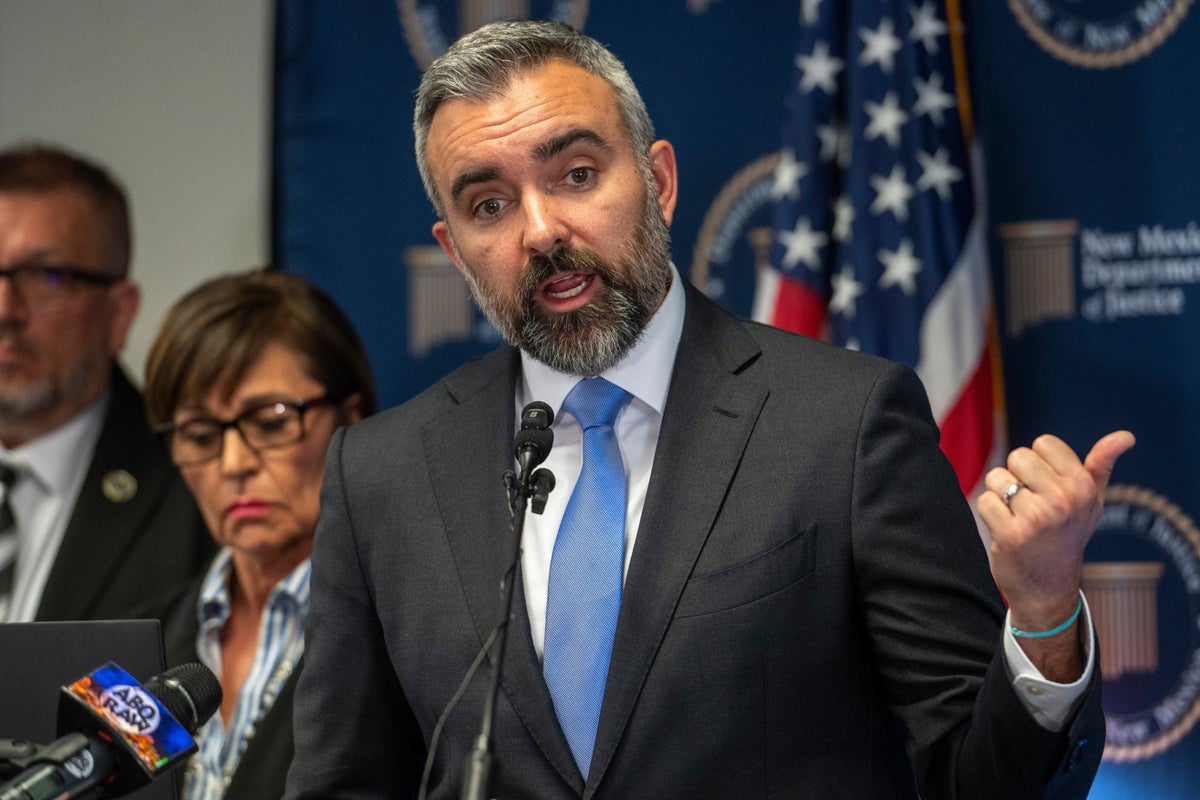
This is the grim reality at the heart of a lawsuit filed by the New Mexico Attorney General’s office. It is a legal action born from a specific, shocking incident: a minor child, young and vulnerable, explicitly directed to cross into Mexico entirely alone. No escort. No preparation. Just an order and a vanishing point.
To understand the weight of this case, one must look past the dry legal filings and examine the architecture of abandonment. As reported in latest articles by The New York Times, the effects are worth noting.
The Anatomy of Isolation
Bureaucracy has a way of turning human beings into coordinates. A name becomes a case number. A terrified human life becomes a logistical hurdle to clear before the end of a shift.
Consider what happens in the quiet moments before a directive is given. A teenager, far from familiar comforts, looks to adults for guidance. In functional environments, authority provides a safety net. It catches mistakes. It cushions the terrifying drops in a young person's life. But when that net is weaponized or discarded entirely, the drop is absolute.
In this specific instance, the directive to cross the international boundary alone exposed a minor to immense physical and legal peril. The borderlands are not a quiet administrative zone. They are patrolled, dangerous, and fraught with actors who prey on the unprotected. To tell a child to walk across that threshold unaccompanied is to gamble with their safety in the most reckless manner imaginable.
The New Mexico Attorney General recognized this terrifying reality. The lawsuit contends that this action was not merely a lapse in judgment; it was a profound breach of duty. It strikes at the core of what society owes to its most defenseless members.
Accountability in the Shadows
For too long, institutional negligence has hidden behind administrative jargon. Organizations and agencies operate with layers of insulation, ensuring that when things go wrong, responsibility diffuses into a mist of red tape.
The legal challenge mounted in New Mexico attempts to pierce that mist. By bringing this case into the light, the state is asking a fundamental question: Who guards the guards?
When an entity tasked with oversight treats a human life as an inconvenience to be exported across a national boundary, the social contract fractures. The AG's filing argues that sending a minor across the border alone violates basic legal duties of care and protection. It exposes a chilling willingness to bypass established protocols simply to wash one's hands of a difficult situation.
Think of how fragile trust is. A young person looks at an adult and believes, against all odds, that the adult possesses a map. When that map turns out to be an order of banishment into a foreign country without support, the psychological betrayal cuts deeper than any physical harm.
The lawsuit does not just seek monetary damages or bureaucratic restructuring. It seeks a moral reckoning. It demands that institutions acknowledge the human cost of their shortcuts.
The Broader Horizon of Protection
Every state line, every border crossing, every checkpoint tells a story about who we decide is worthy of protection and who we deem expendable.
When children are treated as disposable variables in an administrative equation, society as a whole loses its moral compass. The legal action in New Mexico serves as a warning flare. It signals that crossing legal and ethical boundaries with the lives of minors carries severe consequences.
The details of the case remain under legal scrutiny, but the broader implication is unmistakable. Protection cannot be conditional. Duty of care does not evaporate simply because a situation becomes inconvenient or politically sensitive.
As this legal battle unfolds, it forces a confrontation with uncomfortable truths about how institutions handle vulnerability. It challenges the complacency of those who believe oversight ends at the edge of a desk.
The desert wind continues to blow across the southern border, erasing tracks in the sand as quickly as they are made. But accountability leaves a more permanent mark. It carves out lines of responsibility that institutions can no longer ignore, ensuring that the next time a child stands at a dangerous crossroads, someone will finally stand in the way and say stop.

/GettyImages-157526585-93425538070d4422ad42d22af28c0758.jpg)