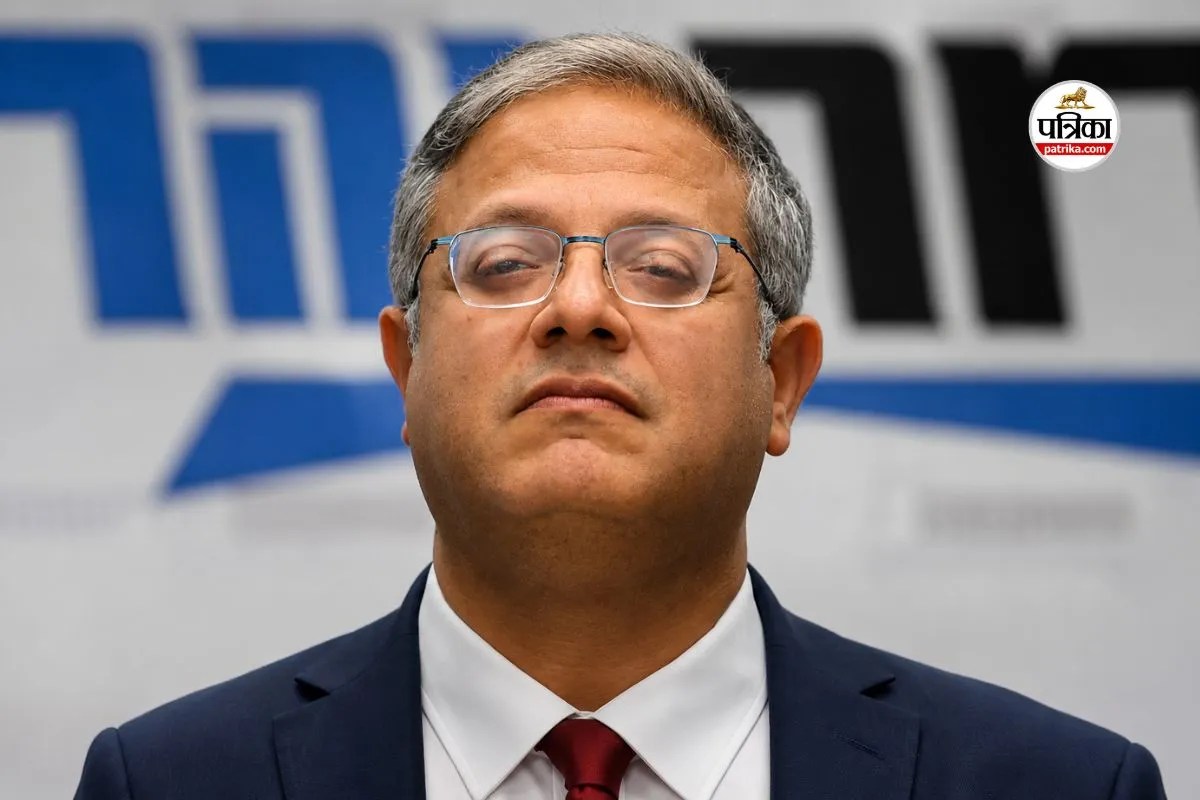
Ink dries, but sound lingers. In the high-vaulted chambers of political posturing, words are rarely mere breath. They carry weight. Sometimes, they carry a body count before a single trigger is pulled.
Consider the arithmetic of escalation. It begins in a committee room or behind a podium, far from the choking dust of collapsed concrete. It starts with a number thrown casually into the air: thirty. Then forty. A daily quota suggested with the bureaucratic detachment of a clerk ordering office supplies.
It is easy to forget the human pulse behind the headline. Imagine a kitchen table in Gaza, where morning tea cools untouched because the ceiling is gone, replaced by an open sky that offers no shelter from the next siren. Now, imagine hearing a voice broadcast across the airwaves, a high-ranking official declaring that survival should be rationed, that the nightly toll must rise.
That voice belongs to Itamar Ben-Gvir. His recent statements did not arrive in a vacuum. They landed in a landscape already fractured by months of relentless bombardment, where millions navigate a labyrinth of rubble and starvation. To suggest that every single night should claim dozens of lives is not just rhetoric. It is a blueprint for normalization. It turns atrocity into a metronome.
The Architecture of Rhetoric
Language shapes reality. When political figures normalize extreme violence through casual pronouncements, the psychological barrier protecting civilian life erodes. This is not accidental. It is a deliberate strategy of desensitization.
Think of how a river carves stone. It does not smash the boulder in one violent blow. It drips, day after day, until the rock gives way. Extreme rhetoric operates in much the same way. Each inflammatory remark wears down the collective conscience of a society, making the unthinkable feel routine, even expected.
History offers a grim ledger of this phenomenon. From the propaganda mills of the twentieth century to modern digital echo chambers, the dehumanization of an adversary always precedes the escalation of physical destruction. First comes the word. Then comes the policy. Finally, comes the silence of the empty room.
When Ben-Gvir articulates a desire for heightened daily casualties, he is speaking to multiple audiences simultaneously. Domestically, he plays to a radicalized base that demands uncompromising hostility. Internationally, he signals a rejection of diplomatic restraint. But on the ground, where the debris settles over families trying to sleep through the drone hum, those words translate into immediate, suffocating terror.
What the Numbers Cannot Capture
Statistics are shields. They allow us to process unimaginable suffering without having to look it in the eye. We read about hundreds killed, thousands displaced, infrastructure reduced to dust. The numbers blur together into an abstract tide of misery.
Let us strip away the percentages and look at the singular.
Picture a father searching through pulverized brick for his daughter’s school notebook. He finds a corner of pink paper, singed at the edge. That is not a statistic. That is an entire universe extinguished.
When political leaders debate the rhythm of slaughter as if adjusting the volume on a radio, they erase that father. They render the daughter invisible. The rhetoric insists that human lives are currency, spent to purchase political leverage or ideological satisfaction.
The danger of such rhetoric extends far beyond the immediate theater of conflict. It poisons the wells of future reconciliation. Every public call for increased bloodshed builds another layer of mistrust, another generation of trauma that will take decades to unspool. If peace is ever to find a foothold in this ancient, bleeding strip of land, it must contend with the poison injected daily into the public discourse by figures who profit politically from perpetual fury.
The Long Shadow
The microphone is switched off. The cameras stop rolling. But the words remain suspended in the air over the Mediterranean, heavy as smoke.
We are left to reckon with a sobering truth. Wars do not end simply when the artillery falls silent. They end when the language of destruction is rejected by those who hold power. Until that language loses its currency, until leaders are held to account for the lethality of their rhetoric, the nightly quotas will not remain mere suggestions. They will become prophecies fulfilled by human hands.
The sky over Gaza darkens again. Another evening descends without certainty. And somewhere in a secure, well-lit room, another sentence is formed, weighing less than a feather, yet capable of crushing a life before dawn.
:max_bytes(150000):strip_icc()/lake-mead-173940030-5c25228846e0fb00014e8584.jpg)
