The green light just turned yellow. Maybe even red.
When a judge sends the Summit Carbon Solutions pipeline route back to the Public Service Commission (PSC) for a fresh look at zoning and safety, it isn't just a minor paperwork hiccup for a massive infrastructure project. It's a massive reality check for the entire carbon capture industry in the Midwest. For years, Summit has pitched its multi-billion-dollar network as an inevitable engine for ethanol survival, steamrolling through regulatory hurdles with promises of federal tax credits and rural economic revitalization.
Now, a court has forced regulators to hit pause and actually look at the local rules they brushed aside.
If you've been following the saga of Summit Carbon Solutions, you know the company wants to build roughly 2,500 miles of pipeline across five states—Iowa, Minnesota, North Dakota, South Dakota, and Nebraska—to capture carbon dioxide from ethanol plants and bury it deep underground in North Dakota. The project relies heavily on the federal 45Q tax credit, which was supercharged by the Inflation Reduction Act to offer up to $85 per metric ton of sequestered carbon. With billions of taxpayer dollars on the table, the rush to lay pipe has been relentless.
And that rush is exactly what got them into trouble.
What the Judge Actually Ordered on the Summit CO2 Route
Let's strip away the legal jargon. When a court remands a permit decision back to a state utility commission—like the North Dakota Public Service Commission or its counterparts in neighboring states—it means the regulators missed something fundamental the first time around.
In this specific battle, the core friction comes down to two things that hit closest to home for rural residents: local zoning authority and pipeline safety data.
State commissions love to claim preemption. Basically, they argue that state-level utility regulators have the ultimate say over where energy infrastructure goes, overriding county-level ordinances. Counties across the Dakotas and Iowa pushed back hard against this, passing setback ordinances that require hazardous liquid pipelines to stay a minimum distance away from homes, schools, livestock facilities, and churches.
Summit argued those local rules made the route impossible to build. Regulators initially agreed, brushing aside county zoning laws to keep the project moving. The court didn't buy it. By sending the route back to the PSC, the judge is forcing regulators to re-examine whether they properly weighed local zoning ordinances and whether the safety evidence in the record actually holds up under scrutiny.
It's a brutal setback for Summit's timeline. You can't just tweak a line on a map when a court tells you to re-evaluate the foundational legal standards of your permit.
Why CO2 Pipelines Are Not Your Average Oil or Gas Line
A lot of people assume a pipeline is just a pipeline. They figure if the Midwest is already crisscrossed with thousands of miles of natural gas and crude oil lines, adding carbon dioxide shouldn't be a big deal.
That assumption is dead wrong.
Carbon dioxide behaves completely differently from hydrocarbons when something goes wrong. To transport CO2 efficiently over hundreds of miles, it has to be compressed into a supercritical state—a weird hybrid phase where it has the density of a liquid but expands like a gas. Keep it under immense pressure, usually above 1,100 pounds per square inch, and it flows smoothly through steel pipes.
Break that pipe, and physics takes a terrifying turn.
Because CO2 is heavier than air, it doesn't dissipate upward into the atmosphere like natural gas does. Instead, it hugs the ground, pooling in low-lying areas, valleys, and basements. It is colorless, odorless, and an asphyxiant. At high concentrations, it doesn't just suffocate humans and livestock—it displaces oxygen so rapidly that internal combustion engines stall out. Cars and ambulances literally stop running when they drive into a dense CO2 plume, trapping people inside the hazard zone and blocking first responders from reaching them.
We saw a real-world preview of this in February 2020 in Satartia, Mississippi. A Denbury Resources CO2 pipeline ruptured after heavy rains triggered a landslide. Within minutes, a green-tinted cloud of carbon dioxide rolled over the small town. Dozens of residents were hospitalized, some found unconscious in their cars, and local emergency crews had no idea what they were dealing with because the company hadn't shared its dispersion modeling with them.
That incident changed the conversation permanently. When landowners and county commissioners demand strict setback distances and transparent dispersion models from Summit Carbon Solutions, they aren't being paranoid. They're looking at Satartia and asking why regulators are letting a company put high-pressure supercritical CO2 lines a few hundred feet from their kids' bedrooms without proving the safety math first.
The Zoning Tug-of-War Between Counties and State Regulators
To understand why this court ruling stings so much, you have to understand the political warfare playing out in county courthouses across the Corn Belt.
Historically, county boards in states like North Dakota and South Dakota were pretty friendly to energy projects. They welcomed wind farms, oil wells, and transmission lines because those projects brought in local property tax revenue.
Summit Carbon Solutions broke that consensus.
Why? Because Summit wasn't just asking for voluntary easements. The company aggressively sought the power of eminent domain—the legal right to seize private farmland for a private, for-profit enterprise. For conservative, property-rights-focused farmers in the Midwest, that was a declaration of war.
Unable to stop the state utility commissions from entertaining Summit's applications, landowners turned to the one level of government that actually answers to them: their county commissioners. Counties began passing ordinances requiring CO2 pipelines to stay anywhere from 1,000 feet to half a mile away from occupied dwellings and public buildings.
Summit sued the counties. They argued that a patchwork of local zoning rules would effectively kill an interstate project that the federal government wants built. When state regulators sided with Summit and preempted those local ordinances, landowners took the fight to district court.
By ordering the PSC to re-examine zoning, the judge essentially told state bureaucrats they can't just rubber-stamp corporate preemption arguments. If state law requires a commission to consider local land-use plans and ordinances—or at least justify why overriding them is strictly necessary—regulators actually have to do the homework. They can't just wave a magic wand and make county laws disappear.
What Regulators Missed on Safety and Dispersion Modeling
Safety isn't just about how thick the steel pipe is. It's about what happens after a rupture, and who gets to see the data.
During initial regulatory hearings, pipeline developers routinely argue that their plume dispersion models—computer simulations showing how far and how fast CO2 gas will spread after a leak—should be kept confidential. They claim releasing those maps creates a security risk, arguing that bad actors could use the data to target infrastructure.
Landowners and safety advocates call nonsense on that excuse. You can't protect a community from a hazard if you refuse to tell the fire chief how far the gas cloud will travel. Furthermore, the Pipeline and Hazardous Materials Safety Administration (PHMSA) has been in the middle of overhauling its federal safety regulations for CO2 pipelines precisely because the existing rules were written decades ago for much smaller, enhanced oil recovery lines—not massive, multi-state carbon capture networks.
When a court forces the PSC to re-examine safety, it opens the door for intervenors to demand real transparency. It forces regulators to look closely at:
- Emergency response readiness: Do volunteer rural fire departments actually have the self-contained breathing apparatus and electric vehicles needed to operate inside a hypoxic CO2 plume?
- Plume modeling transparency: Are the safety buffer zones based on realistic worst-case rupture scenarios, or optimistic corporate estimates?
- Route terrain and soil stability: Has the route adequately accounted for frost heave, drain tiles, and unstable slopes that caused the Satartia failure?
If the PSC has to build a bulletproof evidentiary record on these points, Summit can't rely on vague assurances that they'll "work with local responders later." They have to prove safety up front.
The Ripple Effect Across the Five-State Footprint
Summit's entire business model depends on volume and connectivity. It's a hub-and-spoke system. Dozens of ethanol plants across Iowa, Minnesota, South Dakota, and Nebraska capture their fermentation CO2, feed it into smaller feeder lines, and push it into a massive trunk line heading north to Oliver and Mercer counties in North Dakota, where it gets injected into deep saline aquifers.
If one link in that chain breaks or stalls out, the whole network loses pressure—financially and physically.
North Dakota is the terminus. It's where the carbon actually goes into the ground. If North Dakota's PSC has to re-open its proceedings, hold new hearings, and re-evaluate zoning and safety compliance, the timeline for the entire five-state network shifts backward. Meanwhile, in South Dakota, voters already rejected a state law (Senate Bill 201) that tried to strip counties of their zoning authority over pipelines—a massive populist rebuke that proved just how toxic the eminent domain issue has become at the ballot box.
In Iowa, the Iowa Utilities Board granted a conditional permit, only for Summit to run straight into the reality that it can't start construction in Iowa until it has clear regulatory approval in the states where the carbon is actually going. You don't build a bridge to nowhere, and you don't lay 700 miles of pipe in Iowa if the burial ground in North Dakota is tied up in court.
What Ethanol Plants and Investors Are Facing Now
Let's be honest about why this project exists in the first place. It isn't out of pure altruism for the climate.
The ethanol industry is staring down an existential threat. As electric vehicles slowly eat into gasoline demand, ethanol producers need new markets to survive. Sustainable Aviation Fuel (SAF) is the golden ticket, but federal tax rules require aviation fuel to meet strict carbon-intensity score reductions to qualify for lucrative subsidies. Capturing and burying the CO2 produced during corn fermentation is the fastest way for an ethanol plant to slash its carbon score on paper.
Without Summit's pipeline, dozens of Midwest ethanol plants risk getting locked out of the low-carbon fuel market. That's why agricultural heavyweights and major investors poured billions into Summit Agricultural Group's vision.
Every month of delay burns cash. Engineering teams sit idle, steel pipe sits stacked in storage yards, and financing costs climb in a high-interest-rate environment. More importantly, the political window for the 45Q tax credit isn't guaranteed forever. With shifting fiscal priorities in Washington, massive corporate tax subsidies for carbon capture face growing scrutiny from both fiscal conservatives who hate green subsidies and progressive environmentalists who view carbon capture as a lifeline for fossil fuels.
What Happens Next in the Regulatory Process
When a judge sends a decision back to the PSC, the agency doesn't just issue a press release and move on. The administrative process has to grind forward under strict legal rules, or the next appeal will end with the exact same result.
Here is how the remand process typically plays out in practice:
- Procedural Scoping: The PSC has to issue an order defining exactly what issues are back on the table based on the judge's ruling. They have to decide whether the existing evidentiary record is enough to answer the court's questions, or if they need to re-open the docket for new testimony.
- Supplemental Filings and Discovery: If new evidence is required on zoning impacts or safety protocols, Summit will have to submit updated engineering data, and opposing landowner coalitions will get the right to cross-examine their experts.
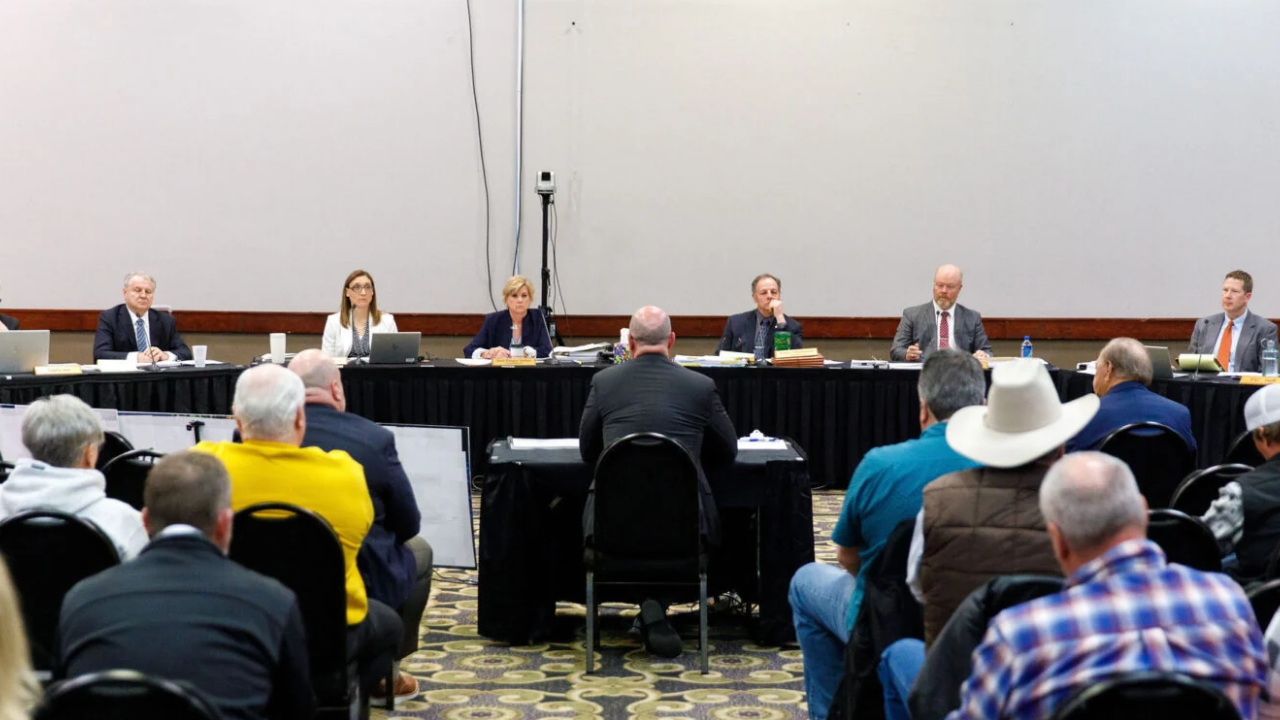
- Public and Evidentiary Hearings: Expect contentious, multi-day hearings where county commissioners, local fire chiefs, and safety engineers put their concerns directly into the official record.
- A Revised Order: The commissioners will eventually vote on a new permit order that explicitly addresses the legal flaws identified by the court.
And even if the PSC eventually re-approves the route with stricter conditions, that doesn't end the war. Landowner groups like the Dakota Resource Council and Bold Alliance have proven they have the funding, legal talent, and stubbornness to appeal every single procedural misstep all the way to the state Supreme Court.
How Landowners and Local Officials Should Respond
If you own land along the proposed route, or you're a local official trying to navigate this mess, don't mistake a temporary court victory for a permanent surrender by a multi-billion-dollar corporation. Summit has too much sunk capital to walk away quietly.
Keep your guard up and focus on concrete leverage points:
- Do not sign voluntary easements out of panic. Land agents love to tell holdout farmers that "everyone else has signed" and that eminent domain is inevitable. This ruling proves the timeline is completely unsettled. Never sign an easement agreement without having an experienced energy and agricultural attorney review every clause—especially liability waivers and depth-of-cover requirements.
- Document everything on your property now. If construction ever does move forward, topsoil compaction and shattered drain tiles can ruin crop yields for decades. Take high-resolution photos, map your drainage systems, and get independent soil assessments on file before a single piece of heavy machinery touches your dirt.
- Show up to the remand hearings. Regulatory commissions count public comments and track local government participation. County commissions need to submit formal, well-documented evidence showing exactly why their setback ordinances exist and how the proposed route conflicts with local emergency response capabilities.
The court didn't kill the Summit Carbon Solutions pipeline, but it shattered the illusion that the project is an unstoppable juggernaut. By forcing regulators to put local zoning and real-world safety ahead of corporate speed, the judge handed rural communities the one thing they've been demanding since day one: a fair fight.