When headlines flash that Iraqi security forces deploy in an Iran-backed militia stronghold, most Western outlets treat it like a clean binary. Either Baghdad is finally taking back its sovereignty, or it's pure political theater for Washington. Both takes miss the messy reality on the ground.
I've followed Iraqi security politics for over a decade, and if there's one thing you learn fast, it's that formal troop movements rarely tell the whole story. A convoy rolling into Jurf al-Sakhar, Sinjar, or parts of Diyala doesn't automatically erase years of entrenched local power. You have to look at who gives the orders, who controls the checkpoints after the cameras leave, and what happens to the local economy once the dust settles.
Why Baghdad Sends Regular Troops Into Militia Territory
The Iraqi government doesn't move regular army units or the Counter Terrorism Service (CTS) into areas dominated by the Popular Mobilization Forces (PMF) on a whim. Usually, three specific pressures collide at the exact same time.
First, there's the international heat. Whenever cross-border strikes flare up or diplomatic pressure from Washington and neighboring Gulf states spikes, Prime Minister Mohammed Shia al-Sudani's government needs visible proof that the state holds a monopoly on force. Sending federal police or army brigades into contested zones buys Baghdad breathing room during sensitive security talks.
Second, local friction reaches a boiling point. In provinces like Nineveh, Kirkuk, and Diyala, overlapping jurisdictions between federal troops and PMF brigades—such as Kata'ib Hezbollah, Asa'ib Ahl al-Haq, or the Badr Organization—frequently trigger turf wars over smuggling routes, checkpoints, and municipal contracts. When a local dispute threatens to spill into open street fighting, the Joint Operations Command steps in to separate the factions.
Third, intelligence warnings force their hand. Remnants of ISIS still exploit security vacuums along the disputed internal boundaries between Baghdad and Erbil. When militant cells launch attacks from agricultural belts or desert fringes, federal forces deploy to clear the terrain, even if a PMF faction nominally claims responsibility for that sector.
The Structural Reality Behind the Popular Mobilization Forces
You can't understand these deployments if you think of the PMF as a rogue rebel group operating outside the law. That's a massive misconception.
Under Law No. 40, passed by the Iraqi parliament in 2016, the Popular Mobilization Forces were formally integrated into the state's security apparatus. They receive state salaries, wear official insignia, and legally answer to the Commander-in-Chief—the Prime Minister himself.
Here's the catch. Legal integration on paper never translated into unified command on the ground.
While some PMF units follow Baghdad's chain of command closely, the most powerful Iran-aligned factions—often referred to as the muqawama or Islamic Resistance—maintain separate ideological loyalties, independent funding streams, and direct links to Iran's Islamic Revolutionary Guard Corps (IRGC). When Iraqi security forces deploy in an Iran-backed militia stronghold, they aren't invading enemy territory. They are stepping into a neighborhood controlled by another branch of the exact same state payroll.
That's why these operations look so strange to outside observers. You won't see pitched battles between the Iraqi Army and major PMF brigades. Instead, you see tense negotiations at checkpoints, joint patrols that quietly hand back control after two weeks, or coordinated redeployments where militia fighters simply swap their faction flags for official PMF or federal police banners.
What Actually Happens on the Ground During a Deployment
Watch the sequence of events closely next time a deployment hits the news cycle. The pattern almost never changes.
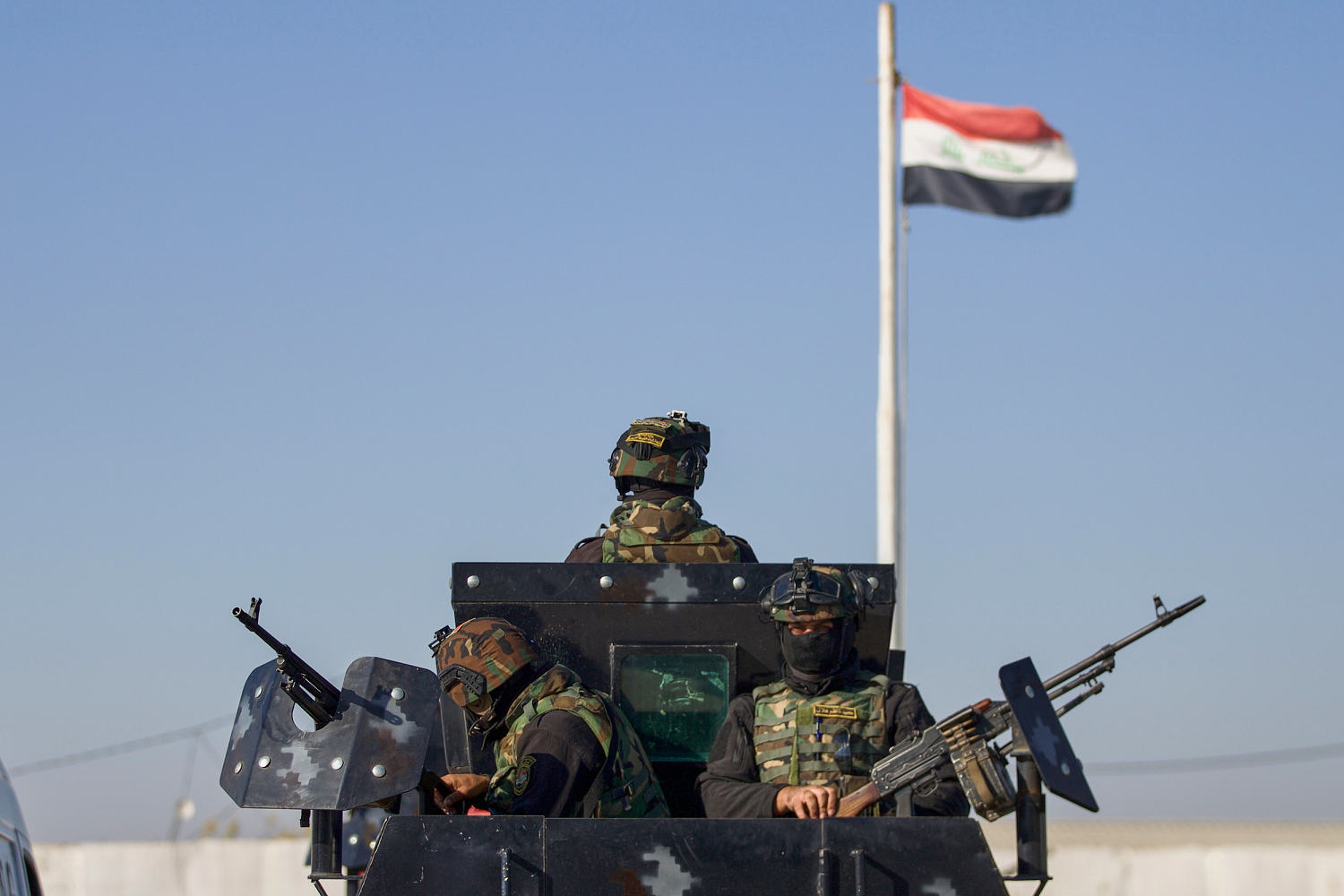
- The Initial Show of Force: Heavy armored vehicles, often from the elite Counter Terrorism Service or the Federal Police's Rapid Response Division, roll into a district center. State media broadcasts crisp footage of commanders meeting local tribal leaders and inspecting main roads.
- The Behind-the-Scenes Deconfliction: Before the first Humvee ever crosses the district line, senior officials in Baghdad have already cleared the movement with the relevant PMF leadership. Nobody wants an accidental firefight. Faction commanders agree to pull back their heavy weapons or vacate visible urban headquarters temporarily.
- The Checkpoint Shuffle: Main highways get handed over to regular army units, which reassures travelers and commercial truckers tired of paying informal transit fees. Meanwhile, secondary roads, agricultural zones, and strategic border crossings often remain under the quiet supervision of local militia networks.
- The Gradual Drawdown: Once headlines fade and political pressure cools off, elite federal units get reassigned to the next crisis zone. Local PMF brigades slowly reassert their administrative influence over municipal offices, reconstruction funds, and local security committees.
Honestly, it's a choreography that everyone in Baghdad understands, even if foreign commentators treat every deployment like a dramatic turning point.
Case Studies That Reveal the Pattern
Look at Jurf al-Sakhar (renamed Jurf al-Nasr by militia groups), roughly 60 kilometers southwest of Baghdad. Since 2014, Kata'ib Hezbollah has maintained near-total control over this strategic agricultural town, blocking tens of thousands of displaced Sunni residents from returning home. Every few years, rumors swirl that federal forces are moving in to reopen the area and restore civil administration. Yet time and again, limited federal deployments only skirt the perimeter, leaving the core security architecture untouched because pushing harder risks fracturing the ruling Shia Coordination Framework coalition in parliament.
Compare that to Sinjar in northwestern Iraq. The 2020 Sinjar Agreement between Baghdad and the Kurdistan Regional Government explicitly called for all non-state armed groups—including Iran-backed PMF factions and PKK-affiliated Yazidi units—to withdraw and hand security over to local police. Iraqi army divisions deployed in force multiple times to enforce the deal. Did it work? Only partially. While federal troops secured main roads and urban centers, armed factions simply rebranded, shifted to surrounding hills, or embedded themselves inside local administrative structures.
Diyala province offers another clear example. Located right on the Iranian border, Diyala is a critical transit corridor for both legitimate trade and illicit smuggling. Whenever sectarian tensions or political assassinations spike in Baqubah or Muqdadiyah, Baghdad rushes in elite federal brigades. Violence drops immediately. Checkpoints multiply. Yet once those emergency units rotate out, the underlying competition among Badr, Asa'ib Ahl al-Haq, and local tribal actors resumes right where it left off.
The Political Tightrope for Baghdad
Prime Minister al-Sudani—and whoever sits in his chair next—faces an impossible balancing act.
His government relies directly on the Coordination Framework, a parliamentary alliance dominated by Shia political parties whose armed wings make up the most powerful Iran-backed militias. If the Prime Minister orders federal troops to forcefully disarm or evict those factions from their strongholds, his political coalition collapses overnight.
At the same time, Iraq desperately needs foreign investment, stable energy infrastructure, and continued access to the U.S. financial system to keep its oil-dependent economy running. Allowing armed factions to operate with total impunity invites retaliatory airstrikes, scares away international energy companies, and weakens Iraq's standing with Arab neighbors like Saudi Arabia and Jordan.
So Baghdad uses targeted security deployments as a pressure valve. They demonstrate state authority just enough to satisfy international partners and calm nervous investors, without crossing the red lines that would trigger an intra-Shia civil conflict.
How to Read Future Iraqi Security News Without Getting Misled
Next time you see breaking news about Iraqi troops entering a militia-controlled district, skip the dramatic hot takes and look for four specific indicators that tell you whether the move actually changes anything:
- Check which unit is deploying. If it's the Counter Terrorism Service (CTS), Baghdad is serious about short-term stabilization or high-value arrests, because CTS answers directly to the Prime Minister and avoids partisan politics. If it's a standard army division already stationed nearby, it's likely routine rotation dressed up for the press.
- Watch the duration, not the arrival. Anybody can send a convoy into a town for 48 hours. Real shifts in control only happen when federal forces establish permanent bases, replace local intelligence directors, and stay past the 90-day mark.
- Follow the economic choke points. Ask who controls the customs posts, scrap metal trade, and agricultural checkpoints two weeks after the deployment. Whoever collects the transit fees holds the real power in rural Iraq.
- Look for civilian returns. In areas depopulated during the war against ISIS, the ultimate test of state control isn't a military parade—it's whether displaced families are actually allowed back into their homes and given reconstruction permits.
Understanding these mechanics won't make the headlines any simpler, but it will stop you from falling for the illusion that a single troop deployment solves a decade-old struggle over who truly governs Iraq.