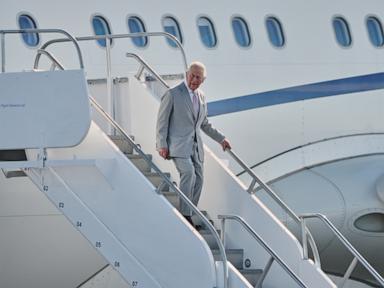
Royal tours aren't just pageantry and handshakes anymore. Not even close. When news breaks that King Charles III arrives in the Bahamas for an official Caribbean trip, most headlines focus on the tarmac greetings, the brass bands, and the outfits. That's a massive mistake.
If you've ever covered or closely followed Commonwealth diplomacy across the Caribbean, you know the real story happens miles away from the red carpet. Every royal visit to Nassau carries heavy political weight, historical baggage, and very real questions about whether the British monarchy still has a future in the region. Discover more on a similar subject: this related article.
Let's cut through the ceremonial fluff. Here's what's actually going on when the British monarch touches down in the Bahamas, why the timing matters right now, and what both Nassau and Buckingham Palace stand to gain—or lose.
Why a Bahamas Royal Visit Hits Differently Today
You can't look at a modern royal trip to the Caribbean through a 1950s lens. Things have changed too fast. Further reporting by NPR delves into similar views on the subject.
When the late Queen Elizabeth II visited the Bahamas in 1966, 1975, 1977, 1985, and 1994, the crowds were massive and the constitutional questions were mostly quiet. The Bahamas gained independence from Britain in July 1973, yet chose to remain a Commonwealth realm with the British monarch as head of state. For decades, that arrangement barely made waves in daily Bahamian life.
Then came the 2020s.
In November 2021, Barbados officially removed the Queen as head of state and became a parliamentary republic. Just a few months later, in March 2022, the then-Duke and Duchess of Cambridge—Prince William and Catherine—embarked on a Caribbean tour covering Belize, Jamaica, and the Bahamas. That trip turned into a public relations wake-up call for the Palace. Protests erupted in Kingston. Jamaican Prime Minister Andrew Holness looked Prince William straight in the eye on live television and stated that Jamaica was "moving on" to fulfill its true ambitions as an independent, developed nation.
By the time William and Kate reached Nassau on that same 2022 tour, the tone had shifted completely. The Bahamas National Reparations Committee issued a formal letter demanding an apology and reparations for slavery. Even Bahamian Prime Minister Philip "Brave" Davis openly acknowledged that republicanism was an active topic of conversation among his citizens.
So when King Charles III arrives in the Bahamas, he isn't stepping onto neutral ground. He's walking into a nation actively debating its constitutional identity.
What Actually Happens on the Ground in Nassau
Most people assume royal itineraries are thrown together by Palace aides picking pretty beaches. In reality, every stop is negotiated line-by-line between Buckingham Palace, the UK Foreign, Commonwealth & Development Office, and the Office of the Prime Minister in Nassau.
I've watched how these schedules come together over the years, and the pattern is unmistakable. Whenever a senior royal visits a Caribbean realm today, the itinerary leans hard into three specific areas—and intentionally downplays traditional colonial pomp.
Climate Action and Marine Conservation
This is King Charles's strongest card, and his team knows it. Long before he took the throne, Charles spent decades campaigning on environmental protection, sustainable oceans, and climate finance.
For the Bahamas, climate change isn't an abstract policy debate. It's an existential threat. Roughly 80% of the country's landmass sits less than one meter above sea level. Bahamians still live with the trauma of Hurricane Dorian in September 2019, a Category 5 monster that devastated Abaco and Grand Bahama, killed at least 74 people officially (with hundreds more left missing), and caused an estimated $3.4 billion in damages.
When Charles meets with Bahamian marine scientists, coral reef restoration teams, or youth climate advocates, the connection feels genuine. The Bahamas has pioneered blue carbon initiatives and boasts one of the world's largest seagrass ecosystems, which absorbs massive amounts of carbon dioxide. Highlighting Bahamian environmental leadership gives the King a platform where he isn't seen as a distant ruler, but as an ally amplifying small island nations on the global stage.
Youth Entrepreneurship and the King's Trust
Demographics are the biggest threat to the monarchy's survival in the Caribbean. Older Bahamians often hold warm memories of Queen Elizabeth II. Younger Bahamians? Many view the Crown as a relic of British colonialism with zero relevance to their daily struggles with cost of living, job creation, or housing.
To counter that gap, Palace strategists almost always anchor visits around The King's Trust International (formerly The Prince's Trust International). The charity runs entrepreneurship and employability programs across the Caribbean, helping young people launch small businesses and build job skills.
It's smart soft power. Instead of speeches about historical ties, the focus shifts to practical economic support for 18-to-30-year-olds.
Navigating the Reparations Question
Here's where things get tricky. You can't visit the Bahamas as the British sovereign without confronting the legacy of the transatlantic slave trade.
During the 2022 Commonwealth Heads of Government Meeting in Kigali, Rwanda, Charles—then still Prince of Wales—expressed "personal sorrow" over the suffering caused by slavery, noting that he couldn't describe the depths of his pain over that history. Later, as King, he signaled openness to independent research into the British monarchy's historical links to the slave trade, starting with royal archives made available to researchers examining the Royal African Company.
Notice what he hasn't done. Neither King Charles nor the UK government has issued a formal state apology or agreed to financial reparations.
In Nassau, groups like the Bahamas National Reparations Committee and Caribbean-wide bodies like the CARICOM Reparations Commission continue to press for both. Whether Charles addresses the past directly in a state banquet speech or sticks strictly to forward-looking language is always the single most scrutinized moment of any trip.
The Republicanism Question Nobody Wants to Rush
If you read casual commentary online, you'd think the Bahamas is days away from ditching the King. That's not accurate either.
Constitutional change in the Bahamas is notoriously hard. Unlike Barbados—where parliament could vote by a two-thirds majority to transition to a republic without a public vote—the Bahamian constitution requires a national referendum to remove the British monarch as head of state.
Referendums in the Bahamas have a rough track record.
- In 2002, Bahamian voters rejected constitutional amendments covering gender equality and other reforms.
- In 2016, voters overwhelmingly rejected four separate constitutional referendum bills aimed at establishing full gender equality in citizenship laws.
Bahamian politicians remember those defeats vividly. Prime Minister Philip Davis has stated publicly that transitioning to a republic would require a referendum, and he has shown little appetite for rushing into a divisive vote while voters are focused on inflation, crime, and hurricane resilience.
Honestly, that's the paradox of the Bahamian monarchy right now. Most people aren't passionately defending the Crown, yet very few politicians want to spend the political capital needed to hold a referendum that might fail anyway.
Common Misconceptions About the King's Role in the Bahamas
Media coverage outside the Caribbean constantly gets the basic constitutional facts wrong. If you want to follow this visit like someone who actually understands regional politics, clear up these three myths right away.
Myth 1: The British government controls the Bahamas through the King.
False. When King Charles acts in the Bahamas, he acts exclusively as King of the Bahamas, not King of the United Kingdom. Under international and constitutional law, the crowns are legally separate. Downing Street has zero say over Bahamian laws, taxes, or foreign policy.
Myth 2: British taxpayers pay for the entire trip.
Not entirely. While UK sovereign grants and foreign office budgets cover the King's travel logistics, royal household staff, and diplomatic security coordination, host nations typically bear significant local costs—including domestic security, motorcades, state dinners, and venue preparation. That cost-sharing frequently sparks fierce debate in local Bahamian talk radio and newspapers whenever a royal visit is announced.
Myth 3: A royal visit is meant to "save" the monarchy.
Charles is pragmatic. He has said repeatedly—most notably in his 2022 Kigali speech—that whether a Commonwealth country chooses to become a republic is a matter entirely for each nation's people to decide, "calmly and without rancor." The goal of a modern visit isn't to beg Bahamians to keep him as head of state. It's to preserve strong bilateral ties between the UK and the Bahamas—and keep the Bahamas an active, engaged member of the broader 56-nation Commonwealth—even if Nassau eventually chooses a Bahamian president down the road.
How to Follow the Visit Without Falling for Surface-Level Coverage
If you're tracking King Charles III's official trip to the Bahamas—whether for news analysis, travel context, or regional policy—skip the breathless fashion roundups and watch the signals that actually matter.
- Read the Prime Minister's welcome remarks word for word. Bahamian leaders choose their phrasing carefully during royal visits. Look for whether Prime Minister Davis frames the relationship around "shared future and climate partnership" or drops subtle references to "constitutional evolution" and "full sovereignty."
- Watch who isn't in the room. Pay attention to statements from the Bahamas National Reparations Committee, University of The Bahamas academics, and local youth leaders. Their reactions on Nassau talk radio and in outlets like The Tribune and The Nassau Guardian tell you far more about public sentiment than any official Palace press release.
- Track concrete bilateral announcements. Ceremonies fade in 48 hours. Look for actual commitments on UK-Bahamas climate finance, maritime security cooperation against transnational trafficking, or expanded funding for local conservation groups.
- Compare the crowd sizes and demographics. Look closely at footage from public walkabouts in New Providence or the Family Islands. The age breakdown of people showing up tells the real story about where the Crown stands with the next generation of Bahamians.
The British monarchy's relationship with the Caribbean is being rewritten in real time, one carefully choreographed visit at a time. Watching Nassau closely gives you the clearest preview of what the Commonwealth will look like over the next decade.


