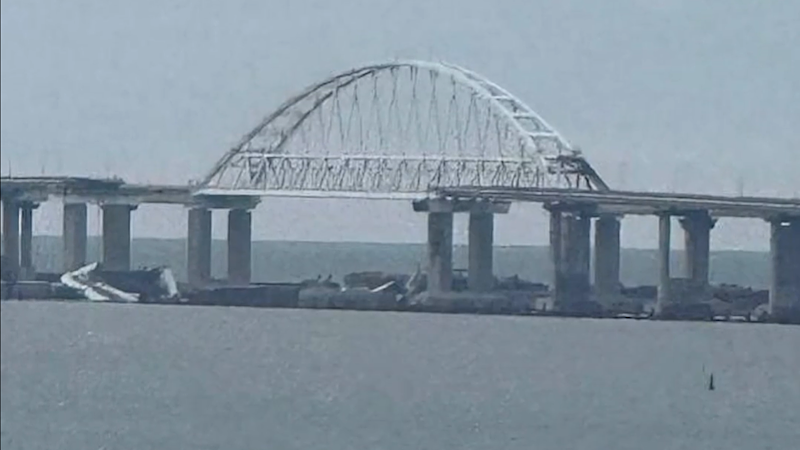
Every time smoke rises over the span linking mainland Russia to occupied Crimea, headlines immediately jump to the same dramatic prediction. The bridge is finished. Moscow's southern logistics are dead. The war changes tomorrow morning.
Hold on. That reaction misses what actually matters on the ground.
Reports of Ukraine's "Flamingo" strike severely damaging a vital bridge connecting Russia to annexed Crimea highlight a shift in long-range strike capability, yet the real story isn't a single Hollywood-style collapse. It's the relentless math of attrition, air defense saturation, and supply-chain friction. If you only look at satellite photos of scorched asphalt or twisted steel, you're looking at the surface symptom rather than the operational disease eating away at Russian logistics.
Why the Crimea Bridge Link Still Dictates Southern Logistics
People love to argue that Russia no longer needs the Kerch Strait crossing because Moscow built rail and road alternatives along the Sea of Azov coast through occupied Mariupol and Melitopol. Honestly, that's only half true. Yes, overland routes through southern Ukraine carry a massive share of daily military cargo now. They're shorter for certain front-line sectors in Zaporizhzhia and Kherson.
Here's the catch.
Overland corridors sit well within range of Ukrainian tactical strike systems, tube artillery in specific sectors, and swarms of first-person-view drones. Every convoy rolling along the coastal highway faces constant interdiction risk. The bridge linking Russia to Crimea was supposed to be the insulated rear-area artery—a heavy-capacity rail and road lifeline far enough back to move bulk fuel, heavy armor, and oversized engineering equipment without dodging ambushes every twenty kilometers.
When a strike like the Flamingo operation hits that structure, Russian planners don't suddenly run out of bullets the next afternoon. Instead, they face an immediate bottleneck cascade. Heavy rail freight has to be broken down, rerouted onto vulnerable coastal tracks, or pushed onto landing ships that Ukrainian naval drones have already hunted down in the Black Sea.
Efficiency dies first. Speed dies second.
What Makes the Flamingo Strike Different From Earlier Attacks
We've seen strikes on the Crimea crossing before. In October 2022, a truck bomb collapsed sections of the roadway and ignited fuel tankers on the adjacent rail line. In July 2023, Ukrainian unmanned surface vessels—Sea Baby naval drones—tore into the bridge supports from below, dropping another span into the water.
Both of those earlier operations relied on asymmetric, close-in delivery methods. Smuggling explosives onto a guarded span or piloting drone boats hundreds of miles across contested waters requires months of bespoke intelligence work and near-perfect timing. You can't repeat those exact tricks every Tuesday.
Long-range aerial strike packages change the tempo entirely. When Ukraine employs a dedicated strike system like the Flamingo against fortified bridge infrastructure, it proves Kyiv can reach heavily defended strategic targets from the air despite Russia layering S-300, S-400, and Pantsir air defense batteries around the strait.
Think about what that forces the Russian Ministry of Defense to do. Air defense radars can't sleep. Interceptor missiles—expensive, slow to manufacture, and desperately needed around Russian oil refineries and airfields—get pinned down guarding concrete piers. Even when interceptors knock down incoming decoys or drones, the sheer cost of defending static infrastructure drains Moscow's air defense stockpile.
The Physics Problem of Destroying Modern Bridges
Here's something armchair generals get wrong constantly: bridges are notoriously hard to kill permanently.
A reinforced concrete and steel box-girder bridge isn't an ammunition dump. It doesn't explode from a single spark. To drop a major span completely, a warhead has to sever primary load-bearing tendons, buckle main steel girders, or shatter the reinforced piers standing in the seabed.
Surface blasts often crater the road deck, rip away guardrails, and scorch concrete without compromising the core structural piers underneath. That's why earlier strikes forced months of lane closures and weight restrictions rather than permanent erasure. Severe damage doesn't have to mean total collapse to achieve a military goal. If a hit warps rail tracks or weakens a girder enough that heavy freight trains can't safely cross at full load, the bridge is functionally neutralized for heavy military logistics—even if passenger cars can still limp across one lane at thirty miles an hour.
How Russia Responds After a Major Bridge Strike
Watch the first seventy-two hours after any strike on the Crimea link. The playbook in Moscow rarely changes, and knowing what to look for helps you separate real operational pain from propaganda spin.
First comes the information blackout. Local authorities shut down traffic, block independent cameras, and claim air defenses intercepted every single incoming target while blaming "falling debris" for minor fire damage. Take those initial claims with a mountain of salt. Falling debris doesn't warp steel bridge spans or halt rail schedules for days on end.
Second comes the barge and ferry scramble. Every time the bridge takes a serious hit, Russia tries to reactivate rail ferries across the Kerch Strait. It's a desperate workaround—and an easy target. Ukrainian forces have repeatedly struck Kerch ferry crossings and docked vessels precisely because ships loaded with fuel cars are sitting ducks compared to reinforced concrete piers.
Third, Russian engineering crews rush in with temporary plating, mobile cranes, and speed restrictions. You'll see state media broadcast footage of cars driving across within days to project normalcy. Look closer at those broadcasts. Are heavy freight trains moving? Are multi-axle military transporters crossing? Usually, the answer is no. Passenger traffic is theater; heavy rail tonnage is the actual metric that matters.
What Most Analysts Overlook About Deep-Strike Campaigns
If you treat the Flamingo strike as an isolated headline, you miss the wider campaign architecture. Ukraine isn't just throwing expensive munitions at symbolic targets for morale boosts. Kyiv runs a systematic targeting network aimed at stretching Russia's defensive perimeter past its breaking point.
Consider the geography. Russia has to defend thousands of kilometers of border, occupied territory, Black Sea ports, Crimean airfields, and interior energy infrastructure all at once. Every time Ukraine demonstrates a new strike capability—whether domestic long-range drones, modified cruise missiles, or precision strike systems—Russian commanders have to pull radars and launchers from somewhere else.
That creates a vicious dilemma for Moscow:
- Leave Crimea exposed: Risk repeated hits on bridges, airbases like Belbek and Saky, and naval facilities in Sevastopol, eroding Russia's entire southern bastion.
- Reinforce Crimea heavily: Strip air defense coverage from front-line brigades in Donetsk or leave interior oil refineries vulnerable to night-time drone waves.
- Rely on the overland corridor: Push massive logistics convoys through occupied southern Ukraine, where Ukrainian reconnaissance drones and HIMARS batteries wait in ambush.
None of those choices solve Russia's problem. They just redistribute the pain.
Misconceptions That Cloud Bridge Strike Reporting
Whenever news breaks about severe damage to a strategic bridge, three bad takes immediately flood social media. Clearing them out makes following the conflict much easier.
Misconception 1 One Strike Will Starve Crimea Overnight
Crimea isn't an isolated island with zero local reserves. Russian forces stockpile fuel, ammunition, and rations in hardened depots across the peninsula specifically because they know the Kerch crossing is vulnerable. Severely damaging the bridge tightens the noose over weeks and months, forcing Russian commanders to ration artillery shells and burn extra fuel rerouting trucks. It doesn't cause an instant collapse by dinner time.
Misconception 2 Repair Crews Can Patch Anything in a Week
Patching asphalt takes a weekend. Fixing structural steel and prestressed concrete damaged by high-explosive blasts and intense fire takes specialized heavy equipment, custom-fabricated girders, and calm weather in the Kerch Strait. Even when Russia rushes repairs, each successive strike compounds structural fatigue and forces longer closures.
Misconception 3 Only Total Collapse Counts as Success
In modern warfare, denial and disruption often deliver better returns than total destruction. Forcing Russia to divert engineering battalions, burn scarce interceptor missiles, halt night-time rail movements, and route hazardous fuel tankers onto vulnerable ferries degrades combat power across the entire southern front.
How to Track the Real Impact Over the Coming Weeks
Don't rely on breathless breaking-news threads to judge how badly the Flamingo strike hurt Russian operations. Watch three concrete indicators over the next few weeks instead:
- Commercial satellite imagery of rail traffic: Look for stalled freight trains backed up on the Taman Peninsula approach or empty rail yards on the Crimean side. Car traffic tells you almost nothing about military supply; rail cars tell you everything.
- Fuel prices and rationing inside occupied Crimea: Civilian gas stations are always the first to feel supply squeezes when military logistics monopolize remaining rail and ferry capacity. Long queues or sudden price spikes signal genuine transport bottlenecks.
- Shift in Russian ferry operations: Watch whether Moscow brings battered rail ferries back into rotation across the strait despite the high risk of Ukrainian maritime drone or missile strikes. Desperation shows up in maritime tracking data long before officials admit anything went wrong.
Track those three signals, ignore the instant victory laps on social media, and you'll see the real operational fallout of the Flamingo strike clearly while everyone else argues over blurry video clips.