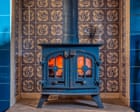
Residential wood burning exposes children to fine particulate matter and carcinogenic compounds at levels that rival or exceed living next to a congested highway. While parents carefully filter tap water and monitor screen time, lighting a fire in a living room stove or fireplace releases massive concentrations of PM2.5—microscopic soot particles capable of bypassing the lungs' natural defenses and entering the bloodstream. Recent epidemiological research confirms that the cozy aesthetic of a wood fire carries a severe biological cost, triggering asthma, impairing lung development, and introducing neurotoxic pollutants directly into the indoor spaces where children spend the vast majority of their winter hours.
For decades, public health messaging around air pollution focused almost exclusively on tailpipes and smokestacks. We built regulations around catalytic converters and industrial scrubbers, assuming that once the front door closed, our families were safe from the gray haze of the modern city. That assumption has collapsed under the weight of indoor air quality monitoring.
The Chemistry of the Living Room Fire
Wood is not a clean fuel. No matter how well-seasoned the oak or how modern the cast-iron stove, burning biomass is an inherently incomplete combustion process. When cellulose and lignin burn, they do not simply turn into harmless water vapor and carbon dioxide. They fracture into a complex soup of hundreds of chemical compounds.
The primary culprit is fine particulate matter, specifically particles smaller than 2.5 micrometers in diameter. To put that scale into perspective, a single human hair is roughly 70 micrometers wide. You could line up nearly thirty PM2.5 particles across the width of one hair. Because they are so small, these particles do not get trapped by the mucus and cilia in the nose and throat. They travel deep into the alveoli, the tiny air sacs in the lungs where oxygen transfers into the blood.
Once there, the body treats them like an invading pathogen. The immune system mounts an inflammatory response. Over days, weeks, and winters, this chronic inflammation scars lung tissue and stiffens blood vessels.
Alongside the soot comes a cocktail of volatile organic compounds and polycyclic aromatic hydrocarbons (PAHs). Many PAHs are known human carcinogens. Benzene, formaldehyde, and acrolein also pour off the logs. Even if you cannot smell smoke in the room, these invisible gases and ultrafine particles leak through stove door seals, draft backward down chimneys during pressure changes, and linger in the air long after the embers have turned to ash.
Why Children Absorb the Worst of the Damage
A child is not a small adult. Physiologically, children are uniquely vulnerable to airborne toxins, and their daily habits compound the risk.
First, consider the mechanics of breathing. Children have a higher resting metabolic rate than adults, which means they breathe faster. Relative to their body weight, a child inhales significantly more air—and therefore more pollutants—than a parent sitting on the exact same sofa. When a stove is burning, a toddler playing on the living room rug is taking in a concentrated dose of particulate matter per pound of body mass.
Second, their respiratory systems are still under construction. Human lungs continue to develop well into adolescence. The alveoli multiply rapidly during the first several years of life. Exposing these delicate, growing structures to caustic soot and inflammatory gases stunts their capacity. Studies tracking children in communities with heavy residential wood use consistently show reduced lung function growth, an effect that mirrors the damage seen in children raised adjacent to major freight corridors.
Third, children spend their evenings on the floor. Heavy particulate matter and settled ash accumulate in dust. Crawling infants and young children stir up this dust and ingest it through normal hand-to-mouth behavior. The exposure is not merely respiratory; it is dermal and digestive.
The Illusion of the "Clean" Modern Stove
Speak to any stove manufacturer or fireplace retailer, and you will hear a confident defense of modern technology. They will point to catalytic combustors, secondary burn tubes, and strict certification standards from agencies like the Environmental Protection Agency. They argue that the smoking, inefficient fireplaces of the 1970s are gone, replaced by high-efficiency heating appliances.
The laboratory numbers look great. Real-world living rooms tell a different story.
Certification tests happen under idealized conditions. Technicians use standardized, kiln-dried wood with exact moisture content, stacked precisely, burned at optimal temperatures. In a real home, things go wrong. Homeowners burn wood that was split too late and still holds 25 percent moisture. They damp down the air intake before going to bed so the fire smolders slowly through the night—a practice that starves the fire of oxygen and causes emissions to skyrocket.
Even a certified, properly operated wood stove creates a massive spike in indoor PM2.5 every single time the door is opened to add a log. In a hypothetical scenario where a parent opens a stove door for just thirty seconds to reload, the negative pressure created by a warm chimney can momentarily fail, spilling a plume of invisible smoke into the room. Air quality monitors placed in homes with wood stoves routinely record spikes that exceed the worst smog days in major industrial cities, lasting for hours before the home's ventilation slowly clears the air.
The Neighborhood Feedback Loop
The problem does not stay inside the house that lights the fire. Residential wood smoke is a classic tragedy of the commons.
During winter temperature inversions—a common meteorological phenomenon where a layer of warm air traps cold air near the ground—smoke from chimneys does not rise and disperse. It sinks. It settles into valleys and suburban neighborhoods like a heavy blanket.
Because modern homes are built to be energy-efficient, they are tightly sealed, yet they still exchange air with the outside through mechanical ventilation, bathroom fans, and microscopic gaps around windows. When a neighborhood has a high density of wood stoves, the outdoor air becomes saturated with PM2.5. That polluted outside air is then drawn directly into neighboring homes.
You can choose never to burn a single log, yet your children can still suffer the respiratory equivalent of living next to a six-lane highway simply because three houses on your block heat with wood. Public health data from regions like the Pacific Northwest, the northeastern United States, and rural parts of the United Kingdom repeatedly demonstrate that during winter evenings, residential wood combustion is the single largest source of particulate air pollution, outstripping all vehicle traffic combined.
Marketing Aesthetics Over Public Health
How did a known respiratory hazard maintain such a squeaky-clean reputation? The answer lies in deep-seated cultural conditioning and clever marketing.
Fire is primal. For millennia, the hearth meant survival, warmth, and community. Today, lifestyle brands, real estate agents, and home renovation shows sell the wood-burning fireplace as the ultimate symbol of domestic comfort and rustic luxury. Wood is marketed as "natural," "renewable," and "carbon-neutral."
Consumers conflate "natural" with "harmless." Arsenic is natural. So is asbestos. The fact that a tree grew in a forest does not make its smoke benign when inhaled into human lungs.
Furthermore, because wood smoke smells nostalgic to many people, our brains do not trigger the same disgust response we feel when standing behind a idling diesel bus. We tolerate—and even pay a premium for—an indoor pollution source that would prompt immediate outrage if it came from a nearby factory. Regulators have been slow to intervene because policing what people burn inside their own homes is politically toxic. Telling a homeowner they cannot use their fireplace feels like an intrusion into private domestic life, so governments rely on voluntary burn bans and weak educational campaigns that rarely reach the parents lighting the match.
Navigating the Gray Areas of Rural Heating
To dismiss wood burning entirely as a vanity project for affluent suburbanites is to ignore economic reality. For millions of families in rural, off-grid, or low-income areas, wood is not an aesthetic choice. It is the only affordable way to survive the winter.
When heating oil prices surge or electric grids fail during ice storms, a wood stove is a lifeline. Telling a struggling family in northern New England or rural Canada to simply stop burning wood without offering a viable, subsidized alternative is neither practical nor fair.
In these contexts, harm reduction becomes the only realistic strategy. The difference between burning wet, unseasoned pine in an old, leaky stove versus burning properly seasoned hardwood in a modern, sealed unit is enormous. While neither is completely safe for indoor air quality, moving away from wet wood and unsealed hearths cuts particulate emissions dramatically.
Practical Defenses for the Modern Home
If you have children in the house and a wood-burning appliance on the property, eliminating the combustion source is the only way to guarantee zero exposure. Converting an open wood fireplace to a direct-vent gas insert—which draws air from outside and exhausts all combustion byproducts directly outdoors through a sealed pipe—removes the indoor particulate burden entirely. Electric heat pumps offer an even cleaner alternative, decoupling home heating from combustion altogether.
If removing the stove is not financially or logistically possible, you must treat the appliance like an industrial hazard inside your living space.
- Measure the air, do not trust your nose. Buy a dedicated indoor air quality monitor that specifically tracks PM2.5. Human senses are terrible at detecting dangerous levels of fine particulates. Seeing the numbers spike on a digital screen when you reload the stove will fundamentally change how you operate it.
- Run high-grade HEPA filtration continuously. Place portable air purifiers equipped with true HEPA filters in the room with the stove and in your children's bedrooms. Do not rely on the thin fiberglass filter in your home's central furnace; those are designed to protect the HVAC equipment, not human lungs.
- Master the fuel and the draft. Never burn garbage, painted wood, or damp logs. Use a moisture meter—a cheap tool available at any hardware store—to verify that split firewood has a moisture content below 20 percent before bringing it inside. Open the damper fully before opening the stove door to reload, giving the chimney maximum draft to pull smoke upward rather than into the room.
- Keep the hearth zone clear of infants. Establish a strict physical perimeter around the stove. Beyond the obvious burn hazards, the floor immediately surrounding a wood stove has the highest concentration of settled ash and heavy particulates. Wet-mop these floors regularly rather than sweeping, which simply launches toxic dust back into the breathing zone.
The visual warmth of a fire is powerful, and breaking the habit of lighting one feels like giving up a cherished winter ritual. Yet the biological data is unambiguous: when you bring an open combustion process inside your home, your children's lungs become the filter.