The air in the boardroom of a glass-and-steel tower in Abu Dhabi doesn't feel like the desert. It feels like pressurized wealth. Outside, the heat is a physical weight, but inside, the climate is a precise $21^\circ\text{C}$, maintained by the very energy the men in the room trade like gods. For decades, this room had a rhythm. It was a synchronized dance with Riyadh, a partnership that dictated the pulse of the global economy.
Then, the music stopped.
The United Arab Emirates (UAE) is no longer content to be the quiet junior partner in the Organization of the Petroleum Exporting Countries (OPEC). If you look closely at the friction points—the sudden policy shifts, the icy silences, and the whispers of a total exit from the cartel—you find that this isn't just about oil production quotas. It is about a fundamental survival instinct. The UAE has realized that the old alliance with Saudi Arabia is becoming a cage, and the bars are being reinforced by an unexpected pressure from Islamabad.
The Weight of the Crown
Imagine a long-distance runner forced to wear lead weights because his training partner is feeling sluggish. That is the current reality for the Emirati energy sector. While Saudi Arabia, under the aggressive leadership of Crown Prince Mohammed bin Salman, pushes for high prices to fund its trillion-dollar "Vision 2030" projects, the UAE has a different problem. They have spent billions expanding their production capacity. They want to sell. They want to flood the market while the world is still buying.
The UAE can now pump over four million barrels a day. OPEC, led by the Saudi-Russian alliance, tells them they must stay closer to three million. Every day that capacity sits idle is a day of lost relevance in a world rapidly pivoting toward green energy.
But why is Riyadh so stubborn? Why risk alienating their closest neighbor? The answer lies in the shifting sands of regional loyalty and a desperate need for a stable, high-priced barrel. Saudi Arabia isn't just building a city called Neom; they are trying to buy a future. To do that, they need total control over the market. They need compliance.
The Islamabad Complication
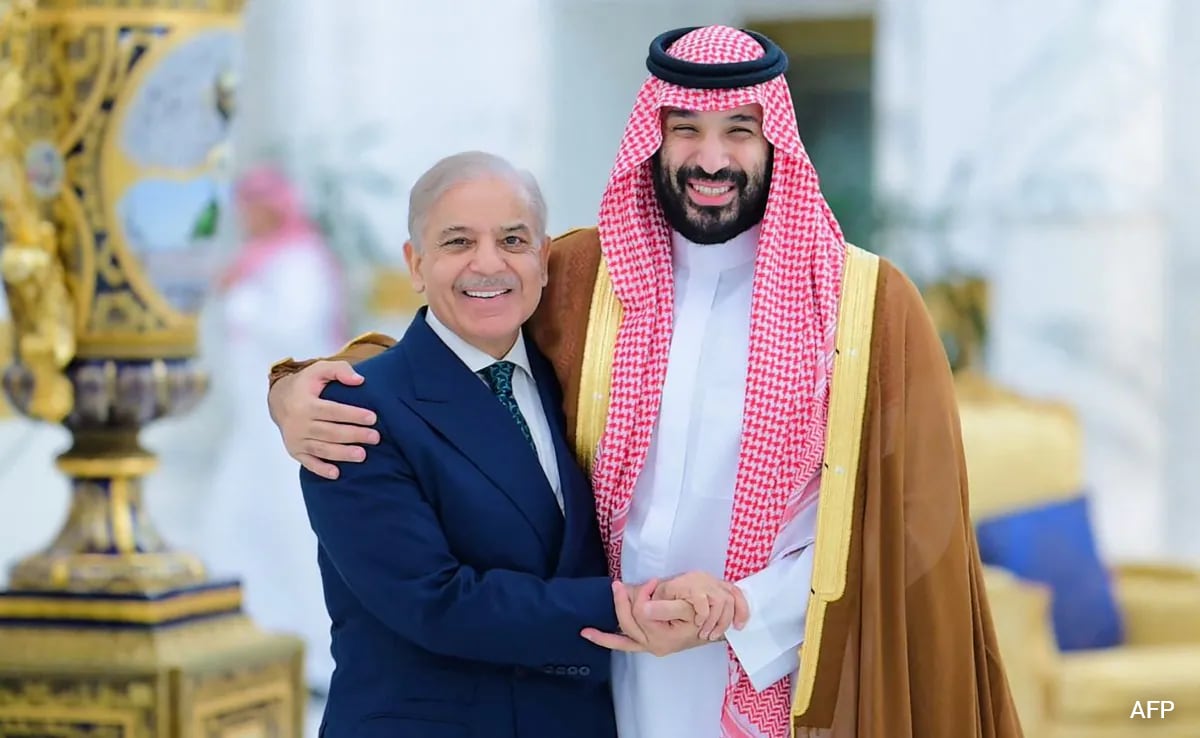
This is where the story takes a turn into the shadows. For decades, the relationship between Saudi Arabia and Pakistan was a simple transaction of "oil for brawn." Saudi Arabia provided the fuel and the funding; Pakistan provided the military expertise and the strategic depth. It was a bedrock of Saudi security.
Recently, that bedrock has started to crumble.
Pakistan is drowning in debt. It is a nation of 240 million people standing on the edge of an economic abyss. Saudi Arabia has been their primary lifeline, providing multi-billion dollar bailouts and deferred oil payment schemes. But Riyadh’s patience is wearing thin. They are demanding structural reforms that the Pakistani government is terrified to implement.
The UAE sees this entanglement and feels a cold shiver. They see Saudi Arabia potentially dragging the entire regional economic bloc into the quagmire of South Asian instability. If Saudi Arabia prioritizes propping up a failing state in Islamabad over the economic growth of its Gulf neighbors, the UAE's path becomes clear.
They cannot afford to be the bank for Riyadh's geopolitical charity.
A Divorce of Ambition
Consider the sheer audacity of the UAE’s "Dubai Model." It is a vision of the future that doesn't rely on being a gas station. They want to be the world's logistics hub, its tourism playground, and its tech incubator. To fuel that transition, they need cash now.
Not in 2030. Now.
The tension reached a breaking point during the recent OPEC+ negotiations. The Emiratis stood their ground, refusing to extend production cuts unless their "baseline"—the number from which their cuts are calculated—was raised to reflect their true power. It was a public challenge to Saudi authority. It was a declaration of independence.
The Saudis responded with a series of economic jabs. They changed their import rules to exclude goods made in "free zones"—a direct hit to Dubai’s manufacturing heart. They demanded that international companies move their regional headquarters to Riyadh or lose out on government contracts.
The "brotherly" relationship is being replaced by a cutthroat competition for the same pool of global investment.
The Invisible Stakes
If you are a commuter in London or a truck driver in Ohio, this boardroom drama feels distant. It shouldn't. The UAE leaving OPEC would be the most significant shift in global energy since the 1970s. It would likely signal the end of the cartel's ability to fix prices.
Without the UAE, the "O" in OPEC becomes a lot smaller.
If the UAE exits, they are free to pump at will. Prices would likely drop in the short term, but the long-term volatility would be staggering. We are looking at a world where the old anchors are being pulled up, and the ships are drifting into uncharted waters.
The UAE is betting on a "post-oil" world by selling as much oil as possible while they still can. It is a paradox of survival. They are racing against time, against the climate, and against a Saudi neighbor that seems increasingly distracted by the spiraling crisis in Pakistan.
The Breaking Point
The human element here is the pride of princes. We often mistake geopolitics for a game of chess, but it is more like a family feud at a funeral. Everyone knows what is at stake, but no one wants to be the first to blink.
The UAE’s leadership looks at the map and sees a Saudi Arabia trying to reinvent itself in the image of Dubai, while simultaneously tethered to the instability of Islamabad. They see a partner that is becoming a competitor, and a cartel that is becoming a constraint.
A man who has built a skyscraper doesn't want to be told he can only use the first five floors.
The UAE has the tools, the technology, and the hunger. They have spent fifty years preparing for the moment the oil runs out, only to realize the real danger is being told they aren't allowed to sell it before the world stops wanting it.
The silence between Abu Dhabi and Riyadh is growing louder. It is the sound of a tectonic shift. It is the sound of a golden cage being dismantled from the inside, piece by piece, by the very people it was built to protect.
The desert is indifferent to the names of the nations that claim it. It only knows who has the water, and who has the power to keep the lights on. Right now, the UAE is betting that they are better off standing alone in the heat than suffocating in the shadow of a kingdom that is looking the wrong way.
The next time you see the price of a gallon of gas tick up or down, don't look at the ticker. Look at the map. Look at the distance between a skyscraper in Dubai and a palace in Riyadh. That gap is where the future is being decided.
The golden cage is open. The only question left is how fast the bird will fly.