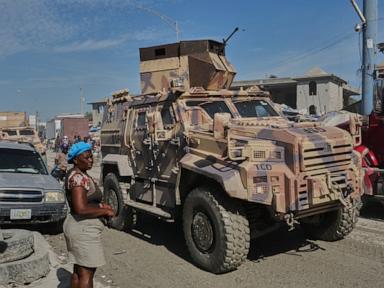
When gangs in Haiti ambushed an armored vehicle carrying four Salvadoran aviation technicians in Croix-des-Bouquets on October 18, 2026, they didn't just trigger the biggest attack since the Gang Suppression Force began operating. They exposed how fragile, fragmented, and improvised Haiti's outside security response really is.
Look at what happened that Sunday in the village of Santo near Port-au-Prince. Armed men hit the vehicle with explosives, set it on fire, and abducted the four Salvadoran technicians assigned to the UN-authorized Gang Suppression Force (GSF) after they had visited a market in a gang-controlled "red zone" without enough security for the terrain. Within days, El Salvador's President Nayib Bukele turned a hostage crisis into a massive unilateral deployment. Roughly 2,000 to 2,500 Salvadoran troops and seven helicopters moved into the picture—surpassing the size of the GSF itself, which had only around 1,500 personnel on the ground compared to its 5,500-troop ceiling.
Here is the blunt truth that basic breaking-news updates miss. Sending more armed men into Haiti isn't new, and it won't stick on its own. Haiti is dealing with roughly 1.5 million displaced people, around 5.8 million facing acute hunger, and a political vacuum stretching back to the July 2021 assassination of President Jovenel Moïse. You can't shoot your way out of collapsed state institutions when gangs control swathes of the capital and key transit corridors.
How a Single Attack Triggered a Parallel Intervention
Most people assume foreign troops in Haiti all answer to the same command structure. Honestly, that's not how it works right now.
Before the October 18 ambush, El Salvador already had a small contingent—around 78 to 124 personnel—working alongside the GSF, which replaced the underfunded Multinational Security Support mission after UN Security Council Resolution 2793. When the four technicians went missing in territory tied to powerful armed groups like Chèn Méchan and 400 Mawozo, Bukele initially framed the response as a targeted rescue operation and warned gangs he would wipe them out the way he cracked down on gangs back home.
Then the scope widened fast. Backed by logistics and transport support involving the United States, Colombia, and the Dominican Republic—and following a call in which U.S. President Donald Trump reportedly told Bukele to "do what you have to do"—thousands of Salvadoran troops arrived. Analysts at the International Crisis Group point out that deploying a large unilateral force outside UN monitoring channels raises serious questions about command, deconfliction, and long-term accountability.
Think about how messy that is on the ground. You have Haitian National Police units, the Armed Forces of Haiti, the UN-backed Gang Suppression Force, Bukele's surge troops, and private contractors including Vectus Global, a firm linked to Blackwater founder Erik Prince. Even Salvadoran nationals have ended up connected to more than one armed actor in the theater. When too many armed groups operate in tight urban neighborhoods without tight coordination, the risk of friendly-fire incidents and civilian harm climbs sharply.
Why Gangs Are Pushing Back Harder Than Ever
If you're wondering why gangs would risk a direct confrontation with foreign soldiers, put yourself in their shoes. To armed leaders like Wilson Joseph of 400 Mawozo or Krisla, ceding ground without a fight means losing territory, extortion revenue, and leverage.
The ambush in Croix-des-Bouquets wasn't random street crime. Analysts and aid workers have noted that seizing foreign personnel in a contested zone sends a loud message: gangs can still strike back, force negotiations, or test the resolve of outside forces. Even after helicopters and armored columns hit gang strongholds and key corridors like Martissant—where police reported at least 34 suspected gang members killed in a November raid—gangs haven't simply evaporated.
There's also a geographic reality people overlook. Port-au-Prince and surrounding communes like Croix-des-Bouquets and Martissant aren't open desert battlefields. They're dense, crowded neighborhoods where fighters can blend in, slip between alleys, and use civilians as cover. A helicopter strike or armored sweep can knock down a compound or clear a road for a day. Holding that ground week after week is a completely different beast.
What El Salvador's Crackdown Gets Right and Wrong
Bukele's popularity among many Haitians—and across parts of the Haitian diaspora—is easy to understand. When you've lived under gang checkpoints, kidnappings, and displacement for years, seeing decisive action and thousands of troops arrive in weeks feels like movement after years of paralysis. Videos of crowds cheering Bukele and his soldiers show real frustration with slow international promises.
Still, comparing Haiti to El Salvador is a stretch. El Salvador's gang crackdown happened inside Bukele's own country with national police, courts, and prisons under his domestic control, alongside sweeping emergency measures that critics say trampled civil liberties. In Haiti, Salvadoran troops are guests operating in a foreign sovereign state with a fragile transitional government, a police force facing deep-rooted corruption and criminal ties, and preparations underway for long-delayed elections.
As analysts at the Council on Foreign Relations have highlighted, a "clear" operation without a credible plan to "hold" neighborhoods and "build" local institutions leaves a vacuum. Worse yet, heavy reliance on explosive drones and rapid offensives has already carried a steep human toll. UN reporting has documented scores of civilian deaths—including children—tied to drone strikes over a multi-month period, while armed clashes continue to uproot families.
A few core tensions define where this crisis stands right now:
- Speed vs. coordination: Fast deployments bring immediate firepower, yet rushing troops in without shared rules of engagement and deconfliction creates confusion between local police, GSF contingents, and bilateral forces.
- Tactical gains vs. lasting control: Pushing gangs out of a corridor or compound matters, especially around routes connecting the capital to other regions, but gangs regroup if state authority doesn't follow behind.
- Public relief vs. civilian risk: Many residents welcome pressure on predatory gangs, yet intense urban firefights and drone strikes put innocent bystanders directly in harm's way.
- Short-term rescue vs. open-ended mission: Salvadoran officials have pointed to recovering the missing technicians as a trigger for withdrawal, while Haitian officials have pushed for broader help against gangs. That mismatch makes exit planning tricky.
Practical Ways to Track What Happens Next
If you're following Haiti's security crisis and want to cut through viral clips and political spin, focus on concrete indicators rather than dramatic headlines.
- Watch corridor reopenings, not just raids: A single raid makes headlines, but sustained movement along vital routes like Martissant and roads into Artibonite shows whether access is actually changing.
- Check UN and independent human rights tallies: Compare official claims from any side against UN human rights monitoring and humanitarian updates on displacement, hunger, and civilian casualties.
- Track Haitian institutional reform: Look for real progress on vetting police units, curbing corruption, and building a unified command before foreign troops eventually scale back.
- Follow official mandate and deployment updates: Pay attention to UN Security Council decisions, troop rotations, and formal agreements between Port-au-Prince and troop-contributing nations rather than relying solely on social media posts.