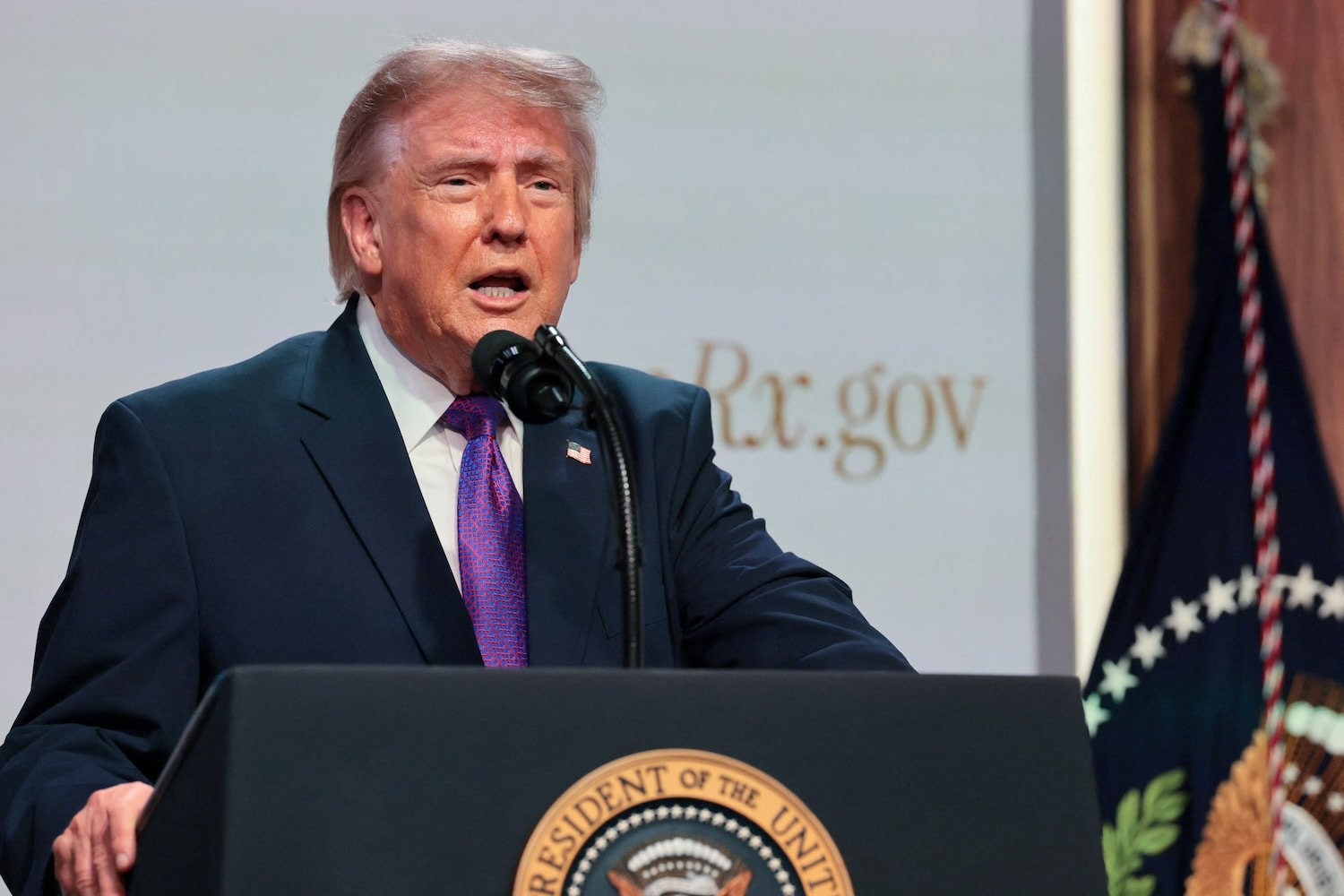
The global energy market just received a violent reminder that geopolitical stability is often a house of cards built on the shifting sands of rhetoric. When President Donald Trump signaled that a new nuclear agreement with Iran was largely negotiated following a flurry of high-level discussions with Gulf leaders and Israeli Prime Minister Benjamin Netanyahu, the immediate reaction was not one of quiet optimism. It was a liquidation. Crude oil prices didn't just dip; they plummeted 7% in a single trading session, wiping out billions in market valuation as traders scrambled to price in a world where Iranian barrels return to a saturated market.
This sudden collapse exposes the fragile relationship between White House diplomacy and the algorithms that dictate global commodity prices. For months, the "risk premium" associated with Middle Eastern tensions kept oil prices artificially buoyant. The moment that premium evaporated, the underlying reality of oversupply and weakening demand was laid bare.
The Backroom Mechanics of the New Deal
Diplomacy at this level is never a straight line. The path to this "largely negotiated" status involved a delicate balancing act between historical rivals. By engaging directly with the UAE and Saudi Arabia before finalizing terms with Tehran, the administration sought to neutralize the primary opposition to any Iranian thaw.
The strategy was simple. Offer the Gulf states enhanced security guarantees and advanced military hardware in exchange for their silence on a revised nuclear framework. Netanyahu’s involvement was the final piece of the puzzle. For Israel, a deal that includes stricter oversight on ballistic missiles and regional proxy funding is a bitter but perhaps necessary pill to swallow if it prevents an immediate nuclear breakout.
However, the market doesn't care about the nuances of regional security. It cares about volume.
Why 7 Percent Matters
A 7% drop in oil prices is not a standard fluctuation. It is a structural break. When crude falls that sharply, it triggers automatic sell orders and margin calls that accelerate the downward spiral.
The primary driver here is the anticipated end of secondary sanctions. If Iran is allowed to legally export its full capacity of roughly 2.5 million barrels per day, the current OPEC+ production cuts become almost irrelevant. The world is already facing a projected surplus in the coming quarters. Adding Iranian volume into that mix creates a glut that could push prices into a tailspin not seen since the early days of the pandemic.
The Saudi Dilemma
Riyadh now finds itself in an impossible position. For years, the Kingdom has shouldered the burden of production cuts to keep prices near $80 a barrel—the "sweet spot" needed to fund their ambitious Vision 2030 projects. If Trump successfully re-integrates Iran into the global economy, the Saudis lose their leverage.
They cannot cut further without losing significant market share to Tehran and the United States. Yet, if they open the taps to compete, they tank the price and bankrupt their own domestic transformation. The silence from the Saudi energy ministry following the announcement speaks volumes. They are likely calculating whether a strategic partnership with a Trump-led Washington is worth the sacrifice of their primary revenue stream.
The Invisible Hand of the US Shale Patch
While the headlines focus on the Middle East, the real pressure is being felt in West Texas. American shale producers have become the world’s swing producers, but they are disciplined. They have promised shareholders returns over growth.
A 7% drop puts many planned projects near the break-even point. If prices stay at these levels, US production growth will stall. This creates a strange paradox. A deal intended to stabilize the Middle East could inadvertently cripple the American energy sector, making the US more dependent on foreign oil once again.
The Netanyahu Factor and Domestic Pressure
Benjamin Netanyahu’s public alignment with this negotiation is perhaps the most shocking development for long-term observers. Usually the loudest critic of any Iranian engagement, Netanyahu appears to have traded his opposition for a "red line" guarantee.
Sources within the diplomatic circles suggest that the new deal includes a "snapback" mechanism that is far more aggressive than the 2015 iteration. If Iran deviates by even a fraction, sanctions return automatically without a UN Security Council vote. This gives Netanyahu the political cover he needs at home, but it leaves the oil market in a state of permanent anxiety. The "largely negotiated" deal is only as good as the next IAEA inspection report.
The Logistics of Re-entry
It is a mistake to think Iranian oil will hit the water tomorrow. The infrastructure has been neglected. Tanker fleets are aging, and many wells have been choked back for years.
- Refining hurdles: Many global refineries have shifted their "diet" away from Iranian heavy crude. Re-tooling takes time and capital.
- Insurance and Banking: Even if sanctions are lifted, Western banks are notoriously "once bitten, twice shy." Establishing the credit lines necessary for multi-million barrel transactions will take months, not weeks.
- The Shadow Fleet: Iran has been selling oil to China through a "shadow fleet" of ghost tankers for years. A formal deal merely moves these transactions into the light. It doesn't necessarily mean every barrel is "new" to the global supply.
The Geopolitical Ripple Effect
If the "largely negotiated" deal holds, it fundamentally alters the power dynamics of the 21st century. It signals a shift away from the "maximum pressure" campaign toward a pragmatic, transactional realism.
Russia, currently relying on high oil prices to fund its regional ambitions, stands to be the biggest loser. A flooded oil market hurts Moscow just as much as it hurts Tehran, but without the benefit of being the one newly invited to the party. We are seeing the beginning of a massive realignment where energy is used as the ultimate tool of pacification.
The Technical Breakdown of the Crash
From a technical analysis perspective, crude broke through its 200-day moving average with high volume. This is a bearish signal that usually attracts institutional short-sellers.
The market had built in a "war premium" based on the threat of a direct Israel-Iran conflict. Trump’s announcement effectively deleted that premium in a single afternoon. When the fear of a supply disruption evaporates, investors look at the balance sheet. And the balance sheet shows a world that is producing more oil than it can consume.
Inflation and the Consumer
There is a silver lining for the average citizen. A 7% drop in crude eventually translates to lower prices at the pump. This is a massive "tax cut" for the middle class and a cooling agent for persistent inflation.
For an administration heading into a volatile political cycle, cheap gas is better than any campaign ad. It’s hard to ignore the timing of these "largely negotiated" talks. Geopolitics is often just domestic policy with a passport.
The Fragility of the "Almost" Deal
The phrase "largely negotiated" is doing a lot of heavy lifting. In the world of high-stakes diplomacy, the last 5% of a deal often takes 95% of the effort. We have seen this movie before. A tweet or a stray comment can derail months of back-channel work.
If the talks fail or if Iran demands further concessions on their "peaceful" nuclear program, that 7% drop will be recovered in a heartbeat. Traders are currently betting on the man, not the document. They are betting that Trump’s personal brand of deal-making can overcome decades of institutional animosity.
Real-world Implications for Energy Stocks
Investors in major oil firms and exploration companies are now facing a period of extreme volatility. The dividends that have sustained the sector are safe for now, but the capital expenditure budgets for the next year are being rewritten tonight.
If the price of Brent settles in the $65-$70 range, the era of "easy money" for the energy sector is officially over. Companies will have to prove they can operate with extreme efficiency, or they will be swallowed by larger competitors in a new wave of consolidation.
The market has spoken. It believes the deal is real, it believes the oil is coming, and it believes the era of $100 crude is a distant memory. The only question remains whether the political reality can catch up to the market's conviction.
Watch the storage levels in Cushing and the tanker movements in the Strait of Hormuz. The charts tell the story that the politicians haven't finished writing.