Lina sits in a darkening living room in Beirut, watching the amber glow of a single battery-powered bulb flicker. She is not a hero. She is a woman trying to charge a laptop so she can finish a freelance project for a client in Dubai who doesn't care that her city's power grid is a ghost. Outside, the hum of private generators—the expensive, throat-burning lungs of the city—fills the air with a metallic tang.
People call Lina resilient. They call her neighbors resilient. They write op-eds in foreign journals about the "unbreakable spirit" of the Lebanese people, marvelling at how they can dance in rooftop bars while a port explosion destroys half the city, or how they swap currency tips like sourdough recipes while the lira loses 98% of its value.
But if you ask Lina, she will tell you that resilience feels a lot like being slowly suffocated. It feels like a cage built out of your own ability to endure.
The Romanticization of a Slow Motion Wreck
There is a specific kind of violence in being praised for your suffering. When the international community or the local political class applauds Lebanese resilience, they are effectively giving themselves permission to do nothing. It is a convenient narrative. If the people are "invincible," then the urgency to fix the structural rot disappears.
Consider the "miracle" of the Lebanese banking system, once the Switzerland of the Middle East. It wasn't a miracle; it was a pyramid scheme hidden behind mahogany desks. When it collapsed in 2019, it didn't just take the "excess" of the wealthy. It took the life savings of schoolteachers, the retirement funds of nurses, and the tuition money for students abroad.
In a healthy society, a systemic collapse of this magnitude leads to fundamental change. In Lebanon, it led to a new vocabulary of survival. People stopped using banks and started carrying backpacks full of cash. They learned the daily "black market" exchange rate before they learned the weather. This wasn't an act of strength. It was a desperate, exhausting adaptation to a heist.
We have confused the reflex to keep breathing with the desire to live.
The Anatomy of an Imposed Strength
Let’s look at the invisible stakes of this endurance. Imagine a father, let’s call him Samir, standing in a pharmacy. He needs heart medication. The pharmacist tells him the price has tripled since Tuesday because the subsidy was lifted. Samir doesn't scream. He doesn't burn a tire in the street. He simply turns around, walks home, and starts calculating which meals his family can skip so he can afford the pills.
Samir is "resilient."
In reality, Samir is experiencing a physiological weathering. Chronic stress—the kind that comes from never knowing if the water from your tap is safe or if your salary will buy bread tomorrow—floods the body with cortisol. It erodes the immune system. It creates a collective trauma that doesn't manifest in dramatic outbursts, but in a quiet, simmering exhaustion.
The data bears this out. Since the 2020 port explosion, mental health professionals in Lebanon have reported a surge in "emigration trauma" and "learned helplessness." When your environment is consistently hostile, your brain eventually stops trying to change the environment and starts trying to survive the day. This isn't a character feline; it's a biological defense mechanism.
To call this "admirable" is to romanticize a crime scene.
The Luxury of Fragility
There is a profound inequality in who gets to be "fragile." In stable nations, a two-hour power outage is a scandal that leads to resignations and front-page news. In Lebanon, a twenty-two-hour outage is Tuesday.
By forcing a population to become experts in crisis management, the state robs them of the right to be ordinary. You cannot be a poet if you are busy calculating the ampere-hours of your battery. You cannot be an innovator if you are spending four hours in a petrol queue. The "resilience" so many admire is actually the theft of human potential.
The Lebanese have become the world’s most efficient "fixers." If the internet goes down, they find a workaround. If the roads are blocked, they find a goat path. If the government disappears, they form neighborhood committees. But every "workaround" is a tax on the soul. It is time and energy stolen from art, from family, from rest.
We are watching a generation grow old prematurely because they have had to carry the weight of a failing state on their individual shoulders.
The Trap of the "Phoenix" Metaphor
For decades, the city of Beirut has been compared to a phoenix, forever rising from the ashes. It’s a beautiful image. It’s also a lie.
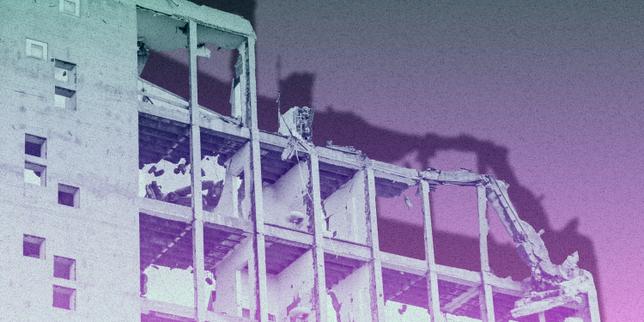
The problem with the phoenix metaphor is that it assumes the fire is inevitable. It implies that the ashes are just part of the natural cycle of things. But the fires in Lebanon—the wars, the economic collapses, the negligence that led to the 2,750 tons of ammonium nitrate sitting in a warehouse—were not acts of God. They were acts of men.
When we focus on the rising, we forget to ask who lit the match.
The narrative of the phoenix serves the arsonists. If the people will always rebuild, then the leaders can always destroy. It creates a feedback loop of trauma where the ability to recover becomes an invitation for further abuse. The more the Lebanese people prove they can handle, the more is piled upon them.
The Silent Exodus of the "Unbreakable"
If resilience were truly a choice or a badge of honor, people wouldn't be fleeing it. The most damning evidence against the "resilience" myth is the sheer number of people leaving. It is a brain drain of biblical proportions. Doctors, engineers, artists—the very people who are praised for their grit—are moving to Europe, the Gulf, and North America.
They aren't leaving because they aren't strong enough. They are leaving because they are tired of having to be strong.
They want the "boredom" of a functioning society. They want the "weakness" of being able to rely on a system rather than their own wits. They want to live in a place where they don't have to be heroes just to get through a Wednesday.
This exodus is the ultimate rejection of the resilience narrative. It is a collective statement that survival is not enough. A life defined by the absence of total catastrophe is not a life lived; it is a life managed.
The Cost of Looking Away
The danger of the resilience myth extends far beyond the borders of Lebanon. It is a blueprint for how we treat any population in crisis. We see it in the way we talk about climate refugees or victims of systemic poverty. We find a way to admire their "spirit" so we don't have to feel guilty about the systems that broke them.
But empathy without accountability is just voyeurism.
When we applaud a mother for walking ten miles to find clean water, we are participating in the erasure of the injustice that took her water away. We are focusing on the beauty of her stride instead of the horror of the distance.
Lina is still sitting in that room in Beirut. The laptop is at 40%. The light is dying. She is not thinking about her "unbreakable spirit." She is thinking about the fact that her eyes hurt from the dim light and that she misses her sister, who moved to Montreal last year.
She is not a symbol of hope. She is a person who has been forced to become a survivalist in her own home.
The next time you hear someone praise Lebanese resilience, look closer at the faces in the photos. You won't see the glow of a phoenix. You will see the heavy, shadowed eyes of people who are exhausted by the demand to be extraordinary. They don't want your admiration. They want a country where they are finally allowed to be vulnerable.
They want the right to be broken.
The world keeps waiting for the Lebanese to reach their breaking point, failing to realize that they reached it years ago, but were simply never given the permission to stop.