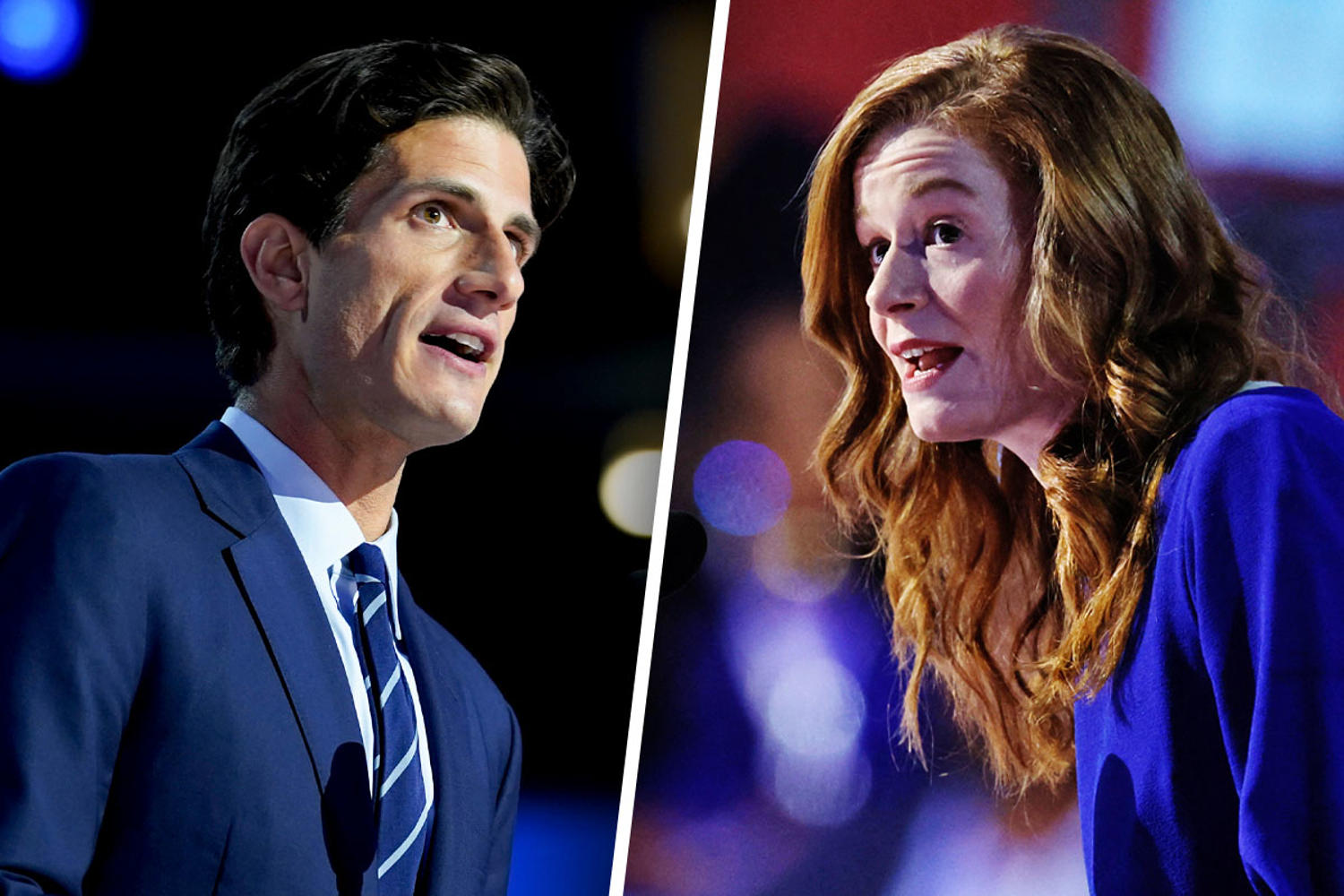
The applause inside a national political convention hall is unlike any other sound on earth. It is a physical wave, compressed by concrete walls and amplified by tens of thousands of people screaming in perfect, curated unison. In August 2024, inside Chicago’s United Center, that wave washed over a select group of young, ambitious politicians. They stood at the podium, bathed in high-definition light, teleprompters scrolling smoothly, anointed by party elders as the future of the movement. They looked like winners.
They felt like winners.
But sound waves dissipate the moment they hit the open air. Outside the arena, across the state lines and deep within the communities these rising stars hoped to represent, the applause vanished. What replaced it was a cold, stubborn reality. Over the months that followed, many of those same telegenic figures who commanded the prime-time stage found themselves staring at concession speeches rather than victory parties.
The national spotlight did not save them. In many ways, it doomed them.
The Mirage of the Main Stage
Consider a hypothetical candidate named Marcus. He is thirty-eight, a state legislator from a swing district in the Midwest, possessing the kind of easy charisma that political consultants dream about. For months, Marcus balances his time between local town halls and frantic phone calls with national organizers. Then comes the invitation: a three-minute speaking slot on Tuesday night of the convention.
When Marcus steps onto that stage, he is no longer just a local representative trying to fix rural broadband or lower county property taxes. He becomes a symbol. He is handed a script written by committee, designed to hit national talking points that fire up the party faithful from coast to coast. Every gesture is coached. Every line is tuned for a television audience in Los Angeles and New York.
For three minutes, it works perfectly. His social media following explodes. Donors from Texas and Massachusetts inundate his campaign account with twenty-dollar contributions.
Then the convention ends. Marcus flies back to his district.
The air smells different at the county fair than it does inside an air-conditioned arena filled with celebratory balloons. When Marcus walks up to a voter standing near a tractor display, the national magic evaporates. The voter does not care about the viral clip from Tuesday night. The voter sees someone who spent the last month auditioning for a national audience instead of listening to the grievances of a town where the main employer just cut its second shift.
This is the hidden tax of political stardom. The very things that make a candidate a darling of the national apparatus often alienate the exact people needed to win a local election.
The Disconnect of the Beltway Dialect
Political parties speak a language that is entirely distinct from the vernacular of daily American life. It is an intellectualized, focus-grouped dialect born in think tanks and refined in Washington committee rooms. When a rising star is pulled into the orbit of a national convention, they are forced to speak this dialect.
But back home, people are worried about grocery bills. They are worried about their children’s schools. They are worried about the quiet, terrifying realization that their paycheck does not stretch as far as it did three years ago.
When national strategists look at a campaign, they see a map composed of red and blue squares. They analyze demographic trends and historical turnout models. They view voters as data points to be shifted by targeted advertising campaigns.
The candidate on the ground, however, cannot afford to view people as data.
When you spend weeks preparing for a convention speech, you are speaking to the converted. You are feeding the beast of hyper-partisanship. That strategy works brilliantly for fundraising, but it creates a massive vulnerability in a general election. The independent voters, the politically exhausted citizens who decide close races, look at the spectacle and see a candidate who has been co-opted by the national machine. They see someone who belongs to Washington, not to them.
The Data Behind the Defeats
The numbers from recent cycles bear out this harsh reality. A significant portion of the high-profile speakers praised by pundits during the 2024 convention underperformed their polling or outright lost their bids for higher office. These were not poor candidates; many were exceptionally talented individuals with stellar legislative records.
The problem lies in the structural friction between local necessity and national expectation.
Nationalizing a local race is almost always a death sentence for a moderate or a challenger in a competitive district. It allows the opposition to paint the candidate not as a independent voice for the community, but as a rubber stamp for a national agenda. Every controversial position taken by the national party is suddenly strapped to the local candidate's back.
The money that pours in from out-of-state donors after a successful convention appearance feels like fuel. In reality, it can act as an anchor. It forces the campaign to invest in expensive television advertisements that often annoy voters rather than persuade them. It creates a campaign that is top-heavy, reliant on consultants who have never set foot in the state, while starving the grassroots infrastructure that actually moves people to the polls.
The Lonely Walk Back to Reality
There is a distinct grief in losing an election after being told you are the future of your party.
The national consultants stop calling. The out-of-state donors move on to the next bright young thing. The television cameras find a new story to chase. The candidate is left in a quiet office, surrounded by half-packed boxes and campaign signs that will eventually be thrown into a dumpster behind the headquarters.
The system is designed to consume talent. It takes local leaders who have built genuine trust within their communities, thrusts them into the meat grinder of national celebrity, and discards them when the immediate political utility has expired.
True political power in America is rarely built from the top down. It is grown slowly, stubbornly, through thousands of unglamorous conversations on front porches and in church basements. The glitter of the convention floor is an illusion. The candidates who survive are often the ones who reject the siren song of the national stage, choosing instead to remain rooted in the soil that grew them.
The lights of the United Center have long since been turned off. The stage dismantled. The speeches forgotten by all but those who delivered them. For the rising stars who lost, the lesson is written in the final vote tallies: a nation cannot be won if you lose the trust of the neighborhood.