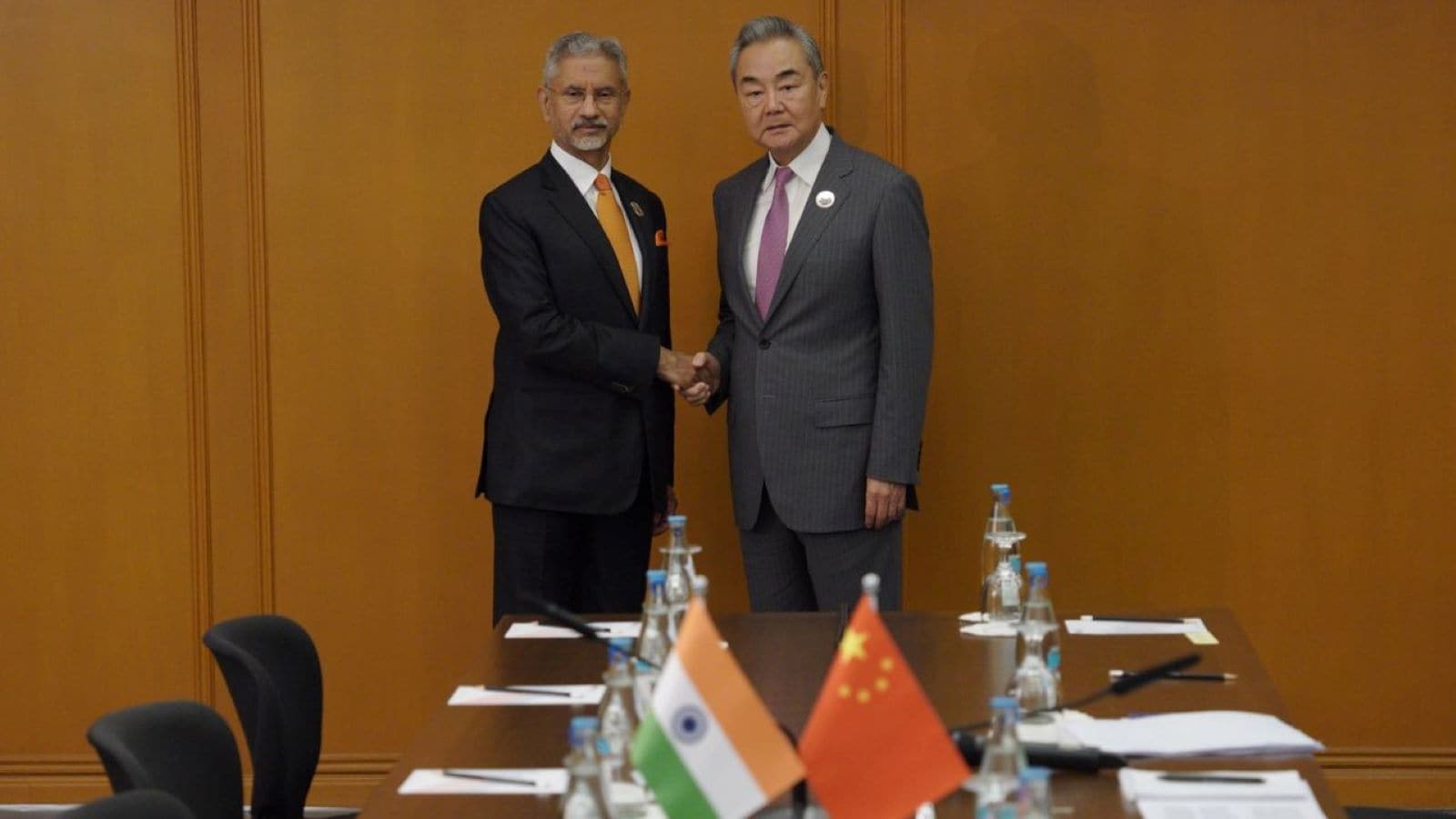
When Indian External Affairs Minister S. Jaishankar sat across from Chinese Foreign Minister Wang Yi in Manila, the official narrative was carefully calibrated. Relations between the two Asian giants, Jaishankar declared, were "gradually normalising" following high-level summits in Kazan and Tianjin. Direct flights are resuming, visa regimes are easing, and the Kailash Manasarovar Yatra is back on track. Yet behind these diplomatic pleasantries lies a far darker, asymmetrical reality. While frontline troops have stepped back from Depsang and Demchok along the Line of Actual Control, the structural tensions driving Asia's biggest geopolitical rivalry have not vanished; they have simply shifted from border outposts to supply chains and trade balances.
The official press releases paint a picture of steady, step-by-step de-escalation. Diplomatists point to the 2024 disengagement agreements as proof that the worst of the 2020 border crisis is behind us. But treating a tactical withdrawal as strategic reconciliation misses the point entirely. Beijing is playing a complex multi-front game, using minor concessions on pilgrimage routes and border trade to project stability while maintaining an iron grip on crucial economic leverage points over New Delhi. If you found value in this post, you should check out: this related article.
The Unbalanced Ledger behind Diplomatic Smiles
Trade figures tell a story that diplomatic communiqués attempt to soften. Bilateral trade between India and China recently surged past $150 billion. On paper, this looks like booming economic interdependence. Look closer, and the imbalance is staggering.
India’s trade deficit with China has widened to an unprecedented $112.16 billion. Indian manufacturing remains heavily reliant on Chinese intermediates, active pharmaceutical ingredients, and heavy industrial machinery. When Beijing quietly throttled exports of critical commodities like rare earth elements, fertilizers, and heavy tunnel boring machines over recent years, Chinese officials dismissed the disruption as accidental fallout from their broader economic war with Washington. Indian security strategists knew better. It was a shot across the bow, a reminder that China holds the keys to essential components of India’s domestic industrial push. For another look on this story, refer to the latest coverage from BBC News.
In Manila, Jaishankar explicitly brought these economic friction points to the table, stressing that market entry barriers and supply chain unpredictability directly threaten long-term stability. Beijing’s response, as usual, was to suggest that trade issues be dealt with separately from territorial claims. This division of issues is precisely what Beijing wants. By decoupling border security from commercial access, China hopes to keep selling high-value goods to India's vast consumer market without yielding an inch of long-term strategic ground in the Himalayas.
Why Depsang and Demchok Were Only the Beginning
Military disengagement along the high-altitude border is real, but it is incomplete. Pulling back patrols from specific friction points solved an immediate tactical crisis. It did not erase the massive infrastructure footprint built by the People's Liberation Army over the past six years.
Beijing has constructed permanent heliports, hardened ammunition depots, and high-speed road networks right up to the Line of Actual Control. These are not temporary installations designed for a seasonal standoff. They represent a permanent forward shift in power projection. When Jaishankar emphasized to Wang Yi that peace and tranquility along the border remain the absolute prerequisite for standard diplomatic engagement, he was signaling that New Delhi will not fall for surface-level charm offensives.
The fundamental problem is one of strategic intent. China views itself as Asia's sole preeminent power, expecting neighbors to accommodate its interests without friction. India views the continent as multi-polar, where two rising titans must coexist on equal terms. These two worldviews are fundamentally incompatible, and no amount of border management mechanisms can reconcile them without a fundamental shift in Beijing's regional strategy.
Tactical Distractions on the Global Stage
Why is China softening its posture now? The answer lies far beyond the Himalayan heights. Facing economic headwinds at home, persistent pushback from Western trade blocs, and shifting global alliances, Beijing cannot afford an active, hostile front on its southern border.
By stabilizing relations with New Delhi, China aims to reduce India's alignment with Western security frameworks. Beijing frequently urges India to see the relationship through a purely bilateral prism rather than through the lens of third nations. Yet while Beijing asks India to remain neutral in broader geopolitical rivalries, it continues to deepen ties with India's immediate adversaries and expand its maritime footprint across the Indian Ocean.
The rhetoric about mutual respect and shared Asian solidarity sounds reassuring in official transcripts. But diplomacy without structural balance is merely theater. As long as China restricts market access, uses industrial exports as leverage, and maintains militarized infrastructure along the border, any talk of normalized ties remains a fragile diplomatic fiction.