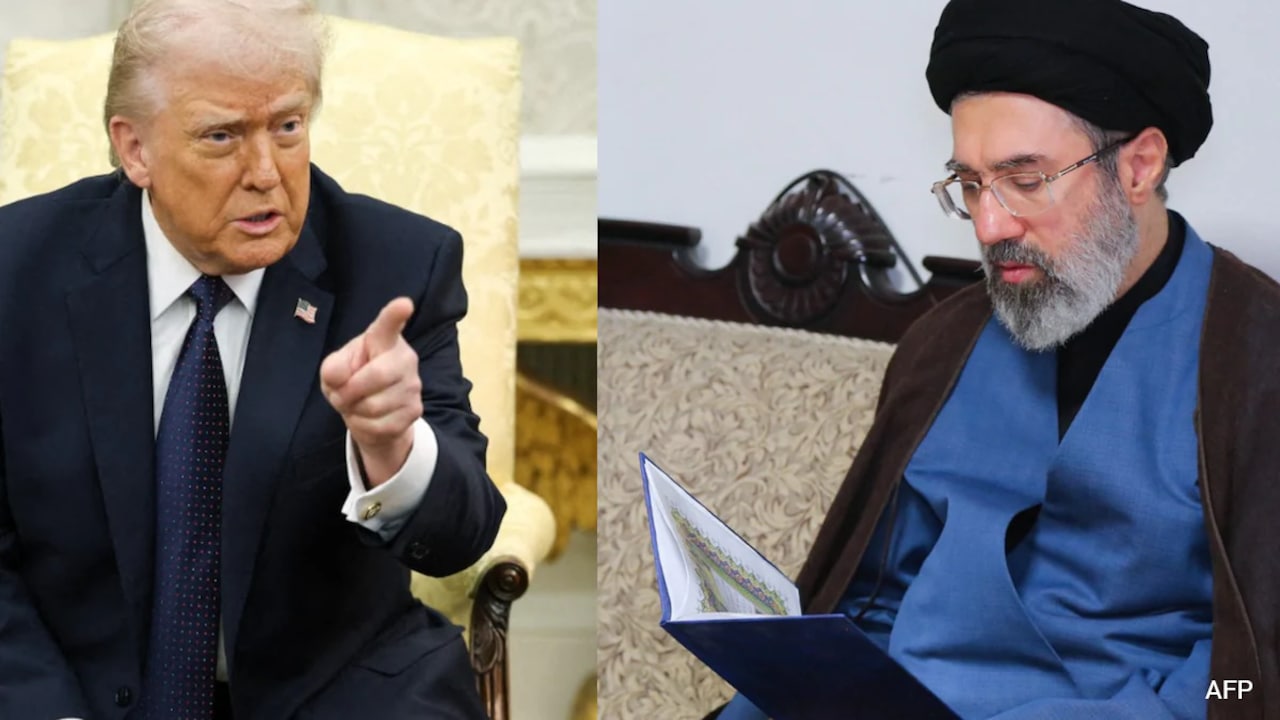
The global energy supply chain now hangs on a series of unpredictable policy shifts and nightly exchanges of cruise missiles. Washington’s sudden decision to enforce a total naval blockade on Iranian cargo while attempting to extract economic concessions from Gulf allies marks a radical departure from decades of maritime doctrine. The crisis reached a boiling point when the White House announced, then abruptly rescinded, a controversial twenty percent transit fee on commercial shipping passing through the Strait of Hormuz. Though the proposed toll vanished within twenty-four hours, the aggressive military posture remains, pushing the United States and Iran into an intense cycle of strikes that threatens to permanently disrupt the world’s most critical choke point.
This confrontation is not merely a localized skirmish over shipping lanes. It is a fundamental rewriting of global freedom of navigation principles, driven by political frustration in Washington over a failing ceasefire and a persistent domestic energy squeeze. By analyzing the tactical realities on the water and the closed-door diplomacy behind the scenes, a stark picture emerges of a conflict where economic leverage is being improvised under fire, and where the risk of total regional war has never been higher.
Gunboat Diplomacy and the Twenty-Four Hour Policy Pivot
The swift deployment of American air power against Iranian targets over recent nights was accompanied by an equally chaotic deployment of economic threats. On Monday, the administration declared the United States the official protector of the waterway, floating a twenty percent levy on all commercial cargo to reimburse the military for its security operations. By Tuesday afternoon, that plan was abandoned entirely. The administration pivoted instead to demanding massive, unspecified trade and investment packages from Gulf Arab states in exchange for keeping the corridor open.
This whiplash exposes a deep divide between geopolitical ambitions and the realities of international law. The initial toll proposal sent shockwaves through the maritime industry, adding an estimated sixteen dollars to the cost of every barrel of crude oil passing through the strait. Supertanker operators faced the prospect of a thirty-two million dollar surcharge per voyage, a penalty that would instantly upend global energy pricing.
Senior diplomats and defense officials privately scrambled to contain the fallout from Monday's announcement. The plan directly contradicted long-held American positions on free passage, positions that the administration's own cabinet members had previously defended. The U.S. military has historically patrolled international waterways precisely to prevent state actors from charging passage fees. Reversing that principle, even briefly, compromised the legal high ground Washington needed to rally international support against Iranian aggression.
The rapid retreat from the toll concept to a demand for Gulf investment shows the transactional nature of modern Western strategy in the region. Gulf states, having already endured retaliatory Iranian drone and missile strikes on their own territory, are now being asked to underwrite the American military presence financially. Riyadh and Abu Dhabi view this demand with deep skepticism. They recognize that paying a direct tribute to Washington makes them immediate targets for Tehran's regional proxies.
The Breakdown of the Memorandum
The current escalation stems from the collapse of a fragile interim agreement signed in June. Under that short-lived memorandum of understanding, Washington had temporarily lifted its previous maritime restrictions on Iranian ports. In return, Tehran agreed to allow unhindered transit through the strait without imposing its own threatened security fees for a period of sixty days.
The deal dissolved when the U.S. military advised commercial vessels to bypass Iranian-controlled waters by hugging the southern coastline of Oman. Tehran viewed this alternative routing as a direct breach of the pact, arguing that it systematically cut Iranian forces out of the agreed-upon security architecture. Iranian forces quickly responded by targeting vessels utilizing the southern track, declaring the route unauthorized and illegal.
The Legal and Economic Frictions of a Maritime Toll
Even though the twenty percent fee has been discarded, the underlying logic that birthed it remains active in policy circles. The idea that international navigation can be monetized by the dominant military power violates the United Nations Convention on the Law of the Sea. While the United States is not a signatory to the treaty, it has historically observed its provisions as customary international law. The International Maritime Organization was quick to point out that no legal mechanism exists to allow mandatory tolls for simple transit through an international strait.
The economic damage of this uncertainty is already visible. Insurance underwriters in London and Singapore have aggressively raised war-risk premiums for any vessel entering the Persian Gulf. Before the latest round of airstrikes, shipping firms had warned that restoring confidence to the market would take months. Now, with the U.S. Central Command enforcing a strict blockade on any vessel carrying Iranian cargo or heading to Iranian docks, those premiums are set to skyrocket further.
Consider the logistics of the current blockade. American naval assets must shadow, intercept, and potentially board commercial ships suspected of carrying Iranian goods. This requires a massive commitment of naval power at a time when American forces are already stretched thin across multiple global theaters. A blockade is an act of war. Enforcing it inside a narrow, heavily weaponized maritime corridor leaves little room for error.
Escalating Strikes and the Reality of Regional Retaliation
On the water, the conflict is playing out with lethal precision. The latest phase began when Iranian forces fired upon a commercial ship, attempting to shut down the waterway completely. The American response was swift and heavy. Three consecutive nights of precision airstrikes targeted Iranian drone storage facilities, coastal radar installations, and missile batteries.
Yet, the idea that American air superiority can easily neutralize the Iranian threat is a dangerous calculation. Iran's military strategy relies on asymmetric warfare. Rather than engaging the U.S. Navy directly, Tehran has launched waves of missiles and drones at regional targets, striking infrastructure in Jordan, Qatar, Kuwait, and the United Arab Emirates. Missile sirens have become a regular occurrence in Bahrain, home to the U.S. Navy’s Fifth Fleet.
This regional retaliation exposes the limits of Western deterrence. By attacking the oil infrastructure and ports of neighboring Gulf states, Iran is signaling that any attempt to strangle its economy will result in the mutual destruction of the region's economic viability. The United Arab Emirates reported that recent Iranian attacks set two commercial tankers ablaze within the strait, resulting in civilian casualties. These actions demonstrate that Tehran can exact a severe toll on global trade without ever successfully closing the strait permanently.
The conflict has also evolved beyond the simple deployment of anti-ship missiles. Iran’s Revolutionary Guard has utilized fast-attack craft and sea mines to disrupt the flow of traffic, forcing commercial captains to weigh the risks of compliance with U.S. directives against the immediate threat of Iranian sabotage. The alternative routes are narrow, congested, and thoroughly within range of Iran's mobile coastal artillery.
The Diplomatic Vacuum
Compounding the military crisis is the total absence of a viable diplomatic off-ramp. The death of Iran's long-serving Supreme Leader earlier this year triggered a complex transition of power within Tehran, leaving the political elite eager to prove their nationalist credentials through military defiance. While back-channel communications through mediators in Qatar, Oman, and Pakistan remain technically open, the substance of those talks has completely stalled.
Washington's strategy appears to rely entirely on maximum economic and military pressure to force a concession that Tehran is politically incapable of making. The administration's domestic vulnerability adds an extra layer of volatility. Facing pressure from an electorate weary of high energy costs, the White House is desperate for a decisive victory that stabilizes oil prices before upcoming elections. Yet, every cruise missile launched increases the risk premium on global crude, achieving the exact opposite of the desired economic outcome.
The current posture assumes that the Gulf states will willingly foot the bill for an American military campaign that has failed to secure their shores from incoming fire. It assumes that international shipping companies will continue to send crews into a combat zone under the vague promise of protection from a newly self-appointed guardian. Most dangerously, it assumes that Iran will capitulate under the weight of a blockade rather than striking back with the full force of its regional proxy network.
The United States has committed to a path of escalation without establishing a clear definition of victory or a coherent legal framework for its actions. As the nightly bombardments continue and the maritime blockade tightens, the global economy remains tethered to a strategic gamble where a single miscalculation by a naval commander or a drone operator could trigger an uncontrollable energy shock. You can track the rapid escalation of this maritime standoff and the diplomatic friction surrounding the aborted transit fee policy through this Strait of Hormuz Conflict Analysis which covers the military shifts directly.

