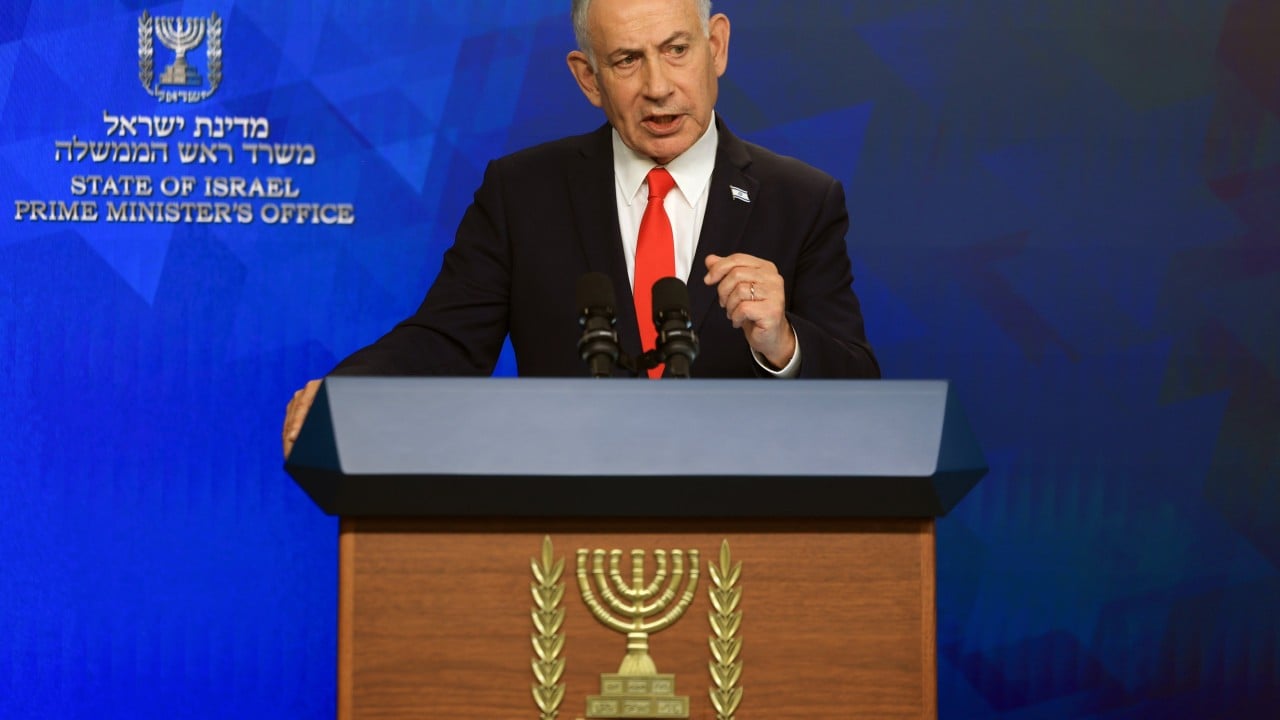
Israeli Prime Minister Benjamin Netanyahu threw a rhetorical grenade into the volatile politics of the Middle East during a televised interview on an American news network, claiming that Christian villages in southern Lebanon are actively begging for Israeli annexation. Speaking on Fox News, the Israeli leader painted a picture of minority communities looking to Jerusalem for salvation from Hezbollah militants. The reality on the ground in southern Lebanon tells a completely different story. Representatives from fifteen major border towns swiftly released a joint statement denouncing the claim as completely fabricated, reaffirming their unyielding loyalty to the Lebanese flag and the sovereignty of their own state.
This stark contradiction highlights a deeper disinformation strategy designed to justify a prolonged military occupation. By claiming that local Arab minorities are inviting foreign rule, the current Israeli government is attempting to rewrite the rules of international law and manufacture a humanitarian mandate out of thin air. An investigation into the borderlands reveals that these communities are not seeking a foreign savior. They are trapped between the anvil of an invading army and the hammer of a domestic militia they cannot control.
Rhetoric Versus the Border Reality
Netanyahu used his appearance on American television to present an narrative of regional rescue. He stated that certain communities had reached out to Israeli authorities asking to be formally absorbed into the state to escape the threat of religious execution. He did not name a single village. He offered no transcripts, no dates, and no corroborating evidence to support an assertion that would fundamentally alter the map of the modern Levant.
The response from the border region was instantaneous and furious. In Rmeish, one of the largest Christian enclaves near the southern border, Mayor Hanna al-Amil went on public television to reject the premise out of hand. He stated that even contemplating the idea of Israeli annexation was completely out of the question for the residents of the south. Local councils representing fifteen distinct towns issued a collective declaration stating they possessed neither the desire nor the legal right to alter their national borders. They explicitly anchored their identity to the Lebanese republic, despite the immense physical destruction their homes have suffered since the outbreak of full-scale hostilities on March 2.
The physical state of these villages directly contradicts the image of a protective embrace. Since the Israeli ground invasion commenced, these towns have been subjected to intense artillery shelling, aerial bombardments, and forced evacuation notices. Churches have been damaged, convents demolished, and centuries-old agricultural lands scorched by white phosphorus and heavy munitions. To suggest that a population undergoing systematic bombardment is simultaneously petitioning the occupying force for permanent citizenship is a distortion of human psychology and political reality.
The Anatomy of an Unwanted Safeguard
The strategy behind Netanyahu’s messaging relies on exploiting the complex sectarian fissures that define Lebanese society. Lebanon operates under a delicate confessional power-sharing system where Christians, Sunni Muslims, and Shiite Muslims navigate a fragile domestic equilibrium. Hezbollah, a heavily armed Shiite movement backed by Tehran, has long acted as a state within a state, often dragging the rest of the nation into conflicts without the consent of the central government in Beirut.
Israeli strategists see an opportunity within this internal friction. The Israeli military has regularly contacted Christian mayors and municipal leaders via direct phone calls, instructing them to bar any displaced people or outsiders from entering their towns. The official rationale is safety, but the operational effect is the creation of internal blockades and mutual suspicion between different religious sects.
- Sectarian Isolation: Forcing local leaders to police their own borders creates friction between Christian residents and fleeing Shiite civilians.
- Psychological Leverage: Threatening total destruction if a single militant is found in a village turns the local population into unwilling border guards for the Israeli military.
- The Protection Narrative: Presenting the Israeli Defense Forces as the exclusive shield against domestic extremism ignores the fact that Israeli artillery remains the primary source of immediate physical destruction in these specific sectors.
This tactic relies on a fundamental misunderstanding of modern Lebanese nationalism. While many Christians in the south are deeply critical of Hezbollah’s military dominance and its alliance with Iran, their opposition to a domestic militia does not translate into an invitation for a foreign invasion. The historical memory of past occupations remains vivid, and the prospect of becoming citizens of a state that has spent decades conducting military operations on their soil holds no appeal.
Historical Ghost Voices from the South
This is not the first time an Israeli administration has attempted to cultivate a cooperative Christian proxy force in southern Lebanon. During the protracted Lebanese Civil War and the subsequent Israeli occupation that lasted until the turn of the century, Jerusalem heavily funded and armed the South Lebanon Army, a predominantly Christian militia led by Saad Haddad and later Antoine Lahad. That historical experiment ended in total collapse. When Israeli forces abruptly withdrew in May 2000, thousands of local collaborators were abandoned overnight, forced to flee across the border into Israel or face trial for treason in Beirut.
The current generation of southern leaders remembers that abandonment intimately. They understand that proxy forces are inherently disposable assets utilized for temporary geopolitical leverage. The older generation tells stories of how the South Lebanon Army was used to police a buffer zone, only to be discarded when the political calculations in Jerusalem shifted.
Furthermore, the domestic political environment inside Israel today is vastly different from the era of the South Lebanon Army. Today’s coalition government features prominent far-right ministers who openly advocate for territorial expansion. Defense officials frequently claim that Israel has no permanent territorial ambitions north of the border, but senior cabinet members have publicly declared that parts of Lebanon must be completely cleared. This aggressive rhetoric makes any talk of benevolent protection sound hollow to the people living in the path of the advancing mechanized divisions.
The Real Geopolitical Utility of the Annexation Claim
If the claims of requested annexation are so easily debunked by the very people invoked, why would a prime minister make them on global television? The answer lies in the shifting diplomatic dynamics between Washington, Jerusalem, and Tehran. Following the diplomatic framework signed on June 26, which aimed to establish a roadmap for regional stabilization, Netanyahu has faced severe domestic pressure from his right-wing base, who view any negotiated settlement as an incomplete victory.
By asserting that diverse religious groups—including Druze, Sunnis, and even some Shiites, as Netanyahu claimed later in the same broadcast—are begging for Israeli intervention, the administration attempts to achieve multiple strategic objectives simultaneously:
| Target Audience | Intended Political Message | Underlying Strategic Objective |
|---|---|---|
| American Conservatives | Israel is protecting global Christianity from Middle Eastern extremism. | Securing continuous weapon shipments and diplomatic vetoes in Washington. |
| Domestic Israeli Voters | The military campaign is achieving unprecedented historic shifts in regional borders. | Deflecting attention from security failures and domestic legal troubles. |
| The Lebanese State | The central government has completely lost the loyalty of its border populations. | Weakening Beirut's leverage during ongoing border demarcation negotiations. |
This communications strategy aims to transform a controversial military occupation into a mission of liberation. It provides an easy moral narrative for foreign benefactors who may be growing weary of long-term regional conflicts and the mounting civilian casualties associated with urban warfare.
The Friction in the Diplomatic Corridor
The timing of these statements also points to growing friction between Netanyahu and the broader international community regarding the implementation of the June 26 framework agreement. While the diplomatic text outlines a gradual return of state authority to southern Lebanon, the Israeli military has continued to strike infrastructure deep within the country, targeting positions in Nabatiyeh and the surrounding heights.
Major Western powers have repeatedly warned against any rhetoric that hints at territorial expansion or the fragmentation of the Lebanese state. A stable Lebanon requires the strengthening of its official national institutions, particularly the Lebanese Armed Forces, rather than the fabrication of autonomous zones or artificial annexation requests. When a foreign power undermines the sovereign integrity of a neighbor by claiming its citizens want to defect, it complicates diplomatic efforts and hardens the resolve of armed factions who claim that total military resistance is the only way to prevent the erasure of the national border.
The people of the southern borderlands are fully aware that their villages are being used as backdrops for international political theater. They continue to remain in their homes, tending to their damaged orchards and repairing their shelled churches, refusing to allow their identity to be instrumentalized by external actors. The true story of the south is not one of a population looking for a new flag to swear allegiance to, but rather a community demonstrating a stubborn determination to survive under their own.
Netanyahu's assertion that Lebanese Christians are asking to join Israel is a fiction constructed for political consumption abroad, completely detached from the realities of a population that has spent generations defending its right to remain distinctly Lebanese.