The buzzing started years ago, a sound like a swarm of angry mechanical bees hovering just above the grey rooftops of the hutongs. For Li Wei, a freelance cinematographer who made his living capturing the sweeping symmetry of Beijing’s ancient architecture, that sound was the pulse of progress. It was the sound of a camera breaking free from the gravity of a tripod, soaring over the Forbidden City to catch the first light of dawn hitting the golden tiles.
But on May 1, the buzzing stops.
The Chinese capital is a city built on layers of control and history, a place where the air itself feels heavy with the weight of significance. Now, a new silence is settling over the skyline. Beijing authorities have finalized a sweeping ban on the sale of all unmanned aerial vehicles—drones—across the city. It isn’t a suggestion. It isn’t a temporary measure for a high-profile summit. It is a fundamental shift in how the city breathes.
The Vanishing Inventory
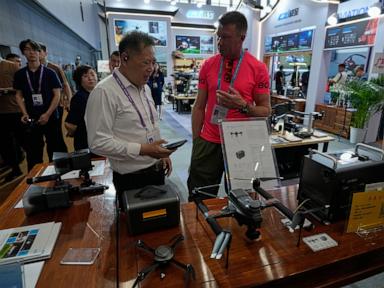
Walk into a tech mall in Zhongguancun, the district often dubbed China’s Silicon Valley, and the change is visceral. A month ago, the shelves were packed with sleek, white quadcopters. You could see the carbon-fiber props of racing drones and the palm-sized toys meant for children to crash in the park. Today, those shelves are being repurposed. Store owners move boxes of smartphones and smartwatches into the gaps where the drones used to sit.
The directive is absolute: from May 1, the commercial sale of these machines is prohibited within the city limits. It’s a logistical decapitation of a hobby that had become a hallmark of the Beijing middle class. To understand why this matters, you have to look past the hardware. You have to look at the people who used these tools to see their world differently.
Consider a hypothetical buyer named Chen. Chen is an amateur photographer who saved for six months to buy a drone that could track his movements while he cycled through the hills of Huairou. Under the new rules, Chen can’t walk into a store in his own city to replace a broken wing or upgrade his battery. The local economy for these devices—the repair shops, the boutique retailers, the hands-on showrooms—is evaporating overnight.
A Fortress in the Clouds
The official reasoning is anchored in the bedrock of "public safety and national security." Beijing is not just any city; it is the political heart of a superpower. With the proliferation of low-cost, high-altitude cameras, the line between a hobbyist’s sunset shot and a security breach became dangerously thin.
Low-altitude, slow-speed, and small-target aircraft—referred to by authorities as "three-low" flyers—pose a unique challenge to urban management. They are difficult to track on traditional radar. They can carry payloads. They can peer into windows that were never meant to be seen.
For the average resident, the sky was a playground. For the state, the sky was a vulnerability.
The ban doesn't just affect the sale; it reinforces a culture of groundedness. While existing owners might still hold their hardware, the path to entry for new flyers has been blocked. The message is clear: if you want to fly, you must do it somewhere else. But in a city as sprawling as Beijing, "somewhere else" is a long, expensive drive away.
The Logistics of the Lockout
How do you actually stop a city from buying a product that fits in a backpack? The enforcement is multi-layered. Courier services and logistics companies have been put on high alert. Shipping a drone into the city limits is becoming an exercise in futility, as packages are scanned with the same intensity as suspicious substances.
The digital fence is closing. Major manufacturers had already implemented "geofencing" software that prevented drones from taking off near sensitive locations like Tiananmen Square or the airport. But software can be bypassed by those with enough technical savvy. A physical ban on sales is a much more blunt, effective instrument. It targets the supply chain, not the pilot.
This creates a strange, bifurcated reality. Outside the Sixth Ring Road, the world continues to move toward a drone-integrated future, with automated deliveries and aerial surveys. Inside the heart of the capital, the clock is being turned back.
The Human Cost of the Silent Sky
Li Wei sits in a small cafe in the Sanlitun district, scrolling through his old footage. He points to a shot of the CCTV Headquarters, the "Big Underpants" building, captured from an angle that no human on a ladder could ever achieve.
"It gave us a god-complex for a few years," he says, his voice a mix of nostalgia and resignation. "We forgot that the ground belongs to the people, but the air belongs to the city."
For professionals like Li, the ban is more than an inconvenience. It’s a message that their medium is no longer welcome. The creative spark that comes from seeing the world from 400 feet up is being doused. There is a specific kind of loneliness that comes with being told a perspective you once had is now forbidden.
The ban also ripples into the educational sector. Beijing’s elite universities have been centers for robotics research. Student clubs that once spent weekends testing flight algorithms in open quads are now pivoting to terrestrial rovers. The transition is practical, but it lacks the magic of lift-off. You can feel the shift in the way students talk about their projects—the focus has moved from "how high" to "how far."
A City Redefined by its Limits
Every great city is defined as much by what it forbids as by what it allows. Paris forbids skyscrapers in its center to preserve its silhouette. New York forbids peace and quiet to maintain its energy. Beijing is now a city that forbids the casual eye in the sky.
This isn't just about a piece of plastic and four motors. It's about the tension between the individual's desire to explore and the collective's need for order. It’s about the realization that as our technology becomes more capable, our physical spaces become more guarded.
The ripples of this decision will be felt in the coming months as other major metropolitan areas watch Beijing’s experiment. If a city of 21 million can successfully erase a consumer category from its streets, what does that mean for the future of urban tech? Will we see "no-fly" cities become the global standard for political hubs?
As May 1 approaches, the last few drones sit in display cases like artifacts from a brief, exuberant era. Some buyers are rushing to make final purchases, while others are simply giving up the hobby altogether, unwilling to deal with the mounting paperwork and the looming threat of confiscation.
The sun sets over the West Mountains, casting long, dramatic shadows across the city. A year ago, this would have been the hour when the drones emerged, hovering like fireflies to catch the purple light. Tonight, the sky is empty. There is only the wind, the occasional bird, and the steady, rhythmic hum of the traffic on the ground, where everyone is now required to stay.
Li Wei closes his laptop. The screen goes black, reflecting the quiet, undisturbed sky outside the window.