The carpet in the James S. Brady Press Briefing Room absorbs sound. It is a dense, charcoal gray fabric designed to muffle the shuffling feet of men and women who spend their lives chasing sentences. For decades, that room has operated as an informal town square for the American experiment—a cramped, fluorescent-lit theater where power is forced to look its reflection in the eye and answer for its choices.
Then, the locks turn.
When an administration draws a thick red line across the press badge roster, barring specific networks and journalistic institutions like CNN, Politico, and media outlets operating under banners such as MS NOW from the physical grounds of the White House, the shockwave is felt far beyond Washington. This is not merely an administrative reshuffle of seating charts or pool reports. It is a fundamental renegotiation of how a democracy handles friction. It is the moment the glass house decides to pull down the blinds.
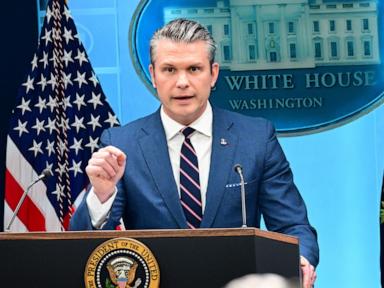
To understand the weight of this exclusion, you have to stand in that room when the air conditioning rattles and the Secretary of the Press steps up to the lectern. You have to feel the sharp, electric compression of forty reporters breathing the same recycled air, all of them armed with questions that nobody in power wants to hear.
Consider what happens in the margins of a traditional press briefing. It is rarely the polished, televised exchange at the microphone that changes the course of a day. It is the whispered clarification in the hallway. It is the split-second eye contact when an official evades a crucial statistic, prompting a reporter three rows back to lean in, tap a colleague on the shoulder, and whisper, "Ask about the memo."
When certain voices are evicted from that room, those micro-interactions vanish. The friction is removed. And power without friction is a dangerous machine.
History teaches us that discomfort is the price of admission for a free press. From the early days of partisan pamphleteers shouting insults at George Washington to the aggressive investigations of the twentieth century, American governance has never enjoyed a quiet relationship with the journalists who chronicle it. Leaders from both parties have cursed reporters in private, threatened them in public, and occasionally tried to ice them out. But a total physical bar—a calculated severing of access based on editorial stance—crosses an invisible threshold. It turns the seat of government into a private club where only friendly guests are permitted to sip the coffee.
Imagine a hypothetical morning desk editor sitting in a newsroom miles away from the White House lawn. Let's call her Sarah. For fifteen years, Sarah has tracked executive policy shifts through the lens of direct observation. She knows the cadence of the press secretary’s voice when an answer is honest versus when it is a rehearsed evasion. She knows which aides linger after the cameras click off.
Now, Sarah watches the briefing on a lagging YouTube livestream from a basement office. The camera angle is fixed, wide, and sterile. When the press secretary dodges a question about executive overreach, Sarah cannot catch the subtle tilt of a chin or the defensive shuffle of papers that signals a vulnerability. She is reduced to a spectator, peering through a frosted window at events that dictate the future of millions.
This distance breeds a dangerous abstraction. When journalists are physically removed from the halls of power, the news stops being an eyewitness account and becomes a game of telephone played across digital screens. The public loses the benefit of immediate, rigorous pushback.
Defenders of such bans often frame them through the lens of accountability. They argue that certain outlets have abandoned objectivity, operating less as news organizations and more as political combatants. There is an undeniable truth buried in that grievance: modern media is fractured, tribal, and often infected by sensationalism. Trust in journalism has plummeted to historic lows, and newsrooms have earned plenty of the public cynicism directed their way.
Yet, punishing bias by banning access is like curing a fever by breaking the thermometer. It does not eliminate the underlying disease; it simply blinds the patient to its progression.
When a government chooses which questions are legitimate based on who is asking them, the entire premise of a free press begins to rot from the inside out. Journalism was never meant to be a comfortable companion to authority. It was designed to be the sand in the gears, the irritating grain that forces the oyster to produce a pearl of truth. If we accept the premise that a leader can curate an entirely docile, friendly audience of chroniclers, we are no longer watching a republic govern itself. We are watching a monarch hold court.
The consequences ripple outward into the daily lives of citizens who might care little for the petty squabbles of Washington press corps politics. When transparency is treated as a discretionary privilege rather than an absolute right, policy decisions made in secret begin to fester. Environmental rollbacks, military engagements, economic regulations—all of these complex realities require an adversarial press to stress-test their viability before they become law. Without that rigorous interrogation, errors compound in the dark.
Look closely at the empty chairs in the briefing room. They are not just vacant pieces of furniture. They are monuments to a vanishing consensus—the agreement that no matter how much a president detests the headlines, the right to ask hard questions remains inviolable.
The locks on the White House doors will eventually be opened or replaced by future administrations, but the precedent carved into the woodwork will linger. Every time a boundary is pushed, the baseline of what is acceptable shifts. We normalize the exclusion. We grow comfortable with the silence of dissent.
The true test of a free society is not how it treats its flatterers. It is how it withstands the piercing, uncomfortable glare of those who refuse to look away. As the cameras roll and the screen buffers, the most important question hangs in the air, unanswered by any press secretary: When the lights finally go out and the last independent voice is shown the gate, who is left to tell the truth about the dark?