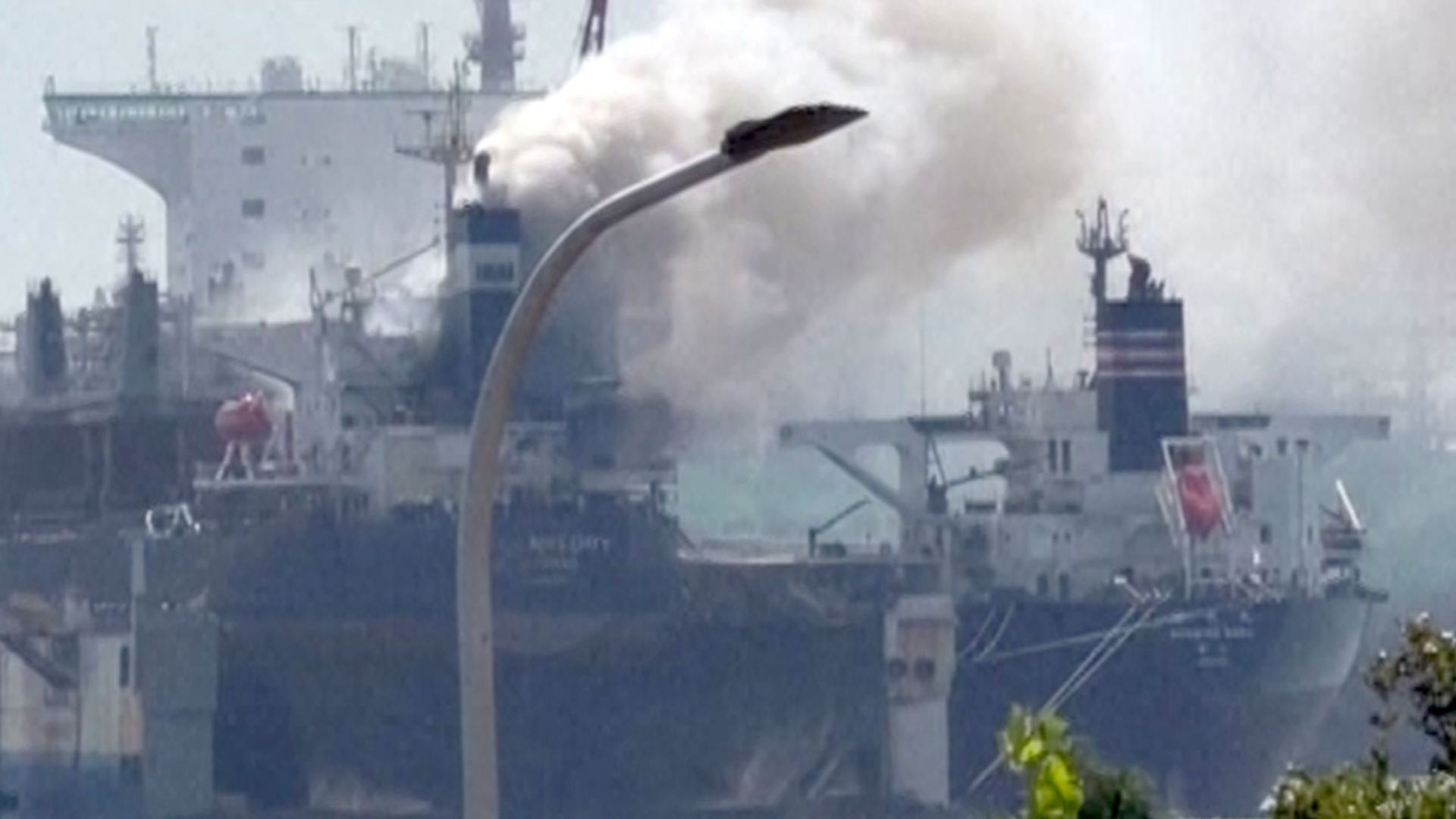
Twenty human lives vanished in a matter of hours on a docked bulk carrier in eastern China.
A routine repair job turned into a catastrophic disaster when a fierce fire erupted aboard the Liberian-flagged cargo ship Ocean Melody at the Qingdao port. State media reports confirm that at least 20 people died, with another five listed as missing. Out of 42 individuals onboard during the maintenance work at the Beihai Shipbuilding Co. shipyard, only a fraction managed to escape. Five injured survivors were rushed to nearby hospitals, while emergency crews scrambled to contain the disaster.
We need to talk about why shipyards remain death traps.
What Happened at Qingdao Port
The timeline of the tragedy points to a rapid, uncontrollable escalation. The fire broke out around 11:15 a.m. local time on Thursday. Thick, choking smoke billowed from the 190-meter-long vessel, catching workers completely off guard. Witnesses in nearby residential compounds reported seeing dense plumes rising against the skyline, though no massive explosion preceded the smoke.
State-backed firefighting units managed to extinguish the open flames by 2:30 p.m., but the damage was already done. Twenty victims were found with no signs of life once teams finally accessed the interior compartments.
Why did a ship maintenance project end this way? Hot work—such as welding, cutting, or grinding—is the usual culprit in shipyard fires. When sparks fly near flammable residues, old insulation, or paint fumes in confined ship spaces, disaster follows fast. Investigators have not yet released the official root cause, but the structural risks of ship repair are well documented across the maritime industry.
The Immediate Political and Corporate Fallout
High-profile industrial accidents in China trigger swift top-down reactions. President Xi Jinping immediately issued direct instructions demanding an aggressive search for the missing crew members and strict accountability for those at fault. Premier Li Qiang also pushed for immediate rescue efforts.
The shipyard involved, Beihai Shipbuilding Co., operates under the massive umbrella of the state-controlled China State Shipbuilding Corporation—the largest shipbuilder on the planet. When a facility of this scale suffers a casualty count this high, it exposes glaring gaps in local oversight. Safety protocols look great on paper. On the ground, corners get cut to keep drydock schedules moving.
Why Shipyard Safety Protocols Fail
Working inside a commercial bulk carrier under repair is hazardous. You are dealing with tight quarters, limited escape routes, and heavy machinery.
- Inadequate Hot Work Permits: Too often, workers perform welding without clearing combustible materials within a safe radius.
- Blocked Escape Routes: Ships under maintenance accumulate scaffolding, equipment lines, and debris that block emergency exits.
- Poor Communication: Contractors, yard workers, and ship crew often lack a unified command structure during refits.
When things go wrong, seconds matter. If fire watches aren't stationed properly or fire suppression systems are disabled during maintenance, a small spark turns into an inferno before anyone can sound the alarm.
Accountability and What Comes Next
Holding people accountable after the fact doesn't bring back the dead. Beijing is pushing for stricter preventive measures to stop catastrophic accidents across industrial sectors, but maritime safety reform requires a complete cultural shift. Shipyards need zero-tolerance policies for bypassed safety checks, regardless of financial deadlines or delivery pressures.
The investigation into the Ocean Melody will move forward. Heads will roll, penalties will be levied, and statements will be issued. But until maritime operators treat ship repair with the exact same tactical rigor as active navigation at sea, workers will continue paying the ultimate price for operational negligence.