The rain was doing that thing where it doesn't just fall; it pulses against the glass, rhythmic and insistent. Sarah sat in the driver's seat of her old sedan, watching the digital clock crawl toward midnight. She was staring at a flickering orange light on her dashboard—the universal symbol for "you should have stopped twenty miles ago." In the world of internal combustion, this is a minor stressor. In the world of first-generation electric vehicles, it is a haunting.
For years, the promise of the electric revolution felt like a beautiful lie sold by people who lived in temperate climates and never had to drive more than ten miles to a grocery store. We were told the future was clean, but we weren't told it would be so anxious. We traded the smell of gasoline for the constant, nagging math of kilowatt-hours versus uphill climbs. Also making headlines in related news: The A10 Warthog is a Flying Coffin and Keeping it Until 2030 is a Strategic Crime.
Then came the Hyundai Ioniq 3.
It didn't arrive with the thunder of a supercar or the pompous silicon-valley jargon we’ve grown weary of hearing. Instead, it arrived as a solution to the quiet desperation of the Sunday night commute. It is a car designed for people who are tired of doing mental calculus while they should be enjoying the playlist. Additional insights into this topic are explored by MIT Technology Review.
The Curve that Defies the Wind
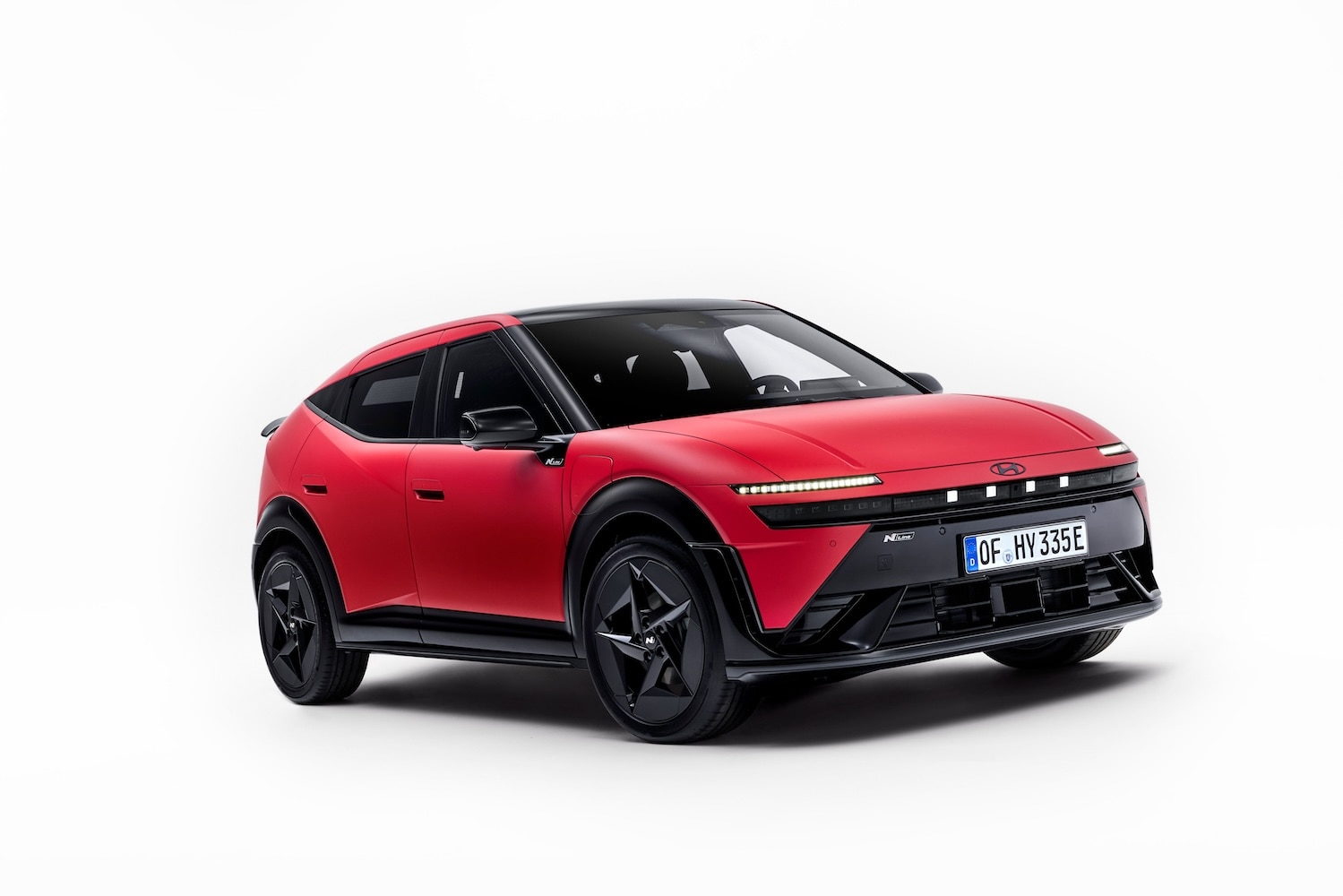
The first thing you notice isn't a spec sheet. It’s the shape. Hyundai calls it the "Aero Hatch," but to the human eye, it looks like something smoothed over by centuries of river water.
In the early days of automotive design, we built bricks. We fought the air. We used raw horsepower to punch a hole through the atmosphere, uncaring of the waste left in the wake. But the Ioniq 3 treats the air like a partner rather than an adversary. Every line on the chassis serves a singular, humble purpose: to let the wind slide past without a fight.
This isn't just about looking like a prop from a mid-century sci-fi flick. It’s about the invisible drag that eats away at your battery life. When Sarah—our hypothetical but very relatable commuter—hits the highway at sixty miles per hour, the Aero Hatch design is working to preserve every drop of energy. It’s the difference between arriving with a comfortable cushion and arriving on a prayer. By lowering the coefficient of drag, Hyundai has managed to extract a staggering 496 km of range from its battery system.
Think about that number. 496 kilometers.
That is not a trip to the mall. That is a journey from Paris to the borders of Switzerland. It is the distance of a life lived outside the city limits. It’s the freedom to miss a turn, to take the scenic route, or to realize you forgot the milk and not feel a cold sweat break out because the "nearest charger" icon is too far away.
The Half-Hour Revolution
We have been conditioned to believe that charging an electric car is a chore akin to watching paint dry. We’ve seen the photos of lonely drivers huddled in brightly lit charging stations at 2:00 AM, nursing lukewarm coffees while a progress bar crawls toward eighty percent.
The Ioniq 3 looks at that cultural trauma and offers a reprieve.
The engineering team focused on a 29-minute charging window. Why twenty-nine? Because thirty minutes is a commitment, but twenty-nine feels like a break. It’s the length of a sitcom episode. It’s the time it takes to walk the dog, grab a sandwich, and check your messages. By the time you’ve stretched your legs and cleared your head, the car has recovered the bulk of its life force.
Consider the physics for a moment. To move that much energy into a chemical battery without melting the internals requires a sophisticated dance of thermal management.
$$P = V \times I$$
To get the power ($P$) up, you have to balance the voltage ($V$) and the current ($I$) in a way that doesn't stress the lithium-ion cells. The Ioniq 3 manages this through an advanced E-GMP architecture that treats heat not as a byproduct to be ignored, but as a variable to be controlled. It’s a silent, liquid-cooled symphony happening beneath the floorboards while you’re deciding between a turkey club or a Caesar salad.
The Interior as a Third Space
Modern life is loud. Our homes are filled with the hum of appliances and the glow of work-from-home monitors. Our offices are battlegrounds of productivity. The car, for many, has become the only true "third space"—the bridge between who we are at work and who we are at home.
Inside the Ioniq 3, the "human-centric" philosophy moves from a marketing buzzword to a physical reality. There is a minimalism that feels intentional rather than cheap. The materials don't scream for attention; they invite you to sit.
Hyundai opted for a layout that prioritizes spatial awareness. Because there is no transmission tunnel cutting through the center of the cabin, the floor is flat. It feels less like a cockpit and more like a lounge. It’s a small detail, but it changes the psychology of the drive. You aren't being "held" by the machine; you are inhabiting it.
For Sarah, this means the thirty-minute crawl through suburban traffic becomes a moment of decompression. The silence of the electric motor—once eerie to those raised on the roar of V8s—becomes a sanctuary. You can hear the nuance in a podcast. You can hear your own thoughts.
The Weight of the Choice
Choosing a car has always been a declaration of identity. In the twentieth century, it was about power and status. In the twenty-first, it’s increasingly about responsibility and the realization that our choices ripple outward.
But nobody wants to be a martyr for the environment. We want to do the right thing, provided the right thing doesn't make our lives significantly harder. This is the tightrope the Ioniq 3 walks. It doesn't ask you to sacrifice your weekend road trips. It doesn't demand that you plan your life around a charging map.
It simply exists as a tool that happens to be better for the planet while being objectively better for your peace of mind.
The "3" in its name suggests a compact stature, a car meant for the narrow streets of Europe or the crowded lots of American coastal cities. Yet, its range puts it in the territory of heavy-duty cruisers. This is the democratization of distance. You no longer need to spend six figures on a luxury flagship to get the "long-range" badge.
Beyond the Spec Sheet
Numbers are cold. 496 kilometers is a statistic. 29 minutes is a measurement.
The reality of the Ioniq 3 is found in the moment you realize you haven't looked at the battery gauge in three days. It’s found in the way the Aero Hatch catches the light at sunset, looking less like a car and more like a teardrop frozen in motion. It’s found in the lack of vibration at a red light, a stillness that slowly seeps into your own nervous system.
We are witnessing the end of the "early adopter" era. The days of making excuses for electric vehicles—the "it’s great, but..." conversations—are fading.
As Sarah finally pulled into her driveway, the rain still drumming on the roof, she didn't look at her dashboard with dread. She didn't think about the flickering orange light of her old life. She thought about the morning, and the quiet, effortless hum of a car that finally understands that the most important feature an EV can offer isn't speed or tech—it's the permission to stop worrying.
The Ioniq 3 isn't just a new model in a growing lineup. It is a sign that the machine is finally learning to speak human.
The road ahead is long, but for the first time in a long time, the distance doesn't feel like a threat. It feels like an invitation.