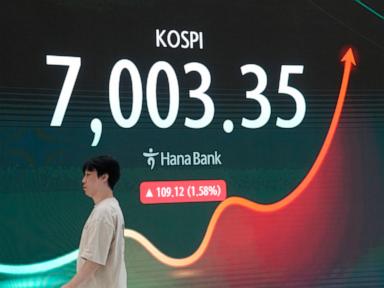
Financial markets operate on a continuous loop of incoming data and repricing expectations. When equity futures climb in tandem with declining oil prices ahead of a high-stakes bilateral summit between American and Chinese leadership, market participants are not simply reacting to news headlines. They are pricing shifts in the risk matrix. Understanding this mechanism requires deconstructing the primary transmission channels between commodity valuation, monetary policy constraints, and trade diplomacy.
The Inverse Commodity Transmission Channel
Energy prices function as a foundational tax on global economic activity. Crude oil acts as a primary input cost across manufacturing, logistics, chemical synthesis, and consumer discretionary sectors. When energy benchmarks drop, cost pressures on corporate balance sheets compress immediately, expanding operating margins for companies heavily dependent on transportation or energy-intensive production.
This cost compression alters the equity risk premium through two distinct pathways. First, lower energy input costs reduce consumer price index pressures, offering central banks greater latitude to ease monetary policy or pause aggressive tightening cycles. Second, discretionary household income expands as spending at the pump decreases, reallocating capital toward consumer goods and services.
The compression in oil prices observed during periods of macro uncertainty typically stems from one of two structural drivers: weakening global demand signaling a slowdown, or an easing of geopolitical risk premiums that previously inflated spot prices. Markets must evaluate which force is dominant. When equity futures rise alongside falling oil prices, investors are generally signaling confidence that the energy price drop reflects supply-side adjustments or receding geopolitical friction rather than an imminent demand collapse.
The Geopolitical Signaling Function In Trade Diplomacy
High-level diplomatic summits between major economic superpowers—specifically the United States and China—serve as critical clearinghouses for structural uncertainty. Global supply chains depend heavily on tariff predictability, intellectual property frameworks, and regulatory stability. When trade relations deteriorate, corporations face elevated capital expenditure risk, leading to deferred investment and compressed valuation multiples.
The anticipation of a presidential-level meeting triggers a strategic reassessment among institutional allocators. The objective of such summits is rarely a sweeping structural overhaul; rather, it is the establishment of a diplomatic floor that prevents further escalation. This mechanism reduces tail risk—the low-probability, high-impact event of severe trade decoupling or sweeping retaliatory sanctions.
Institutional asset allocators reprice risk not based on utopian agreements, but on the removal of catastrophic downside scenarios. If a summit results in even minor concessions, such as agricultural purchase commitments, delayed tariff implementations, or the resumption of formal working-group dialogues, the implied volatility embedded in multinational equity valuations drops. This reduction in the policy risk premium directly supports higher equity index levels, as the discount rate applied to future cash flows decreases.
Market Reaction Mechanics And Liquidity Flows
Equities markets are forward-looking discounting mechanisms. They do not wait for policy implementation; they price expectations weeks or months in advance. When futures markets rally on the eve of a major geopolitical event, short-term momentum interacts with institutional rebalancing.
Short sellers covering positions ahead of binary political events frequently exacerbate upward price movements. Simultaneously, quantitative strategies driven by momentum indicators adjust portfolio weights upward as volatility indices contract. This interaction creates a temporary liquidity surge that can detach index performance from immediate fundamental earnings reports, anchoring valuations entirely to macroeconomic sentiment and policy trajectories.
Strategic Capital Allocation Under Macro Uncertainty
Navigating environments defined by shifting commodity prices and trade diplomacy requires a systematic approach to portfolio construction. Investors and corporate strategists should apply the following operational frameworks:
- Separate temporary commodity price fluctuations from structural supply and demand imbalances before adjusting long-term operational capacity.
- Model cash flow sensitivities under various trade tariff scenarios to isolate vulnerability to geopolitical friction.
- Monitor implied volatility spreads across cyclical and defensive sectors to gauge whether market breadth confirms the direction of headline equity indices.
- Allocate capital toward enterprises with pricing power capable of absorbing input cost volatility regardless of macroeconomic policy shifts.