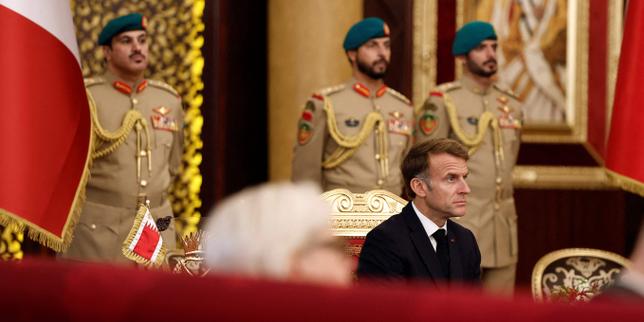
International standing is not sustained by rhetorical flourish; it is governed by a strict balance sheet of domestic stability, fiscal credibility, and transactional utility. When a leader's domestic authority degrades, the international perception shifts from a position of strategic partnership to one of managed liability. Analyzing the trajectory of Emmanuel Macron’s external standing reveals a systemic decoupling between Parisian diplomatic ambition and the structural realities of domestic governance. Foreign partners do not evaluate a head of state through ideological alignment alone. They measure institutional predictability, legislative leverage, and the capacity to deliver on international commitments.
To understand the erosion of this diplomatic footprint, one must first isolate the core variables that constitute executive capital in international relations. These are institutional continuity, fiscal headroom, and domestic enforcement capability. When these variables simultaneously trend downward, the cost of engagement for foreign allies rises. Discover more on a connected issue: this related article.
The Domestic Disconnect and Institutional Friction
The primary driver of external skepticism lies in the friction between executive intent and domestic legislative capacity. Modern statecraft requires sustained legislative backing to ratify treaties, honor fiscal compacts, and deploy resources. When a government loses its reliable parliamentary majority, international counterparts recognize an immediate vulnerability: the executive can make commitments it lacks the domestic architecture to fulfill.
This creates a structural deficit in foreign negotiations. Allies and adversaries alike calculate the discount rate of French diplomacy based on political volatility. Further analysis by Associated Press delves into related views on this issue.
- The Credibility Discount: International agreements negotiated by an executive facing severe domestic opposition are systematically discounted by foreign ministries anticipating a policy reversal or succession bottleneck.
- The Resource Constraint: Fiscal tightening driven by domestic debt obligations limits the capacity for external projection, whether through military assistance, development aid, or diplomatic mediation.
- The Legislative Gridlock: A fragmented parliament converts long-term strategy into short-term crisis management, signaling to international markets that domestic survival supersedes foreign policy coherence.
The European Union operates as a consensus-driven machinery where individual national capitals derive their weight from internal economic stability and clear political mandates. France has historically positioned itself as the intellectual and structural engine of European integration. However, as domestic polarization deepens, the French executive's ability to compromise or spearhead deep reforms diminishes. The resulting paralysis is interpreted in Berlin, Brussels, and Washington not as an isolated legislative hurdle, but as a chronic governance constraint.
The Cost Function of Strategic Ambition
A persistent feature of contemporary French foreign policy is the pursuit of strategic autonomy and global mediation roles. This posture requires immense diplomatic bandwidth and economic credibility. From an analytical perspective, foreign policy projection is an expenditure that must be funded by domestic political capital. When that capital is depleted at home, the return on investment for external initiatives collapses.
Consider the mechanics of mediation on the international stage. A mediator derives power from two sources: perceived neutrality and domestic invulnerability. If a leader is perceived as politically fragile domestically, foreign actors have little incentive to offer concessions. They calculate that waiting out the current administration is a superior strategy to negotiating a binding settlement. Consequently, high-profile diplomatic interventions risk transforming from strategic assets into performative distractions.
Furthermore, economic indicators serve as the unyielding baseline for international respect. Global investors and foreign chancelleries track public debt-to-GDP ratios, deficit trajectories, and structural reform progress with clinical detachment. When domestic resistance successfully halts pension adjustments or fiscal consolidation plans, foreign markets reprice French sovereign risk. Diplomatic influence correlates directly with fiscal health; sovereign vulnerability breeds foreign policy irrelevance.
The Mechanics of International Perception Shifts
International reputation does not change overnight; it degrades through a compounding series of tactical misalignments and unfulfilled projections. Foreign ministries maintain continuous country risk assessments that quantify leadership stability. When consecutive policy crises—ranging from industrial unrest to legislative stalemates—demonstrate a disconnect between executive decrees and societal realities, the perception of competence is permanently altered.
- Phase One: Rhetorical Divergence. The gap widens between grand strategic pronouncements delivered on international platforms and the grim reality of domestic gridlock. Foreign partners note the disparity but maintain diplomatic courtesy.
- Phase Two: Hedging Behavior. Allies begin to hedge. Bilateral cooperation continues, but critical long-term initiatives are quietly sidelined or redirected through alternative multilateral channels where French leadership is not a prerequisite.
- Phase Three: Marginalization. The leadership is treated as a lame-duck entity regardless of constitutional timelines. Foreign actors prioritize transactional management of immediate issues over strategic collaboration.
This progression illustrates why external image cannot be salvaged merely through public relations campaigns or overseas summits. International actors operate on revealed preferences, not declared intentions. If domestic reforms are rolled back under street pressure, or if budgets fail to pass without existential political battles, foreign observers log those events as structural weaknesses.
Strategic Realignment and Institutional Imperatives
Reversing an international erosion of this magnitude requires a fundamental pivot from external posturing to internal consolidation. The primary objective must be the restoration of governing predictability. Without a stable legislative foundation, any projection of power abroad is an exercise in diminishing returns.
Foreign policy must be scaled to match domestic political realities. When structural constraints limit fiscal and legislative maneuverability, a government must prioritize core defensive interests over expansive global ambitions. Attempting to maintain an oversized diplomatic footprint while domestic foundations fracture invites external overreach and exposes vulnerabilities that adversaries will readily exploit.
The path forward demands a rigorous audit of international commitments against domestic capabilities. True authority abroad is never a product of the volume of rhetoric emitted on the world stage; it is the direct byproduct of a well-governed, fiscally sound, and politically unified state at home. Until the domestic equilibrium is restored, international perception will remain constrained by the immutable math of institutional stability.