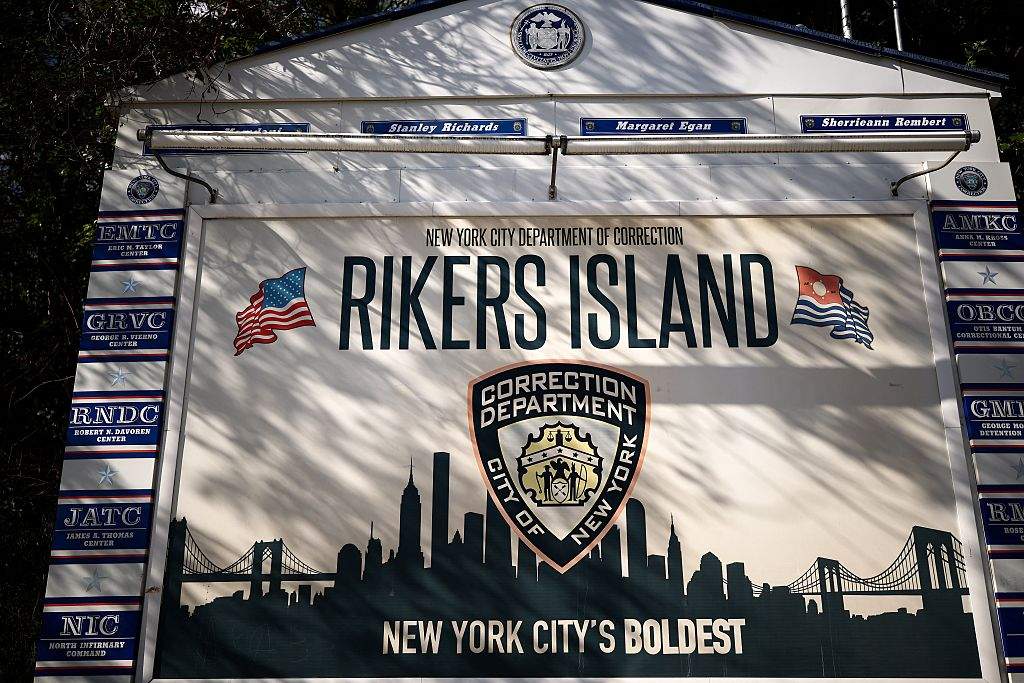
Closing Rikers Island is not a real estate transaction or a simple policy decree; it is a complex systems migration problem constrained by statutory capacity caps, municipal bond markets, and criminal court throughput. When New York City Mayor Zohran Mamdani announces the closure of the Rikers Island jail complex, the headline obscures the operational reality: the city cannot legally or logistically shutter the island until a distributed network of borough-based jails reaches physical and staffing readiness, or until the daily detainee population drops below the hard physical ceiling of the replacement facilities.
Standard municipal reporting treats the closure of Rikers Island as a binary political milestone. In practice, decommissioning an isolated, 400-acre penal colony while maintaining continuous custody of thousands of pre-trial detainees requires solving three interlocking operational bottlenecks simultaneously. If any single variable fails to align—capital construction timelines, judicial case processing speeds, or correctional staffing ratios—the closure date slips indefinitely, regardless of executive intent. Meanwhile, you can find similar events here: Why Austria's Claudia Bauer Refuses to Bankroll a Bigger EU Budget.
The Structural Architecture of the Closure Mandate
To understand whether a mayoral administration can execute the Rikers shutdown, one must separate political rhetoric from the binding statutory mechanics established by the New York City Council and state criminal procedure law. The transition rests on a fixed mathematical equation: total daily custodial population must be less than or equal to the aggregate bed capacity of the four borough-based facilities located in Manhattan, Brooklyn, Queens, and the Bronx.
Unlike the sprawling, modular barracks on Rikers Island, which historically absorbed population surges through temporary annexes and dormitory overcrowding, the borough-based detention model enforces a hard physical cap. Under the city’s uniform land use review procedure approvals, the four new vertical jails are designed to hold a combined maximum of roughly 3,300 to 4,100 beds, depending on final design adjustments and specialized medical or mental health housing allocations. To explore the complete picture, check out the detailed report by TIME.
This architectural constraint creates a rigid operational boundary:
- The Capacity Ceiling: Vertical urban jails cannot expand outward. Once single-occupancy and specialized cells reach 100 percent utilization, the Department of Correction has no overflow valve.
- The Pre-Trial Dominance: Roughly 85 to 90 percent of the Rikers population consists of individuals held pre-trial, meaning they have not been convicted of the charges for which they are detained. Their length of stay is governed by court calendars, discovery compliance, and bail statutes rather than fixed determinate sentences.
- The Dual-Footprint Penalty: During the transition phase, the city must fund the operating costs of deteriorating infrastructure on Rikers Island while simultaneously servicing debt and onboarding staff for the new borough sites.
The Four Drivers of Custodial Population
Because the physical capacity of the replacement system is fixed, the feasibility of closing Rikers Island depends entirely on managing the inflow and outflow of the jail population. In operations research, this is governed by Little’s Law, which states that the long-term average number of items in a stationary system ($L$) is equal to the long-term effective arrival rate ($\lambda$) multiplied by the average time an item spends in the system ($W$), expressed as $L = \lambda \times W$.
Applied to New York City’s detention system, the daily jail census ($L$) rises or falls based on two primary levers: admissions ($\lambda$) and length of stay ($W$).
1. Judicial Throughput and Case Processing Latency
The primary driver of Rikers Island’s stubbornly high population is not a spike in daily admissions, but a systemic expansion in the average length of stay. When felony cases take 12 to 24 months to reach disposition, each detainee occupies a bed for hundreds of days, compounding the daily headcount even when arrest rates remain flat.
Three specific friction points extend length of stay:
- Discovery Compliance Bottlenecks: State discovery reforms require prosecutors to turn over voluminous digital evidence—body-worn camera footage, lab reports, and surveillance files—within strict statutory windows. Delays in assembling and certifying these packages stall pre-trial conferences and push trial dates back by months.
- Courtroom Availability and Trial Capacity: The Unified Court System operates under state jurisdiction, meaning the Mayor of New York City does not control judicial assignments, courtroom scheduling, or clerk staffing. A municipal executive can build new jails, but cannot compel state judges to accelerate felony dockets.
- Forensic and Competency Evaluations: Detainees requiring psychiatric fitness evaluations under Article 730 of the New York Criminal Procedure Law experience severe delays due to acute shortages of court-appointed forensic evaluators and secure state psychiatric beds.
2. Bail Statutes and Judicial Discretion
New York’s bail reform laws eliminated cash bail for most misdemeanors and non-violent felonies, initially driving the Rikers population down toward 4,000 detainees. Subsequent legislative amendments expanded judicial discretion to set bail on repeat offenses and gun-related charges. When judges set bail that defendants cannot afford, admissions convert directly into long-term pre-trial detention. A mayoral administration has zero unilateral authority to alter state penal law or override judicial bail determinations; it can only influence the ecosystem through city-funded supervised release programs that give judges credible non-custodial alternatives.
3. Alternative-to-Incarceration (ATI) Infrastructure
Diverting individuals from Rikers requires high-accountability community supervision. Supervised release programs rely on contracted non-profit providers to monitor court appearances, administer behavioral health interventions, and verify compliance. If ATI providers suffer from high caseworker turnover or lack secure residential treatment beds for individuals with severe mental illness, judges revert to remanding defendants to Department of Correction custody.
4. Parole Violations and State Holds
A smaller but operationally distinct segment of the Rikers population consists of individuals held on technical or substantive parole violations, or those awaiting transfer to state prison facilities run by the New York State Department of Corrections and Community Supervision. While the Less Is More Act curtailed detention for non-criminal technical parole violations, administrative friction between city and state agencies still creates multi-week transfer lags that consume municipal bed capacity.
Capital Construction Physics and the Infrastructure Deficit
The physical replacement of Rikers Island involves demolishing existing structures in four boroughs and erecting high-rise detention facilities on tight urban footprints. Managing mega-projects in dense New York City neighborhoods introduces compounding engineering and financial risks that routinely derail fixed deadlines.
- Site Preparation and Demolition Latency: Unlike greenfield construction, the borough sites require the controlled abatement and demolition of existing aging jails—such as the Manhattan Detention Complex (The Tombs) and the Brooklyn House of Detention—while adjacent courthouses and residential buildings remain active. Noise, vibration, and hazardous material remediation restrict daily working hours.
- Design-Build Procurement Constraints: The city utilizes design-build contracts to overlap architectural engineering with foundation work, aiming to compress schedules. However, mid-project scope changes—such as altering cell configurations to accommodate higher ratios of acute mental health housing—trigger expensive change orders and structural redesigns.
- Supply Chain and Labor Escalation: High-rise detention facilities require specialized security glazing, automated locking mechanisms, tamper-proof HVAC systems, and reinforced concrete cores. Inflation in specialized construction materials and union labor rates drives capital costs well past initial multi-billion-dollar estimates, forcing the Office of Management and Budget to rebalance the city’s ten-year capital strategy.
When construction timelines slip by 24 to 36 months, the city faces a severe fiscal penalty. Every year Rikers Island remains open past its target decommissioning date, the municipality pays hundreds of millions of dollars in emergency repairs to keep 1930s-era boilers, roofs, and electrical grids functional, while simultaneously paying debt service on bonds issued for incomplete borough facilities.
The Human Capital Bottleneck: Staffing Ratios and Operational Safety
A modern physical facility does not automatically resolve a management crisis. Rikers Island’s operational dysfunction stems largely from structural breakdowns in workforce deployment, sick leave abuse, overtime dependency, and perimeter security.
Correctional facilities operate on rigid post-coverage models. A housing unit, medical clinic, or court transport bus cannot operate legally without a minimum number of uniformed officers on duty. When uniformed headcount drops—through attrition, retirements, or chronic absenteeism—the Department of Correction relies on mandatory overtime, often forcing officers to work consecutive 16-hour shifts.
This creates a destructive feedback loop:
- Fatigue-Induced Error: Officers working double and triple shifts experience degraded situational awareness, slower response times to inmate altercations, and higher rates of use-of-force incidents.
- Accelerated Absenteeism: Exhausted staff utilize unlimited sick leave policies to recover, further shrinking the available shift pool and forcing the remaining officers into additional mandatory overtime.
- Transport and Production Failures: When uniformed staffing collapses, the department fails to produce detainees for scheduled court appearances in the boroughs. Missed court dates directly increase length of stay ($W$ in Little’s Law), which inflates the daily jail census ($L$) and requires even more housing units to remain open.
Transitioning to four dispersed borough jails alters the logistics of this workforce problem. On Rikers Island, the department centralizes intake, food service, laundry, and medical clinics on a single landmass, though it must bus thousands of detainees across the East River bridge to borough courthouses daily. In the borough-based model, jails sit directly adjacent to criminal courthouses, connected by secure pedestrian bridges or tunnels. This eliminates cross-city bus transport—reclaiming thousands of officer hours per week—but requires duplicating medical, intake, and supervisory command structures across four separate high-rise buildings.
The Cost Function of Municipal Detention
New York City spends more per detainee than any major jurisdiction in the United States, with annualized per-capita costs exceeding $500,000 when factoring in uniformed salaries, fringe benefits, pensions, medical care, and debt service. This expenditure does not buy superior safety or rehabilitation; it reflects the inefficiency of maintaining an isolated island colony with high fixed overhead and a declining economy of scale.
As the Rikers population shrinks, the fixed costs of operating the island do not decrease proportionally. Heating plants, ferry and bridge security, perimeter patrols, and utility networks must be maintained whether the island holds 10,000 detainees or 5,000. Consequently, the marginal cost per remaining detainee spikes sharply during the final years of a phased drawdown.
The financial logic of the borough-based plan depends on reaching a tipping point where Rikers Island can be completely decommissioned, allowing the city to extinguish the island’s fixed overhead and transfer the land—under the Renewable Rikers Act—to the Department of Environmental Protection and the Department of Citywide Administrative Services for wastewater treatment and renewable energy infrastructure. Until the last housing unit on Rikers closes, the city absorbs the worst of both cost structures.
Limitations and Systemic Risks of the Borough-Based Strategy
A rigorous assessment of Mayor Mamdani’s closure commitment must account for four structural vulnerabilities that no municipal administration can easily eliminate:
- The Zero-Buffer Risk: If crime trends, legislative rollbacks to bail reform, or judicial sentencing shifts push the pre-trial detention demand to 5,500 individuals after Rikers Island is demolished, the borough system—capped near 4,000 beds—will face an immediate constitutional overcrowding crisis. Reopening closed Rikers facilities after years of environmental decay would require billions in new capital.
- Clinical Care Capacity: Roughly half of the individuals in city custody have a diagnosed mental health condition, and nearly 20 percent suffer from serious mental illness. Vertical jails require specialized therapeutic housing units operated jointly by Correctional Health Services and the Department of Correction. If the city cannot recruit and retain forensic psychiatrists, clinical social workers, and specialized correction officers, high-acuity detainees will remain warehoused in standard cells, replicating the humanitarian failures of Rikers inside new concrete towers.
- Federal Receivership Intervention: Persistent constitutional violations regarding inmate safety and use of force have placed the Department of Correction under intense federal court oversight, with the constant threat of an independent federal receiver assuming control of jail operations. A federal receiver possesses the authority to override municipal labor rules, procurement timelines, and budget allocations, potentially altering the administration's sequence of closure milestones.
- Community and Political Friction: While the land-use approvals for the four borough jails are legally settled, ongoing construction disruption, neighborhood opposition to high-rise detention towers in dense commercial districts like Chinatown and Kew Gardens, and fiscal pressure from competing municipal priorities—such as public transit, affordable housing, and sanitation—create continuous political incentives to delay capital outlays.
Execution Sequence for Decommissioning Rikers Island
To move the closure of Rikers Island from a political declaration to an operational reality, the administration must execute a synchronized, data-driven sequence focused on throughput compression rather than passive construction waiting:
- Enforce Strict Court Production Metrics: Establish a joint operational command with the Office of Court Administration to eliminate missed court appearances. Every detainee produced on time for a scheduled hearing reduces average length of stay and directly lowers the daily bed requirement.
- Expand Out-of-Custody Forensic Beds: Fund secure, hospital-operated psychiatric beds through NYC Health + Hospitals to immediately divert Article 730 competency detainees out of Department of Correction custody, clearing the highest-cost, highest-acuity cohort from the daily census.
- Decouple Uniformed Staffing from Non-Custodial Posts: Reclassify administrative, perimeter, and logistical roles to civilian personnel, concentrating uniformed correction officers strictly on housing unit supervision and escorts to break the mandatory overtime cycle.
- Gate Capital Releases to Milestone Verification: Tie borough construction disbursements to verifiable critical-path schedules while executing phased demolition of empty Rikers housing annexes immediately upon population drops, preventing future administrations from backsliding into reopening condemned barracks.