The valuation of DeepSeek at $45 billion represents a fundamental shift in the unit economics of Artificial General Intelligence (AGI) development. While Silicon Valley remains locked in a high-expenditure arms race defined by massive clusters and soaring energy costs, the emergence of a state-backed, hyper-efficient Chinese alternative signals the end of the "Compute Supremacy" era. The primary driver of this valuation is not just the involvement of China’s National Integrated Circuit Industry Investment Fund (the "Big Fund"), but the proof of a divergent architectural philosophy that prioritizes algorithmic density over brute-force scaling.
The Triad of Value Creation in the DeepSeek Ecosystem
To understand why a private entity in a constrained market commands a $45 billion premium, one must analyze the convergence of three distinct pillars: hardware-software co-optimization, sovereign capital guarantees, and the strategic displacement of the "CUDA Moat."
1. Algorithmic Efficiency as a Capital Multiplier
DeepSeek’s primary claim to value is its ability to match or exceed the performance of models like GPT-4o while utilizing a fraction of the training compute. This is achieved through Multi-head Latent Attention (MLA) and the DeepSeekMoE architecture. By compressing the "Knowledge Bottleneck," the firm has effectively decoupled model performance from linear GPU growth.
The economic implication is a radical reduction in the Cost per Intelligence Unit (CIU). If a competitor spends $1 billion to train a model and DeepSeek achieves parity for $100 million, their capital efficiency is 10x. This multiplier justifies a high valuation because it suggests that DeepSeek can survive and iterate in an environment where access to high-end H100 or Blackwell chips is restricted.
2. The Big Fund and the Sovereign Backstop
The reported involvement of the "Big Fund" transforms DeepSeek from a venture-backed startup into a critical piece of national infrastructure. This transition introduces a "Sovereign Premium" to the valuation. Unlike private venture capital, which seeks exit-based returns, state-led investment in this context serves two strategic functions:
- Risk Abstraction: The state absorbs the massive R&D risks associated with frontier model development, allowing the company to focus on technical breakthroughs without the immediate pressure of monetization.
- Supply Chain Integration: Alignment with the Big Fund ensures preferential access to domestic semiconductor manufacturing pipelines (SMIC, etc.), mitigating the impact of US export controls.
3. The Displacement of the CUDA Moat
For years, NVIDIA’s dominance has been protected by CUDA, the software layer that binds developers to their hardware. DeepSeek has demonstrated a high degree of portability, optimizing for diverse hardware environments. By proving that high-performance LLMs can be trained on non-NVIDIA clusters, DeepSeek lowers the barrier to entry for domestic Chinese hardware manufacturers, creating a symbiotic value loop between software and silicon.
Quantifying the Strategic Advantage: The Architecture of Constraint
The "Big Fund" leads this round because DeepSeek has mastered the Architecture of Constraint. When resources (chips) are scarce, engineering ingenuity becomes the primary asset. This is categorized through several technical levers that directly impact the balance sheet.
Inference Cost Disruption
The true battleground for AI dominance is not training, but inference. DeepSeek’s MoE (Mixture of Experts) approach activates only a small subset of parameters for any given query. This leads to:
- Lower VRAM requirements: Enabling deployment on smaller, domestic chipsets.
- Higher throughput: Increasing the number of tokens generated per dollar of electricity.
- Edge compatibility: Positioning the company to dominate the smartphone and IoT markets in Asia.
The $45 billion valuation reflects the projected market share in an "Inference-First" economy where the cost of serving AI becomes the deciding factor for enterprise adoption.
The Data Parity Hypothesis
A common critique of Chinese AI firms is the perceived lack of high-quality English-language training data. DeepSeek has countered this by focusing on Reasoning Traces. By training models on logical chains (Chain-of-Thought) rather than just static information, they have built a model that "thinks" through problems. This focus on logic over rote memorization allows the model to generalize better across languages and domains, reducing the "Data Moat" held by Western incumbents.
Risks and Structural Limitations
No analysis is complete without acknowledging the friction points inherent in this valuation model. The $45 billion figure is predicated on several assumptions that face significant headwinds.
The Performance Ceiling of Domestic Silicon
While DeepSeek’s software is efficient, there is a physical limit to how much algorithmic optimization can compensate for hardware lag. If the gap between NVIDIA’s Blackwell architecture and domestic Chinese hardware exceeds two generations, the efficiency gains from MoE architectures may be neutralized by the sheer raw power of Western compute clusters.
Geopolitical Liquidity Constraints
A $45 billion valuation in a closed ecosystem lacks the liquidity of a NYSE-listed firm. The exit strategy for current investors is limited. Without an IPO in a global market, the valuation remains a "paper" figure, subject to the whims of domestic regulatory shifts and the availability of state-directed capital.
The Token Deflation Trap
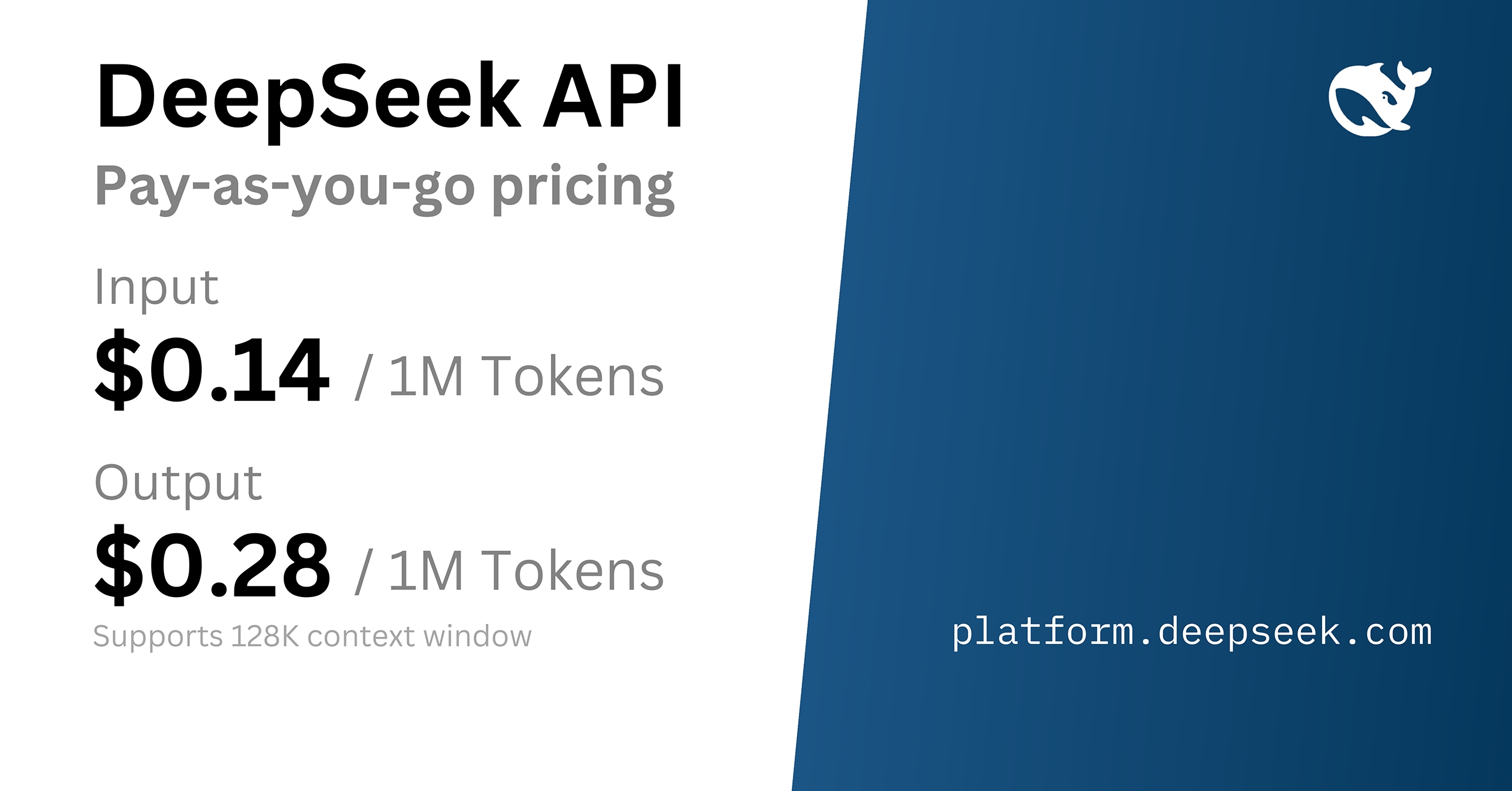
As DeepSeek and its rivals drive the cost of tokens toward zero, the path to profitability becomes obscured. High valuations require high margins. If AI intelligence becomes a commodity—a "utility" like water or electricity—the $45 billion valuation will eventually need to be justified by proprietary application layers or vertical integration, rather than just model ownership.
Structural Dynamics of the Investment
The investment structure of this latest round suggests a shift from "Growth at all costs" to "Strategic Resilience." The participation of the Big Fund indicates that the capital is being deployed as Strategic Infrastructure Spend rather than traditional equity.
- Phase I: Model Parity. The current stage, where DeepSeek proves it can compete with the frontier.
- Phase II: Ecosystem Lock-in. Using state influence to mandate DeepSeek as the foundational layer for Chinese enterprise software.
- Phase III: Hardware Synthesis. Feeding DeepSeek’s architectural requirements back into the design of the next generation of domestic chips.
This cycle creates a "closed-loop" economy that is shielded from external market volatility, albeit at the cost of global interoperability.
The Strategic Play for Global Observers
The $45 billion valuation is a signal to the global market that the era of "scaling laws" as the sole path to AI dominance is over. For enterprise strategists and investors, the DeepSeek model offers a blueprint for frugal innovation.
Organizations must now pivot from asking "How many GPUs do we need?" to "How can we optimize our latency-to-cost ratio?" The competitive edge is moving from the quantity of data to the quality of reasoning.
DeepSeek’s ascent proves that in a world of restricted hardware, the winner is not the one with the biggest cluster, but the one who can squeeze the most intelligence out of every watt. This valuation isn't a bubble; it is a re-pricing of intelligence based on efficiency rather than volume.
Investors should monitor the rate at which DeepSeek integrates with domestic cloud providers. The real value realization will occur when DeepSeek transitions from a research lab to the primary API provider for the "Global South," bypassing the Western software stack entirely. The strategy is clear: commoditize the model to capture the infrastructure.