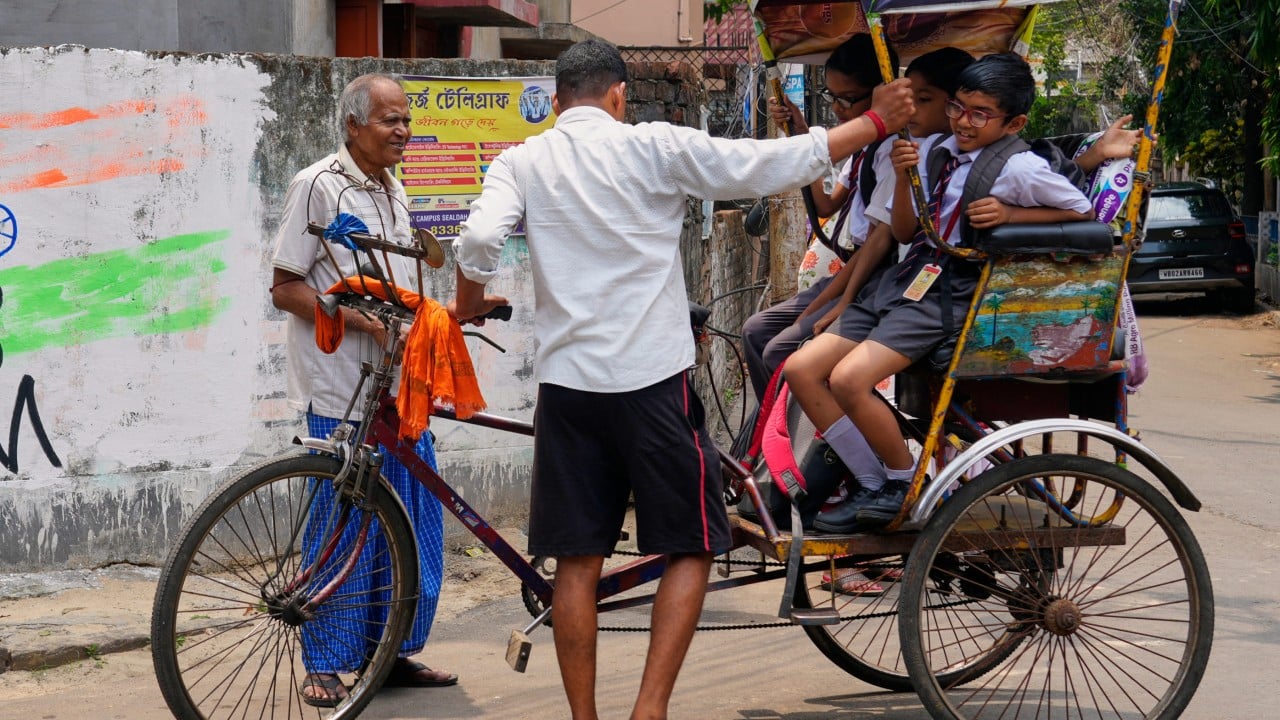
The sounding of the "water bell" in Delhi schools is a desperate signal that the city’s educational infrastructure has reached a breaking point. While international headlines focus on the novelty of mandatory hydration breaks, the reality on the ground is far more grim. Delhi is currently trapped in a heatwave where temperatures routinely cross 45°C, turning classrooms into concrete ovens. This is not a simple weather event. It is a systemic collapse.
The heatwave has forced the Directorate of Education to mandate water breaks, but this measure is a superficial fix for a deep-seated crisis. Schools are struggling to maintain student health as the heat index—a combination of humidity and temperature—makes outdoor activity impossible and indoor learning a physical ordeal. Children are fainting. Concentration is non-existent. The fundamental right to education is being overridden by the basic biological need to survive the afternoon sun.
The Concrete Oven Effect
Most government and low-cost private schools in the National Capital Region (NCR) are architectural nightmares for a warming planet. Built with thin brick walls and uninsulated reinforced concrete roofs, these structures absorb solar radiation throughout the day. By 11:00 AM, the ceiling starts acting like a radiator, beaming heat directly onto the heads of students below.
Standard cooling measures are failing. A ceiling fan in a room where the ambient air is 40°C does not cool the body; it merely moves hot air across the skin, potentially accelerating dehydration through increased perspiration. For a fan to be effective, there must be a temperature differential. In many Delhi classrooms, that differential has vanished. We are seeing a massive disparity between "elite" air-conditioned private schools and the rest of the city. This thermal divide is creating a two-tier education system where the ability to learn is now dictated by the ability to afford a climate-controlled environment.
Water Bells and the Hydration Myth
The "water bell" policy assumes that the only problem is a lack of fluid intake. It ignores the fact that many schools do not have access to chilled water or, in some cases, a consistent supply of clean water at all. Asking a child to drink lukewarm water from a plastic tank sitting on a rooftop in the sun is a cruel necessity.
Medical professionals in the city are reporting an uptick in heat exhaustion cases among school-aged children. The symptoms are often subtle at first—lethargy, irritability, and a persistent headache. By the time a child faints, they are already in the danger zone for heatstroke. The physiological reality is that children regulate body temperature less efficiently than adults. They have a higher surface-area-to-mass ratio, meaning they absorb heat faster. They also sweat less. When we force them into overcrowded rooms during a peak heatwave, we are performing a dangerous experiment in human endurance.
The Architecture of Neglect
Why are we here? The blame lies with decades of urban planning that prioritized density over green cover. Delhi has become a heat island. Large swaths of the city have been paved over, replacing trees with asphalt and concrete. These materials have high thermal mass; they store heat during the day and release it slowly at night. This prevents the city from cooling down, leading to a "nocturnal heat" effect that leaves students exhausted before they even arrive at school.
The Vanishing Canopy
In neighborhoods like Sangam Vihar or Laxmi Nagar, the tree canopy is virtually non-existent. These are the areas where students live and go to school. Without the natural cooling provided by evapotranspiration from trees, local temperatures can be 5°C to 8°C higher than in the leafier parts of Lutyens' Delhi.
Power Grids on the Brink
The demand for cooling has pushed the city's power grid to its limit. Frequent power cuts mean that even those schools with fans find themselves in stifling silence for hours at a time. The reliance on a centralized, overtaxed grid is a vulnerability that the city has failed to address. Small-scale solar installations on school roofs could provide a dedicated power source for fans and water coolers, yet the rollout of such programs has been sluggish, bogged down by bureaucracy and a lack of political will.
The Hidden Economic Toll
The heatwave is not just a health crisis; it is an economic one. When schools are forced to close early or shift to online learning—a "solution" that failed miserably during the pandemic for those without stable internet—parents are forced to stay home. This disproportionately affects daily wage earners and those in the informal sector.
Furthermore, the long-term impact on human capital is significant. Research into the relationship between temperature and cognitive function shows a clear decline in test scores and learning retention as temperatures rise. If Delhi continues to experience these prolonged heatwaves, an entire generation of students will suffer a permanent "heat deficit" in their education. We are looking at a future where the cognitive development of the poor is stunted by the weather.
Beyond the Water Bell
If we want to save the school system, we have to look past the water bottle. The city requires a radical rethink of its "Heat Action Plan." This plan currently exists on paper, but its implementation in the education sector is laughable.
Passive cooling must become the new standard for school construction. This includes:
- Cool roofs: Using reflective paints or materials to bounce sunlight away.
- Green walls: Using vegetation to shade building exteriors.
- Cross-ventilation: Redesigning windows and vents to encourage natural airflow.
These aren't "cutting-edge" technologies; they are ancient techniques that have been ignored in the rush to build cheap, modular school buildings. We are currently building schools that are designed to fail in the Indian climate.
The Shift in the School Calendar
There is a growing argument for a total realignment of the academic year. The traditional "summer break" in May and June was designed for a different era. As the "shoulder months" of April and July become increasingly lethal, the window for safe physical schooling is shrinking. Some experts suggest moving the long break to coincide with the peak heat and the peak pollution months in winter, creating a split-semester system that prioritizes student safety.
However, this change is met with resistance from administrators who fear the logistical nightmare of changing examination cycles. This resistance is a form of institutional inertia that prioritizes paperwork over the physical safety of children.
The Reality of the Thermal Divide
Walk into a high-end private school in Chanakyapuri and you will find central air conditioning, air purifiers, and chilled water dispensers. These students are protected from the environmental collapse happening outside their gates. Now, walk into a government school in a resettlement colony. The contrast is not just unfair; it is a violation of the social contract.
The heatwave is an amplifier of inequality. It takes every existing crack in our society and widens it. When we talk about "Delhi schools sounding the alarm," we must be specific about which schools are doing the screaming. The elite schools are quiet, tucked behind thick glass and humming compressors. The alarm is coming from the schools where the water is warm and the fans are still.
The Myth of Resilience
We often praise the "resilience" of the Indian public—their ability to endure hardship and carry on. In the context of the Delhi heatwave, "resilience" is just a polite word for "acceptance of a preventable tragedy." We should not expect children to be resilient against 48°C heat. We should expect the state to provide an environment where they can breathe and learn.
The water bell is a white flag. It is an admission that we cannot control the temperature, so we will simply try to keep the students from dying of thirst until the bell rings at 1:00 PM. This is survival, not education.
The city is heating up faster than the policies can keep up. If the current trend continues, the very idea of a "daytime school" in the summer months will become a relic of the past. We are watching the climate rewrite the rules of society in real-time, and currently, the children are the ones paying the highest price.
Stop looking at the water bell as a solution and start looking at it as a warning of a city that is becoming uninhabitable for its most vulnerable citizens.