Calling Denmark a dictatorship is the political equivalent of calling a surgeon a serial killer because they both use knives.
Every few months, a sensationalist headline rips through international media feeds, usually backed by a soundbite from a fringe opposition politician or a foreign state broadcaster eager to prove that Western democracies are collapsing from the inside. The narrative is seductive. Look at the strict immigration caps. Look at the aggressive public health mandates during crises. Look at the seizure of valuables from asylum seekers or the mandatory language classes for children in designated neighborhoods. To an outsider raised on Anglo-American libertarianism or watching through the distorted lens of geopolitical propaganda, Copenhagen looks like an iron fist wrapped in minimalist furniture.
That reading is lazy. Worse, it completely misses the actual structural threat facing modern democracies.
If you want to understand power in Scandinavia, stop looking for jackboots and secret police. You will not find them. Denmark consistently ranks near the very top of the World Justice Project Rule of Law Index, Transparency International’s Corruption Perceptions Index, and Freedom House’s global freedom scores. A dictatorship requires the suspension of the rule of law, the elimination of free and fair elections, and the crushing of political dissent. In Denmark, minority governments rise and fall through relentless parliamentary negotiation, an aggressive press corps tears ministers apart on live television, and citizens sue the state—and win.
So why do critics—and occasionally disgruntled Danish MPs seeking international airtime—scream "dictatorship" whenever the Folketing passes a controversial bill? Because they confuse high-trust state capacity with authoritarianism.
The Lazy Consensus Around State Power
In most of the Western world, political commentators operate on a binary spectrum. On one end sits pure individual liberty, where the state gets out of the way and lets the market or the citizen decide. On the other end sits tyranny, where the state dictates how you live, what you earn, and what you say.
When analysts apply this binary framework to Denmark, their brains short-circuit.
Denmark levies some of the highest taxes in the OECD. The Danish state intervenes deeply in family life, urban planning, labor markets, and social integration. When the government decides that certain residential areas with high unemployment and low educational attainment—historically labeled "ghettos" in official legislation—must undergo physical demolition and mandatory integration programs, international observers gasp. When a Danish MP goes on foreign television to declare that the country is sliding into dictatorship over emergency powers or speech laws, the clip goes viral because it confirms a pre-existing bias: big government inevitably equals tyranny.
I have spent years watching political risk analysts, foreign correspondents, and policy consultants misread Nordic governance because they refuse to separate state reach from state accountability. They see a government with massive administrative capability and immediately assume malice. They fail to ask the only question that actually matters in political science: Who holds the leash?
In an authoritarian regime, the state holds the leash on the public. In Denmark, a hyper-organized civil society, powerful labor unions, an independent judiciary, and an electorate with near-90% voter turnout hold the leash on the state.
Defining the Terms Before We Lose the Plot
To dismantle the "Danish dictatorship" myth, we have to be precise about political mechanics. Precision is the enemy of propaganda.
Authoritarianism is defined by concentrated power without constitutional accountability. Citizens cannot peacefully remove their leaders. The courts serve the executive branch. Information is monopolized by state or oligarchic interests.
High-Trust Social Corporatism—the actual engine of Danish politics—is an entirely different beast. It is a system where competing societal interests (employers, unions, political parties, civic associations) negotiate binding compromises backed by a strong, efficient state apparatus.
Consider the Danish labor market, known globally as flexicurity. Companies can fire workers easily, with minimal bureaucratic friction—a dream for free-market capitalists. In exchange, the state provides generous unemployment benefits and aggressive retraining programs, funded by high taxes—a dream for socialists. Neither side gets everything. Both sides accept intense state involvement because the institutional referees are trusted to be fair.
When a critic points to a single restrictive law in Denmark and cries "dictatorship," they are zooming in on one pixel and ignoring the entire frame. They ignore that the law was debated across multiple readings in a proportional representation parliament where no single party has won an outright majority since 1909.
Think about that statistic. Over a century without one-party rule.
Every piece of Danish legislation is the product of coalition building, compromise, and parliamentary scrutiny. Even when emergency laws were passed rapidly during the early stages of the COVID-19 pandemic—a period frequently cited by alarmists—those laws included sunset clauses and were subsequently scaled back, audited, and fiercely debated by independent commissions. Dictators do not write sunset clauses into their own power grabs.
Why Foreign Broadcasters Love the "Dictatorship" Soundbite
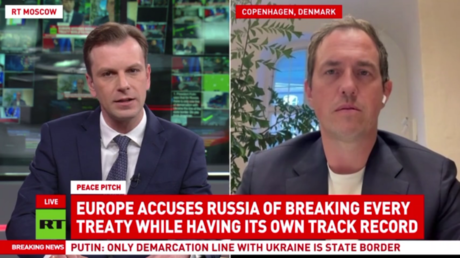
You cannot separate the headline "Denmark moving towards dictatorship" from the medium that amplified it. When an outlet like RT—a state-funded Russian media network—airs a segment featuring a Danish MP trashing their own democracy, you are not watching journalism. You are watching whataboutism deployed as foreign policy.
The strategic goal of such broadcasts is simple: moral equivalence.
If a Western democracy like Denmark can be framed as an emerging dictatorship, then actual dictatorships—where opposition leaders are poisoned, imprisoned, or pushed out of windows—suddenly look normal. It is a classic disinformation tactic documented extensively by researchers at the Atlantic Council’s Digital Forensic Research Lab and the Reuters Institute for the Study of Journalism. You do not need to convince viewers that Moscow or Beijing is free; you just need to convince them that Copenhagen is equally unfree.
And who helps them do it? Local politicians looking for leverage.
In a proportional parliamentary system with a low 2% threshold for entry, Denmark’s parliament regularly houses a dozen or more political parties. This produces healthy debate, but it also gives microphones to fringe figures on both the far left and the far right. When an opposition MP loses a vote on pandemic restrictions, agricultural emissions, or criminal justice reform, hyperbole is their sharpest weapon. Calling a rival coalition "dictatorial" plays well on domestic social media. When a foreign network picks up that quote and strips away the local context, a routine parliamentary squabble transforms into a breaking international crisis.
The Real Friction Nobody Wants to Admit
Here is where the contrarian take has to cut both ways. If I tell you Denmark is a flawless utopia, I am lying to you just as much as the "dictatorship" crowd.
High-trust governance has a dark, sharp edge, and Denmark’s critics are pointing at a real symptom even while misdiagnosing the disease.
The weakness of a consensus-driven, high-trust society is tyranny of the majority—a danger Alexis de Tocqueville warned about nearly two hundred years ago. When 85% of a population shares deep cultural norms and trusts the state to enforce them, the remaining 15% can feel suffocated.
Look closely at the policies that trigger international outrage:
- Assimilation Mandates: Denmark’s approach to integration does not celebrate passive multiculturalism; it demands active cultural and economic participation. Policies targeting non-Western immigrant neighborhoods—including mandatory daycare from age one to teach Danish language and values, and harsher criminal penalties in designated zones—treat equality before the law as conditional on geography and demographics. That is a massive departure from classic liberal legal principles.
- Surveillance and Policing: Denmark has steadily expanded closed-circuit television networks, border controls, and police stop-and-search zones. Because Danes trust their police force at rates exceeding 80%, there is far less public pushback against surveillance infrastructure than you would see in Germany or the United States.
- Conformity Pressure: The unwritten cultural code known as Janteloven (the Law of Jante)—which discourages individual boasting and prioritizes collective harmony—bleeds into political life. Dissent is completely legal, yet radical non-conformity carries heavy social friction.
Notice what these issues actually are. They are not signs of an impending coup or a one-party police state. They are the byproduct of a democratic majority voting repeatedly to use state power to protect social cohesion and the welfare state.
Danes understand a brutal economic math that many other Western nations try to wish away: you cannot maintain a universal, cradle-to-grave welfare state with open borders and low social trust. If millions of people draw from the system without contributing to it, or if parallel societies reject the foundational norms that make high taxation tolerable, the welfare model collapses. So Danish voters—across both center-left Social Democrats and center-right Liberals—chose to harden the shell of their society to keep the soft center intact.
You can call that illiberal. You can call it exclusionary. You can argue it violates universal human rights norms. Those are serious, adult debates. Calling it a "dictatorship" is intellectual surrender.
Imagine a Scenario Where the Critics Were Right
Let us run a quick thought experiment to expose how hollow the dictatorship claim really is.
Imagine a scenario where Denmark actually did begin sliding toward authoritarianism. What would the early warning signs look like? You would not see it in a controversial housing bill or a temporary public health mandate. You would see it in three specific institutional attacks:
- Capture of the Courts: The ruling coalition would pack the Supreme Court with loyalists or strip judges of the authority to review executive orders.
- Strangulation of Public Media: The government would seize editorial control of DR (the Danish Broadcasting Corporation) and bankrupt independent newspapers like Politiken or Berlingske through targeted tax audits and libel suits.
- Rigging the Electoral Math: The ruling party would raise the parliamentary threshold from 2% to 10% to wipe out smaller opposition parties and lock in permanent power.
Look at the reality on the ground in Copenhagen today. None of those things are happening. Not one. Instead, the Danish press routinely exposes government scandals—such as the 2020 mink culling crisis, where the Prime Minister ordered the destruction of the country's mink population without proper legal authority.
And what happened when the government overstepped its legal bounds during that crisis?
Did journalists disappear? No. A parliamentary commission investigated the Prime Minister. Coalition partners threatened to bring down the government. The Prime Minister had to issue a formal apology, pay compensation to farmers, and face voters in a general election. That is the exact opposite of a dictatorship. That is an immune system working under stress.
Stop Asking If Denmark Is Free and Start Asking What Freedom Costs
Whenever people search for answers about Denmark’s political direction, they are usually asking the wrong question. They ask: "Is Denmark losing its democracy?"
The real question is: How much individual autonomy are you willing to trade for collective security and institutional trust?
In the United States, citizens fiercely guard individual autonomy against state intrusion, accepting higher crime rates, fragmented healthcare, and deep political polarization as the price of liberty. In Denmark, citizens fiercely guard collective stability, accepting high taxes, intrusive social policies, and strict integration rules as the price of security.
Both models carry real risks. The American model risks institutional paralysis and social breakdown. The Danish model risks paternalism and the marginalization of minorities who do not fit the consensus mold.
When you read headlines claiming Denmark is marching toward dictatorship, recognize the game being played. You are watching political theater designed to weaponize your own cultural assumptions against a system that plays by entirely different rules.
If you want to critique Denmark, critique its paternalism, its aggressive assimilation policies, or its willingness to trade civil liberties for administrative efficiency. Those arguments have teeth. But stop calling a consensus-obsessed, coalition-governed, transparent democracy a dictatorship just because its voters choose to use the state differently than you would.
Power in Copenhagen is not locked in a palace; it is rented from an electorate that can—and regularly does—evict the tenants at the ballot box.