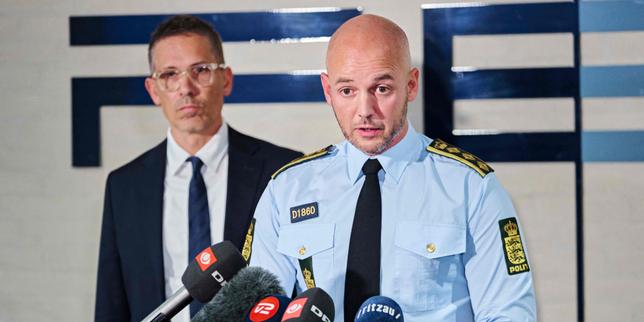
Denmark has formally expelled a Russian diplomat following an attempted assassination of a Ukrainian rapper on Danish soil, escalating diplomatic tensions between Copenhagen and Moscow. The Danish Ministry of Foreign Affairs confirmed the expulsion as a direct response to intelligence linking Russian state operatives to the plot, signaling that European capitals are increasingly unwilling to tolerate extraterritorial covert operations within their borders.
The incident represents a stark convergence of modern information warfare, transnational repression, and traditional diplomatic retaliation. While live news coverage often treats diplomatic expulsions as routine tit-for-tat maneuvers, the targeting of a cultural figure inside a NATO member state marks a significant threshold in how the war in Ukraine is spilling across European borders.
The Mechanics of Diplomatic Expulsion
When a host nation declares a foreign diplomat persona non grata under Article 9 of the Vienna Convention on Diplomatic Relations, the individual must leave the country within a strict timeframe, usually 48 to 72 hours. It is the sharpest non-military tool available in standard statecraft.
Governments rarely deploy this measure over a single isolated incident unless the intelligence is airtight. In Nordic security circles, counterintelligence agencies like the Danish Security and Intelligence Service (PET) typically spend months mapping out networks before recommending an expulsion. By going public and tying the expulsion directly to an attempted hit on a Ukrainian artist, Copenhagen is sending an unmistakable message to Moscow that diplomatic immunity will no longer shield operational handlers.
The operational reality of Russian embassies across Europe has shifted dramatically since 2022. Hundreds of intelligence officers operating under diplomatic cover were expelled across the continent in the months following the full-scale invasion of Ukraine. Those who remained were forced to adapt, often relying on local criminal proxies, coerced diaspora members, or disposable operatives to carry out surveillance, sabotage, and targeted attacks.
Why Cultural Figures Become Targets
At first glance, targeting a musician seems like a strange allocation of intelligence resources. It is not. In asymmetric conflicts, morale and cultural identity are strategic centers of gravity.
Ukrainian artists, particularly musicians and rappers, have played an outsized role in sustaining domestic morale, fundraising for military units, and keeping international attention focused on the war. Unlike military commanders or intelligence officials, cultural figures travel openly, maintain predictable public schedules, and rarely benefit from state-provided close protection details. They are soft targets with high symbolic value.
Eliminating or intimidating a prominent Ukrainian voice in a country like Denmark achieves two objectives for an adversary:
- Psychological deterrence: It signals to the broader Ukrainian diaspora across Europe that geographic distance offers no guarantee of safety.
- Media disruption: A successful attack inside a stable Western European democracy dominates news cycles, sowing fear and forcing host governments to divert security resources toward protecting civilian exiles.
Consider a hypothetical scenario to understand the operational calculus. If a foreign intelligence service wants to rattle an exile community in Copenhagen or Berlin, attacking a heavily guarded embassy requires complex logistics and risks immediate direct attribution. Hiring a local criminal intermediary to target an outspoken civilian artist achieves comparable psychological shock at a fraction of the operational risk.
The Evolution of Covert Operations on European Soil
Europe has seen this playbook before, though the tactics have evolved. The 2018 poisoning of Sergei Skripal in Salisbury and the 2019 assassination of Zelimkhan Khangoshvili in Berlin's Tiergarten demonstrated a willingness to conduct lethal operations inside Western capitals. What has changed is the tempo and the broadening of the target list.
Intelligence agencies across the Baltic and Nordic regions have repeatedly warned about a surge in hybrid threats. These range from GPS jamming in the Baltic Sea to arson attacks on logistics warehouses and plots against individuals critical of the Kremlin. Denmark, sitting at the strategic choke point between the Baltic and North Seas, occupies a critical position in NATO's northern flank. Consequently, Copenhagen has become a primary theater for both maritime surveillance and covert political signaling.
The Proxy Problem
Modern counterintelligence faces a difficult attribution hurdle. When an embassy-based case officer recruits a third-party criminal or a radicalized local via encrypted messaging apps, the paper trail is deliberately fragmented. Proving beyond a legal doubt that a specific diplomat ordered a specific act of violence is notoriously difficult in open court.
This is precisely why diplomatic expulsions are used instead of criminal prosecutions. The evidentiary standard for declaring a diplomat persona non grata is political, not judicial. The host state does not need to prove guilt beyond a reasonable doubt to a jury; it only needs to satisfy its own national security leadership that the diplomat's activities are incompatible with their official status.
Copenhagen's Strategic Calculus
Denmark has been one of Ukraine's most committed backers relative to its size, supplying substantial military hardware, including F-16 fighter jets, artillery systems, and air defense components. That level of support inevitably places Denmark high on Moscow's list of adversarial states.
By expelling a diplomat over the attempted assassination, the Danish government had to weigh the certainty of Russian retaliation. Standard diplomatic protocol dictates that Moscow will respond symmetrically, expelling a Danish diplomat from its embassy in Russia within days. For smaller European nations, every diplomatic slot in Moscow is precious, as shrinking embassy staffs reduce a country's ability to gather ground-level political reporting and provide consular services.
Copenhagen decided the trade-off was necessary. Failing to respond forcefully to an assassination plot on Danish soil would invite further escalation and undermine public trust in the state's ability to maintain internal security.
The Gray Areas of Attribution and Escalation
While the expulsion sends a clear political signal, it also highlights the limitations of current European counter-measures. Expelling one diplomat removes a single node from an intelligence network, yet the broader infrastructure—financial channels, encrypted communication networks, and criminal cutouts—often remains intact.
Furthermore, publicizing foiled plots carries inherent risks. Intelligence services generally prefer to keep their detection capabilities opaque. When a government announces that it thwarted an assassination and links it to a specific embassy official, it inadvertently reveals to the adversary that their operational security was compromised. Adversaries study these announcements closely to identify where the leak occurred, whether through signals intelligence, human sources, or compromised local assets.
There is also the diplomatic reality that shrinking embassy footprints can sometimes backfire. When legitimate diplomatic channels are reduced to skeletal staffs, the space for crisis de-escalation narrows, and intelligence services rely even more heavily on non-official cover operatives who are far harder to track than accredited diplomats.
What Comes Next for European Security Services
The incident in Denmark will almost certainly trigger quiet security reviews across neighboring capitals. Interior ministries and domestic intelligence agencies in Sweden, Norway, Germany, and the Baltic states routinely share threat assessments regarding transnational repression.
Protection protocols for high-profile Ukrainian exiles, journalists, and cultural figures living in Western Europe remain inconsistent. Unlike political dissidents who have formally applied for asylum and entered state protection programs, artists and activists traveling on temporary visas or cultural exchanges often fall through the bureaucratic cracks. Local police departments are rarely briefed on the specific counterintelligence risks facing visiting performers until an incident occurs.
Closing that gap requires tighter coordination between national security services, immigration authorities, and local law enforcement, ensuring that vulnerable individuals are flagged before they become targets. Until European governments impose costs that go beyond routine diplomatic expulsions—such as targeted sanctions on intelligence leadership or sweeping restrictions on diplomatic travel within the Schengen zone—the covert war on European streets will continue to test the boundaries of state sovereignty.