Silence.
That is the first thing you notice when a major airline loses its digital nervous system, not the shouting at the podium or the frantic tapping on smartphone glass, but a sudden, unnatural stillness settling over a terminal built for constant motion. For a closer look into this area, we suggest: this related article.
Picture a hypothetical traveler—call her Maya—standing at Gate B14 in Chicago O'Hare at 6:45 on a Tuesday morning, clutching a lukewarm coffee and a boarding pass that has suddenly become a piece of scrap paper. Three rows behind her sits a retired couple trying to reach a grandson's graduation in Denver, and beside the charging pillar leans a surgical resident carrying a cooler that cannot afford a four-hour layover on the tarmac. None of them know yet that somewhere inside a server architecture miles away, a technology failure has severed the invisible threads connecting flight plans, crew schedules, weight-and-balance calculations, and gate assignments. They only know that the departure board just flickered, the mobile app stopped refreshing, and the gate agent's smile vanished behind a wall of sudden, frantic keystrokes.
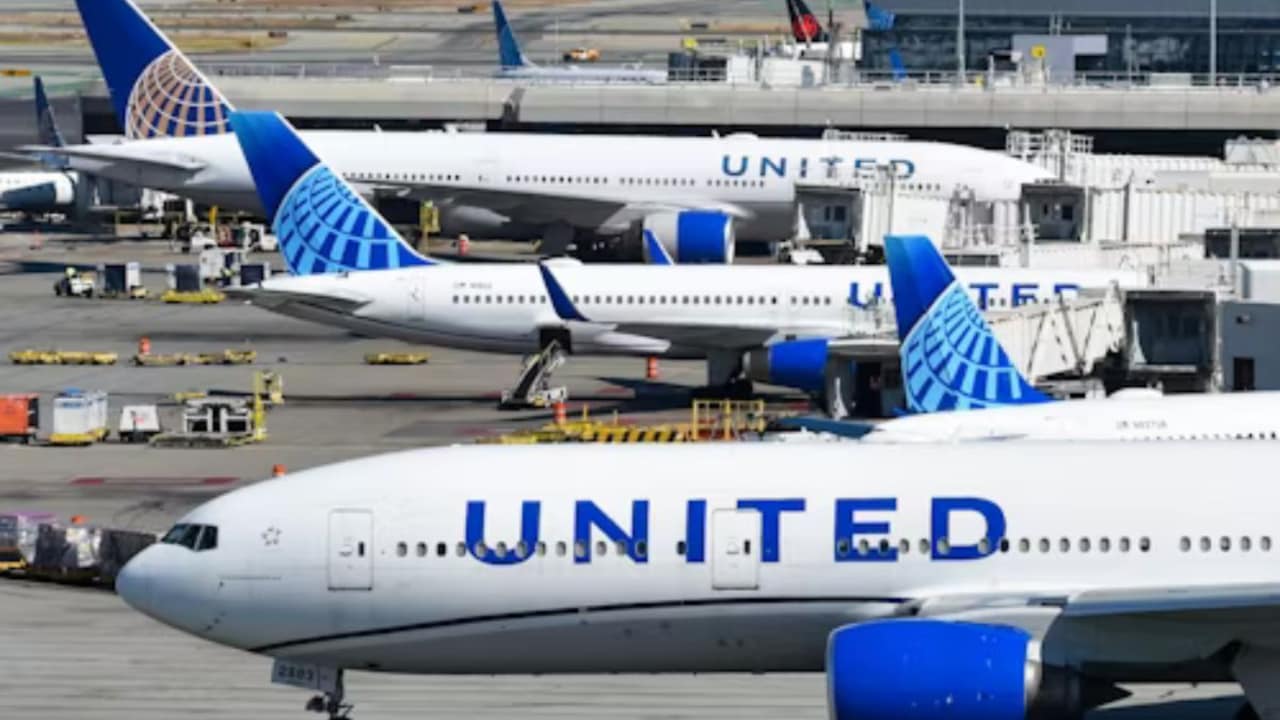
When United Airlines suffers a widespread system outage just days after a nationwide ground stop, the headlines treat it like a routine operational hiccup. Analysts tally the delayed flights, spokespeople issue carefully worded statements about "technology issues" and "restoring normal operations," and by the following afternoon, the news cycle moves on to whatever else is burning. Yet for anyone who has ever slept on carpet tiles beneath flickering fluorescent lights while watching a missed connection dismantle a week of careful planning, these back-to-back disruptions feel anything but routine. They expose a quiet, uncomfortable truth about modern commercial aviation: the machines that carry us through the stratosphere at five hundred miles an hour are marvels of redundant engineering, while the software keeping them on schedule often rests on brittle, aging foundations. For additional background on this issue, in-depth reporting can also be found at National Geographic Travel.
The Anatomy of an Invisible Collapse
To understand why a single software failure can freeze hundreds of aircraft in place, think of an airline not as a fleet of planes, but as a high-wire balancing act performed with ten thousand moving pieces at once.
Every departure requires an exact choreography. A specific airframe must arrive at the right gate with enough turnaround time for fueling, catering, baggage transfer, and mechanical checks, while a captain, first officer, and cabin crew—each bound by strict federal rest rules—must converge on that exact spot at the exact same minute. Behind the scenes, dispatchers calculate fuel loads based on upper-atmosphere winds, passenger counts, and cargo weight, transmitting those numbers electronically to the flight deck before a single wheel can turn.
When the central network goes dark, none of those handshakes happen. The jets themselves are mechanically sound, the skies above are clear, and the pilots are sitting in the cockpit ready to push back, yet the entire operation grinds to a halt because the digital paperwork cannot clear. A nationwide ground stop halts departures across the system to prevent airborne gridlock and preserve safety margins when dispatch or communication links falter. Days later, when a secondary outage strikes customer-facing apps, check-in kiosks, and internal crew-scheduling tools, it lands on an operation already stretched thin from recovering the previous disruption.
I have lived through that exact domino effect more times than I care to count, most memorably during a winter hub meltdown where the weather outside was crystal clear, yet thousands of us remained stranded for thirty-six hours because the crew-tracking database could no longer match pilots to planes. You learn quickly in those moments that an airline outage is not an abstract corporate problem. You smell it in the stale air of overcrowded concourses, hear it in the exhausted patience of gate agents fielding the same unanswerable question four hundred times an hour, and feel it in the low-grade panic of watching hotel vouchers vanish while standby lists stretch into the triple digits.
Why Back-to-Back Failures Happen
Readers often ask the same blunt question when a major carrier stumbles twice in a single week: how can a multi-billion-dollar company with armies of engineers let its systems fail twice in a matter of days?
The honest answer is both reassuring and unsettling. Commercial aviation is built on a culture of absolute caution; when data integrity is even slightly in doubt, aviation protocols demand that planes stay on the ground rather than fly with unverified weight calculations or incomplete dispatch releases. In that sense, a ground stop is proof that safety barriers are working precisely as intended.
The unsettling part lies beneath the hood. Legacy airlines operate on sprawling digital ecosystems cobbled together over decades, where modern cloud interfaces and sleek passenger apps sit atop core mainframe databases written in eras when smartphones did not exist. Updating those foundational layers without shutting down a 24-hour global operation is like trying to rebuild the foundation of a skyscraper while ten thousand people are working inside it.
Consider what happens next when a carrier experiences a major ground stop. Recovery does not end the moment the "all clear" sounds. Planes end up in the wrong cities, flight crews time out under Federal Aviation Administration duty limits, and maintenance schedules fall out of alignment. Engineers push emergency patches, IT teams reroute traffic to stabilize servers, and operations centers run at maximum capacity just to clear the backlog. That high-stress recovery window leaves almost zero margin for error. If a secondary bug, a corrupted data sync, or an overloaded authentication server trips while the system is still catching its breath, the entire network can buckle all over again.
What Passengers Actually Lose When the System Breaks
We tend to measure airline disruptions in cold metrics—cancellation percentages, on-time arrival rates, and stock price dips—because numbers are tidy and grief is messy.
Numbers do not capture the quiet heartbreak of a father watching his daughter's first recital through a pixelated video call from Terminal C because his rebooked flight pushed back six hours late. They do not record the anxiety of a traveler with a chronic medical condition rationing spare medication in an airport bathroom while waiting for a baggage claim carousel to start moving again. Nor do they reflect the toll on frontline employees—the ramp workers, flight attendants, and customer service representatives—who bear the brunt of passenger anger despite having zero control over the server racks failing miles away.
There is also a deeper erosion happening every time a major carrier suffers cascading outages: the loss of trust in the basic promise of modern travel. When you buy a ticket months in advance, check in twenty-four hours early, and arrive at the airport with hours to spare, you are upholding your half of an unspoken contract. When the airline's own digital infrastructure collapses twice in a single week, that contract feels decidedly one-sided.
Navigating the Chaos When the Screens Freeze
So what do you do when you are standing in Maya's shoes, staring at a frozen departure board while the line at the customer service desk wraps past three gates? Panic is natural, and frustration is earned, yet a few deliberate moves can separate getting home tonight from sleeping near a baggage claim belt.
First, bypass the physical line immediately. By the time two hundred passengers realize a system outage is underway, the queue at the gate podium is already a losing game. Call the airline's main reservation line while simultaneously opening a direct message with their support team on social media, and if you hold status or travel internationally, dial the international support desk, where hold times are often a fraction of domestic queues.
Second, decouple yourself from the airline's failing app by checking raw flight status data through independent flight-tracking tools and airport authority websites. During widespread outages, a carrier's proprietary app frequently lags behind real-time gate movements or displays cached error screens, leaving you blind to the one outbound flight that actually has open seats.
Third, know your rights before you accept the first voucher offered. Under U.S. Department of Transportation rules, if an airline cancels your flight or causes a significant delay—even due to an internal technology outage, which falls squarely under carrier-controlled disruptions rather than weather—and you choose not to travel, you are entitled to a full refund to your original form of payment, not merely a future travel credit. If you still need to reach your destination, ask agents explicitly to endorse your ticket over to a partner or competing carrier with available seats, a step that rarely happens automatically unless you request it directly.
Finally, pack your carry-on as though every two-hour hop might turn into an overnight stay. Keep essential medications, chargers, a change of clothes, and critical documents within arm's reach, because during a database outage, automated baggage routing is often the first system to lose track of where your checked suitcase actually went.
The Fragile Thread Holding the Sky Together
We live in an era that worships speed, efficiency, and automated convenience, marveling at how effortlessly we can tap a glass screen in New York and step off an airplane in Tokyo fifteen hours later. Yet moments like these back-to-back United Airlines disruptions strip away the illusion of effortless flight and remind us how much human patience, frontline grit, and fragile code hold the modern world aloft.
Somewhere tonight, long after the headlines fade and the departure boards finally blink back to green, a tired gate agent will scan the last boarding pass of a delayed red-eye, a pilot will run through one final pre-flight checklist in the soft glow of the cockpit, and thousands of strangers will settle into narrow seats, trusting once again that the invisible systems beneath them will hold.