Sports journalism is addicted to lazy adjectives. Whenever a struggling franchise plays a team at the bottom of the standings, headline writers pop open the thesaurus and reach for the cheap stuff. Desperate. Must win. Backs against the wall.
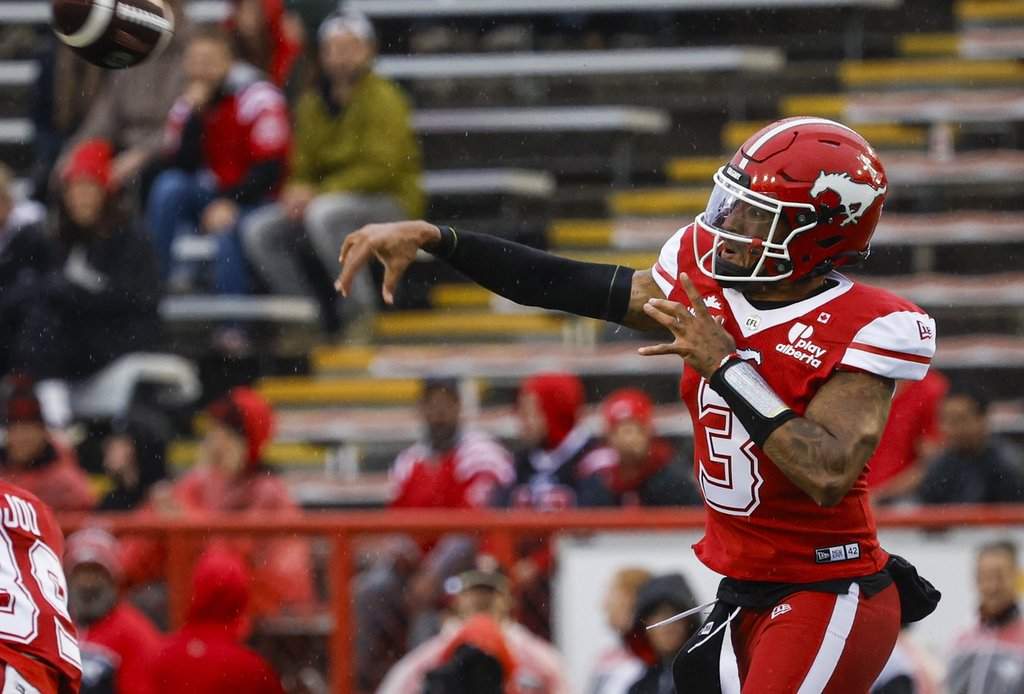
Look at the standard narrative surrounding a mid-season matchup between the Calgary Stampeders and the Ottawa Redblacks. The Stampeders are supposedly desperate because their record is sub-par. The Redblacks are supposedly harmless because they carry a winless tag into McMahon Stadium. It is a storyline built for casual fans who mistake emotional panic for competitive advantage. It ignores how professional athletes actually function under pressure, how variance dictates football outcomes, and why treating a struggling team as a wounded animal is a tactical trap.
Desperation in professional sport is not a performance enhancer. It is a symptom of structural decay.
When a coaching staff or a front office panics, they throw out game plans, shorten rotations, and force personnel into roles they cannot execute. I have watched organizations throw millions of dollars into panic-driven roster churn. They cut veterans on Tuesday, sign street free agents on Wednesday, and expect a cohesive unit by Thursday kickoff. It never works. Chemistry is built on repetition and trust, not anxiety. When a team is described as desperate, what is actually happening behind closed doors is chaos. Panic leads to blown assignments, missed gap integrity, and conservative play-calling born from the sheer terror of making a mistake.
The team carrying the "desperate" label is paralyzed by the fear of humiliation. The winless team across the field carries zero psychological weight. They are playing with house money.
The Mathematics of the Winless Fallacy
A winless record in a professional league with parity is a statistical outlier, not a permanent state of being. Regression to the mean is an ironclad law of physics in sports. Teams do not stay winless forever. The variance inherent in a 110-yard Canadian football field ensures that bounces, fumbled balls, and penalty flags eventually even out over a sample size of games.
When a winless team walks into an opponent's stadium, conventional wisdom claims they are demoralized. That is false. They are dangerous because their margin for error has expanded outward into absolute freedom. Nobody expects them to win. Every pundit has already written their obituary for the week. This removes the suffocating weight of expectation.
Meanwhile, the favored or home team—burdened by the media narrative of desperation—feels the crushing weight of every single missed assignment. The crowd groans at a second-and-long incompletion. The sideline turns toxic after a single defensive breakdown. That is not an advantage. That is a hostile work environment engineered by panicked fans and lazy media members.
The Canadian Football Nuance
To understand why the standard "desperate powerhouse vs. hapless doormat" narrative fails, you have to look at the geometry of the Canadian Football League.
The field is 110 yards long, 65 yards wide, and features 20-yard deep end zones with goalposts stationed right on the goal line. Add twelve men a side, motion rules that allow backfield players to run full speed toward the line of scrimmage before the snap, and three downs instead of four. This creates an explosive, high-variance environment where massive momentum swings are baked into the rulebook.
In a three-down league, a single two-and-out changes field position drastically. The penalty for conservative play is immediate death. When a team panics and dials back its playbook to avoid mistakes, it plays directly into the hands of an aggressive, blitz-heavy defense that has nothing to lose. Ottawa does not need a miracle to beat Calgary; they need Calgary to beat themselves. And a desperate team beats itself faster than any opponent ever could.
Anatomy of a Front Office Panic
Let us examine what happens when management buys into their own press clippings about being desperate.
When losses mount, fans demand heads. Owners get restless. General managers feel the seat getting hot. The immediate reaction is always cosmetic. They change the starting quarterback, or they fire a coordinator on a short week, or they sign a high-profile retread to a bloated contract.
Imagine a scenario where a front office spends the week restructuring contracts and bringing in external media noise to prove to the fanbase that they are taking action. All that achieves is fracturing the locker room. The players who survived the roster purge look over their shoulders, wondering if they are next. The messaging from the coaching staff shifts from tactical execution to emotional survival.
Football is a game of millimeters, split-second recognition, and relentless repetition. If a player is spending even five percent of his cognitive bandwidth worrying about whether his job is secure because the media called the team desperate, his reaction time on a zone-read drops by a critical fraction of a second. Against elite professional athletes, a fraction of a second is the difference between a Pick-Six and a game-winning touchdown.
Dismantling the Statement Win
Every time a team like Calgary faces a winless opponent, analysts chatter about needing a statement win.
This is another hollow phrase. Statement wins do not exist in professional sports. A single regular-season victory over a struggling opponent does not fix a broken offensive line, an uninspired defensive scheme, or a talent deficit at key national positions under the ratio rules. Wins mask flaws; losses expose them.
If Calgary wins a sloppy, penalty-riddled game against Ottawa by three points, the local papers will scream about resilience and character. They will talk about how the team turned a corner. They will ignore the blown coverages in the secondary and the anemic red-zone conversion rate. They will use the result as a sedative, delaying the necessary, painful restructuring that the franchise actually requires.
Conversely, if Ottawa exploits Calgary's structural vulnerabilities and walks away with an upset, the panic button will be smashed into dust. But at least the illusion would be gone. At least the organization would be forced to look in the mirror and admit that a label like desperation is just a euphemism for bad roster construction and poor preparation.
The Trap is the Narrative
The media loves to label games as trap games. They warn the public that a winless team is more dangerous than their record indicates. But they frame it as a quirky coincidence rather than a mathematical reality.
The trap is not the opponent. The trap is the mindset.
When you convince a team that they are desperate, you tell them they are already failing. You tell them that normal rules no longer apply, that they must force plays, that they have to rescue their season in a single afternoon. That mindset breeds turnovers. It breeds undisciplined penalties. It breeds the exact type of sloppy football that allows a winless underdog to gain confidence in the first quarter, smell blood in the second, and close out the game in the fourth.
Stop looking at professional football through the lens of emotional melodrama. Teams do not win because they wanted it more. They do not lose because they lacked heart. They win because their scheme exploited the opponent's leverage points, their depth held up through four quarters, and their execution survived the variance of the sport.
Calgary does not need desperation. Ottawa does not need pity.
Both rosters are stepping onto a 110-yard field governed by physics, math, and execution. The team that wins will be the one that stops panicking about the narrative, stops listening to the noise about must-win scenarios, and simply executes their assignments better than the men standing across from them. Everything else is just ink on a page, written by people who have never taken a hit in the open field.