History is rarely written in grand halls during moments of unanimous clarity. More often, it is scribbled in the margins of yellow legal pads, typed into encrypted document folders on tired laptops, or recorded in private journals late at night when the adrenaline of a relentless crisis finally starts to fade.
The public sees the finished product. They see the podiums, the bright television lights, the steady stream of press briefings, and the polished figures standing before the world to deliver numbers that dictate whether schools stay open or families stay apart. But behind that glass wall exists a different universe entirely. It is a space defined by exhaustion, friction, the heavy burden of public visibility, and the strange, isolating reality of becoming a household name while simply trying to do a job.
Consider what happens when private thoughts collide with public spectacle.
For years, the inner workings of high-stakes government health responses remained locked away behind closed doors. Then, the pages surface. Diaries emerge. Personal reflections held in private notebooks find their way into the light, offering a rare, unfiltered glimpse into the mind of a central figure navigating a historic storm. These records do not read like policy papers. They read like human reactions. They reveal the sheer disbelief of sitting across from powerful political figures who viewed global health crises through the lens of daily news cycles and polling data rather than epidemiological curves.
The contrast is stark. On one side stands the institutional scientist, armed with data, historical precedent, and the slow, methodical language of research. On the other stands the political executive, driven by immediate perception, rhetorical flair, and an acute awareness of an audience. When these two forces meet in closed-room meetings, the friction is palpable.
Imagine sitting at that long conference table. The air is stale. The coffee has gone cold hours ago. Outside, a restless nation waits for answers, tuning into evening broadcasts like an audience watching a high-stakes drama. Inside, the dialogue is jagged, unpolished, and intensely human.
In these newly revealed reflections, the friction between political leadership and scientific expertise comes into sharp focus. The descriptions of high-level meetings capture a leader whose communication style often drifted into unstructured loops, mixing policy instincts with spontaneous theater. To the scientist taking notes in the margins, these moments were not just eccentricities; they were obstacles to clear, life-saving communication. Every rambling sentence at a televised briefing represented a potential misinterpretation by millions of anxious citizens. Every off-the-cuff remark meant hours of subsequent cleanup for communications teams working around the clock.
Yet, the diary entries reveal something deeper than mere frustration with political theatrics. They capture the strange, disorienting phenomenon of accidental celebrity.
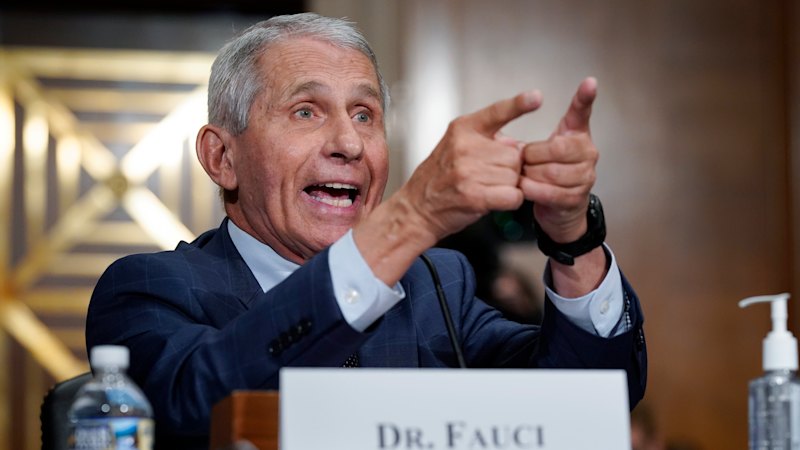
Fame is a peculiar beast. Most scientists spend decades in sterile laboratories, academic libraries, or quiet clinical wards, rewarded not by applause but by peer-reviewed citations and the quiet satisfaction of solving microscopic puzzles. They are trained to be invisible instruments of truth. But history occasionally thrusts these figures onto center stage, turning immunologists and epidemiologists into cultural touchstones whose faces appear on coffee mugs, t-shirts, and late-night television sketches.
The personal journals document the surreal nature of this transition. One day, you are reviewing viral mutations; the next, you require armed security details just to buy groceries because your face has become a lightning rod for a fractured society's collective anxiety and anger.
This is the invisible tax of public service during a crisis. The stakes are impossibly high, yet the margin for error is razor-thin. Every word is parsed, weaponized, and dissected by a population looking for certainty in an uncertain world. When a public official admits in a private diary that they felt overwhelmed, isolated, or exasperated by the chaotic nature of leadership at the highest level, it humanizes an office that often feels untouchable and distant.
We forget that behind every major institutional response are individual human beings with limited sleep, frayed nerves, and profound doubts. They make judgment calls under immense pressure, knowing that history will judge every syllable. When the cameras turn off, the performance stops, and the writer picks up the pen to record the reality of what just transpired, the true narrative of our times is written.
It is a reminder that governance is not a machine. It is a messy collection of personalities, egos, fears, and occasional moments of profound courage, all crashing against one another in rooms where the future of a nation is quietly negotiated line by line.
The notebook closes. The ink dries. The public moves on to the next cycle of outrage and discovery. But the words left behind remain as an enduring testament to what it truly feels like to stand at the eye of the storm when the world is watching, waiting, and wondering what comes next.