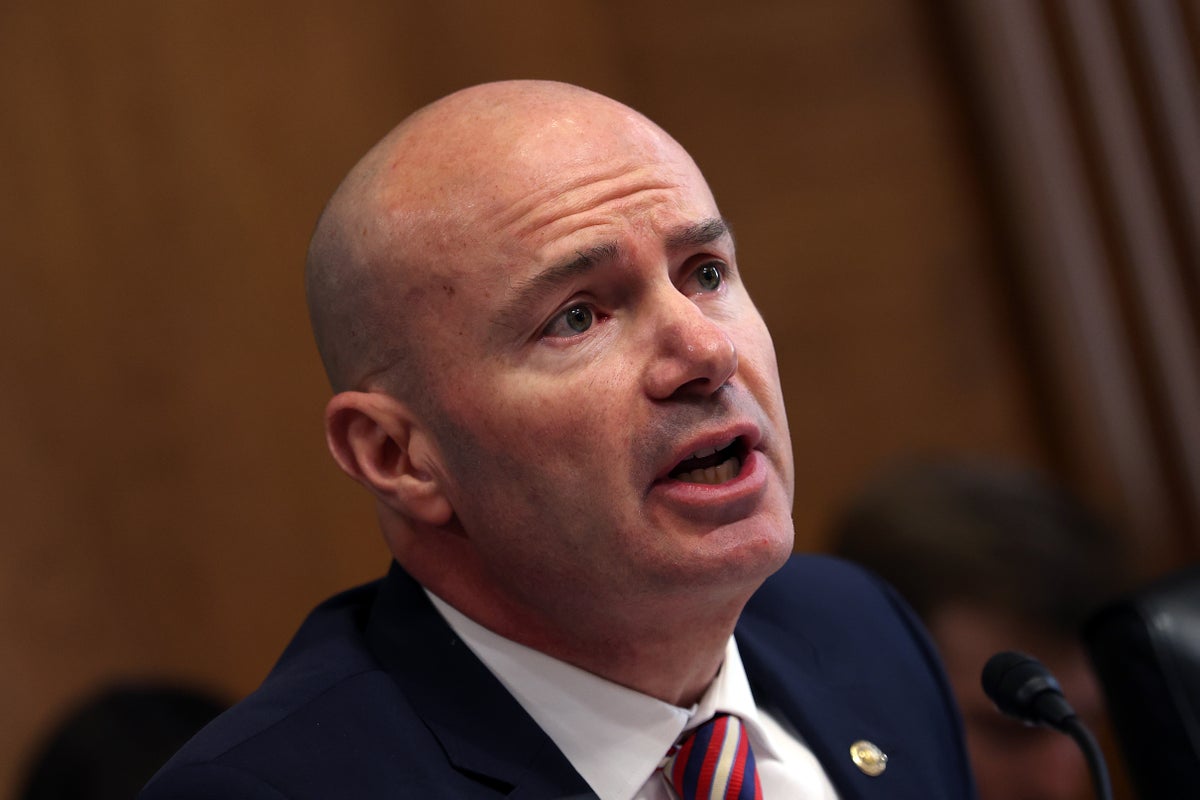
The notification pings at 2:00 AM. It’s a blue light reflecting off a glass of water, a silent intruder in the quiet of a bedroom. For a United States Senator, that screen is a portal to the collective consciousness of a nation. On this particular night, Mike Lee, a Republican from Utah, decided to reach into the digital ether and pull out a ghost.
He didn't post a policy update. He didn't share a constituent’s success story. Instead, he hit "repost" on a meme. It featured an image etched into the American psyche: O.J. Simpson and Nicole Brown Simpson. The joke—if we are still calling these things jokes—cast Senator Elizabeth Warren and Spirit Airlines in the roles of the doomed couple.
To understand why this sparked a firestorm that refused to die down, you have to look past the political theater. You have to look at the anatomy of a meme and the way it erodes the floor of human decency until we are all standing in the basement.
The Weight of an Image
Some images are radioactive. They carry a half-life of trauma that doesn't dissipate with time. The photo of O.J. and Nicole isn't just a celebrity snapshot from a bygone era of tabloids and trial-of-the-century sensationalism. It is a precursor to a double homicide. It is a visual shorthand for a woman who lived in terror and died in a pool of her own blood on a walkway in Brentwood.
When a public official uses that specific imagery to score a point about a political rival or a struggling airline, something breaks. The "funniness" of the meme relies entirely on the viewer's knowledge of the domestic violence and the subsequent killing. The punchline is the murder.
Consider a hypothetical staffer in the Senator's office. Let's call her Sarah. Sarah grew up in a house where the sound of a heavy footstep on the stairs meant it was time to hide under the bed. To Sarah, the image of Nicole Brown Simpson isn't a template for a "sick burn" on X. It is a trigger for a physiological response—a tightening of the chest, a flash of cold sweat. When her boss shares that image, the professional world and the traumatic world collide. The stakes aren't political. They are visceral.
The Architecture of the Outrage
The internet moves in waves. First comes the post. Then comes the silence as people process the audacity. Then, the dam breaks.
Critics didn't just disagree with Mike Lee; they felt a sense of profound vertigo. How did we get here? How did the "world’s greatest deliberative body" find itself trading in the currency of 1990s tragedy? The backlash was swift and jagged. Commenters pointed out the grotesque nature of using a victim of domestic violence as a prop.
Elizabeth Warren, the target of the meme, has long been a lightning rod for conservative ire. That is the nature of the game. Policy debates are loud. They are often ugly. But they usually stop at the water's edge of human life. By crossing that line, the post stopped being about Warren's politics or Spirit Airlines’ bankruptcy filings. It became a referendum on the person holding the phone.
The Senator eventually deleted the post, but the internet has a long memory and a "save" button. The deletion felt less like an apology and more like a tactical retreat. It lacked the weight of a person realizing they had stepped on a grave.
The Desensitization Machine
We live in an era of the "unfiltered" politician. The goal is to appear human, relatable, and—above all—edgy enough to stay relevant in a feed that refreshes every three seconds. This drive for engagement creates a dangerous incentive structure.
Algorithms don't have a moral compass. They reward friction. A thoughtful essay on the complexities of the FAA’s relationship with budget carriers will get a handful of likes. A meme that mocks a murder victim will get millions of impressions. When the metric of success is "reach," the human cost becomes an externality.
This isn't just about Mike Lee. It’s about the slow-motion car crash of our public discourse. We are losing the ability to distinguish between a joke and a desecration. When we turn a woman’s final moments of life into a metaphor for a corporate merger or a legislative disagreement, we are participating in a secondary kind of violence. We are saying that her life, and the lives of those who suffer like she did, are less important than a clever caption.
The Invisible Stakeholders
There are people reading these posts who don't care about Senate committees or the price of a flight to Orlando. They are the survivors of domestic abuse who see their worst nightmares being used as a punchline by the people who write the laws of the land.
The stakes are the trust we place in our institutions. If a Senator cannot see the inherent cruelty in a meme, how can we trust them to see the humanity in the people they represent? Empathy isn't a soft skill. It is the fundamental requirement of leadership. Without it, policy is just a series of cold calculations made by people who have forgotten what it feels like to be afraid.
The digital age has made us neighbors with everyone, yet it has built walls of glass between our hearts. We see the image, we recognize the face, we get the reference, and we click "share." We forget that behind the pixels, there was a person.
The Echo in the Chamber
The silence that follows a deleted tweet is never truly silent. It echoes. It stays in the minds of the people who saw it and felt a little bit smaller, a little bit less safe.
We are currently navigating a world where the boundaries of the "acceptable" are being redrawn every hour. If we don't pause to ask why a specific image hurts, we lose the map entirely. We become lost in a wilderness of irony and cruelty, where the only thing that matters is the next notification, the next "own," the next moment of viral fame.
The bloodstains on that walkway in 1994 were real. The fear Nicole Brown Simpson felt was real. When we use those things to fill the empty space of a social media feed, we aren't being "bold" or "un-PC." We are simply being small.
The screen goes dark. The glass of water sits on the nightstand. The Senator moves on to the next topic, the next battle, the next headline. But for everyone else, the image lingers—a grim reminder that in the rush to be heard, we have forgotten how to listen to the quiet, persistent voice of our own conscience.
The light of the phone fades, but the shadow it cast across the Senate floor remains, long and cold.


