In the neon-lit periphery of São Paulo, where the humidity clings to the skin like a damp wool blanket, twenty-four-year-old Gabriel stares at a glass screen. His thumb moves in a rhythmic, hypnotic flick. Up. Up. Up. He isn’t reading the news. He isn’t looking for a manifesto. He is looking for a way to feel like a man in a country that feels like it has forgotten he exists.
On his screen, a different kind of sermon is playing. It isn't the gravelly, union-hall rhetoric of Luiz Inácio Lula da Silva, the man currently occupying the Alvorada Palace. Instead, it is the sharp, polished, and relentlessly aggressive digital presence of Flavio Bolsonaro. The message is simple. It is visual. It is fast.
Brazil is witnessing a tectonic shift that has nothing to do with traditional polling and everything to do with how a generation perceives reality. The "Lula Generation"—those born into the prosperity of the early 2000s—is vanishing. In its place is a demographic of digital natives who view the current president not as a savior of the working class, but as a dusty relic of a bygone analog era.
The Ghost of 2003
To understand why a young man like Gabriel is drifting toward the right, you have to understand the weight of nostalgia. For older Brazilians, Lula represents the "economic miracle." They remember the smell of fresh meat on the grill and the first time they could afford a flight to visit family in the Northeast.
But Gabriel wasn't there.
To him, those stories are like black-and-white movies. He grew up in the shadow of the 2014 recession. He saw his parents struggle under the weight of corruption scandals that dominated the headlines for a decade. When Lula speaks of "returning to the good times," it sounds to Gabriel like a grandfather reminiscing about a world that no longer exists.
The left is selling a memory. The right is selling a brand.
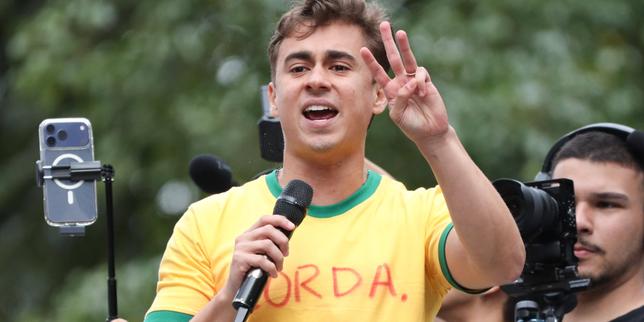
Flavio Bolsonaro, the eldest son of the former president, has mastered the art of the algorithmic hook. While the government struggles to explain complex fiscal policies or social programs through official channels, Flavio is in the comments section. He is on TikTok. He is in the Telegram groups where the real "truth" is shared.
Consider the difference in delivery. Lula’s communication is institutional. It is heavy with the gravity of the state. It requires patience. Flavio’s communication is a dopamine hit. It uses the language of the internet—memes, short-form video, and the "us vs. them" narrative that fuels the modern attention economy.
The Entrepreneurial Trap
There is a specific kind of hunger that defines the young Brazilian today. It is the hunger of the "correria"—the hustle.
The traditional promise of the left was a stable job, a strong union, and a social safety net. But in the gig economy, unions feel like a hindrance. Gabriel doesn’t want a boss; he wants to be the boss. He delivers food on a motorbike, or he tries to sell dropshipping courses, or he dreams of being an influencer.
The Bolsonarista movement tapped into this "entrepreneurial" spirit with surgical precision. They framed the state not as a protector, but as a predator—a monster of taxes and bureaucracy that keeps the small guy down.
When Flavio Bolsonaro speaks, he talks about freedom. Not the abstract, philosophical freedom of the Enlightenment, but the freedom to ride a bike without a helmet, the freedom to own a gun, and the freedom to make money without the government taking a cut.
It is a seductive lie, or perhaps a seductive half-truth. It ignores the reality that without the state, the "small guy" is often crushed by the "big guy." But in the heat of a thirty-second video, nuance is the first casualty.
The Aesthetic of Power
Visuals matter. In the age of the image, the aesthetic is the message.
Lula’s public appearances are often sea of red flags and aging activists. It is an aesthetic of the 1980s labor movement. For a nineteen-year-old in a favela, this looks like the past.
Flavio and the Bolsonarista machine have adopted the aesthetic of the modern "alpha." They use high-contrast lighting, gym culture, and religious undertones. It’s a mix of prosperity gospel and paramilitary chic. It feels powerful. It feels masculine. In a country with high crime rates and a crumbling sense of public order, that projection of strength is an intoxicating drug.
The data supports this shift. Recent polling indicates that among voters aged 16 to 24, the gap between Lula and the Bolsonarista influence is narrowing at a terrifying rate for the Workers' Party. It isn't just that they are losing the vote; they are losing the conversation.
The Invisible Stakes
The real danger isn't just a change in political preference. It is the erosion of a shared reality.
When Gabriel spends six hours a day in an echo chamber curated by an algorithm designed to provoke outrage, he stops seeing his fellow Brazilians as neighbors with different ideas. He sees them as enemies of the nation.
The "invisible stakes" here are the social fabric of Brazil itself. The right has successfully tied political identity to moral identity. To be a supporter of Flavio is to be "pro-family," "pro-God," and "pro-freedom." By definition, the opposition is cast as the opposite.
This isn't just politics. It’s a holy war fought with hashtags.
The left’s failure is a failure of imagination. They believed that if they improved people’s lives—if they put food on the table and lowered inflation—the votes would follow. They treated the electorate like a spreadsheet.
But humans are not spreadsheets. We are stories.
Lula is providing the bread, but the Bolsonaros are providing the circus, the meaning, and the identity. They are giving young men like Gabriel a reason to feel important. They are telling him he is a soldier in a great battle for the future of Western civilization. That is a much more exciting story than a 2% increase in GDP.
The Algorithm of Anger
We must confront the role of the machine. The platforms—Instagram, TikTok, YouTube—are not neutral observers. They are participants.
Content that triggers fear, anger, or tribal pride performs better. It stays on the screen longer. It gets shared more. The Bolsonarista movement didn’t just happen to be good at social media; they built their entire political philosophy around what the algorithm wants.
They are the first truly algorithmic political movement in South America.
Lula’s team tries to fight back with "fact-checking." They release long, boring documents debunking rumors. By the time the fact-check is published, the rumor has already been seen by ten million people. The lie has already become part of the narrative.
You cannot fight a forest fire with a glass of water.
The Mirror and the Mask
Deep down, the shift toward Flavio Bolsonaro is a mirror. It reflects a deep-seated insecurity among Brazil’s youth.
They are the most connected generation in history, yet they feel the most isolated. They see the wealth of the world on their screens every day, yet they struggle to pay for mobile data. This disconnect creates a vacuum of resentment.
The Bolsonarista movement provides a mask for that resentment. It turns the feeling of being "left behind" into a badge of honor. It tells the youth that they are the "real" Brazil, and that the elites in Brasília—including the current president—are the ones who are truly out of touch.
There is a profound irony in a billionaire’s son, a career politician like Flavio, positioning himself as the anti-establishment hero for the poor. But in the digital realm, irony is a dead language. Only the feeling remains.
The Quiet Room
Back in his small room, Gabriel puts his phone down. The screen goes black, but his mind is still racing. He feels an adrenaline spike that he doesn’t quite understand. He feels like he knows something that his parents don’t. He feels like he is part of a movement that is going to take the country back.
He doesn't realize that his "rebellion" has been carefully packaged and delivered to him by an algorithm designed to keep him clicking. He doesn't see the strings.
The battle for Brazil isn't happening in the halls of Congress. It isn't happening in the voting booths. It is happening in the quiet spaces between a thumb and a screen. It is a war for the attention, the identity, and the very soul of a generation that has stopped believing in the old gods of the left and is looking for something—anything—that feels like power.
The tragedy is that by the time they realize the difference between power and a digital simulation of it, the country they were trying to save might be unrecognizable.
Brazil is holding its breath. The old man in the palace is talking to a crowd that is slowly walking away, their heads bowed, eyes fixed on the glowing rectangles in their palms.