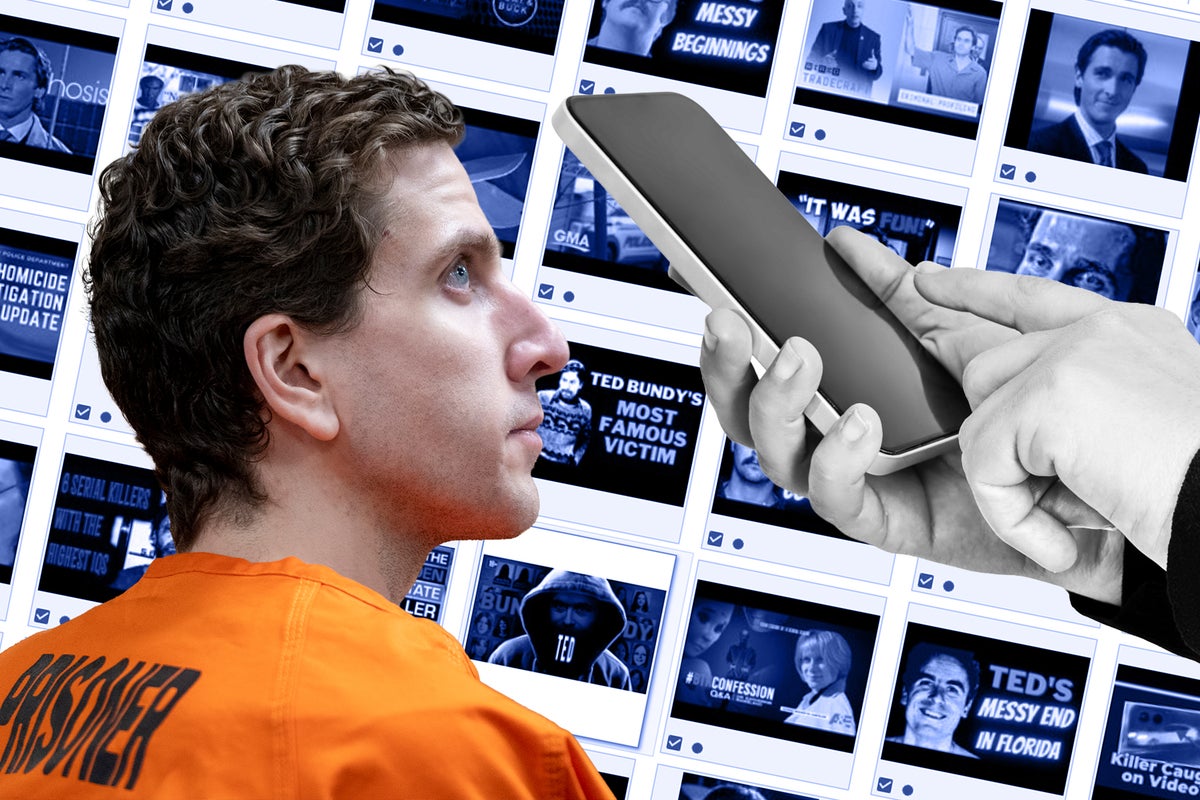
The white Hyundai Elantra didn’t just carry a suspected killer; it carried a digital ghost. Between 2:47 a.m. and 4:48 a.m. on November 13, 2022, Bryan Kohberger’s cell phone stopped communicating with the world. To the untrained eye, this looks like a man falling off the grid. To the FBI’s Cellular Analysis Survey Team (CAST), it was a beacon. By intentionally toggling his phone to airplane mode or powering it down, Kohberger didn't hide his trail. He highlighted it. He created a "digital blackout" that functioned as a loud, data-driven confession in an era where total silence is statistically impossible for a modern professional.
Investigators didn't catch Kohberger because his phone was on. They caught him because it was off at exactly the moment four University of Idaho students were being slaughtered.
The Myth of the Clean Break
Criminals often operate under the delusion that turning off a device creates a vacuum. It doesn’t. In the world of cellular forensics, there is a distinct difference between a "dead zone" and a "user-initiated disconnection." When a phone loses signal due to geography, it frantically shakes hands with every available tower, leaving a trail of "last gasp" pings. When a user manually kills the connection, the network logs a specific command.
Kohberger, a Ph.D. student in criminology, likely understood the basics of cell site location information (CSLI). He knew that if his phone pinged a tower near 1122 King Road, he was finished. But he underestimated the power of the "doughnut hole" theory. If a suspect’s movement is tracked from Pullman, Washington, toward Moscow, Idaho, and the signal vanishes for exactly the duration of a quadruple homicide before reappearing on a return route, the silence becomes a chronological fingerprint.
The FBI used this gap not as a missing piece of the puzzle, but as the border of the puzzle itself. They mapped every tower Kohberger hit before 2:47 a.m. and every tower he hit after 4:48 a.m. By overlaying those pings with surveillance footage of his white Elantra, they narrowed his location to a window of time where only one logical explanation remained: he was avoiding detection.
The Granular Precision of CAST
Special Agent Richard Stafford and the CAST unit utilize more than just simple tower triangulation. They look at timing advance and per-call measurement data. These metrics don't just say "he was in the city"; they can often place a device within a specific wedge of a tower's coverage area, sometimes down to a few hundred meters.
The prosecution’s strength lies in the frequency of Kohberger’s previous "scouts." Evidence suggests his phone pinged the area near the King Road residence at least twelve times in the months leading up to the attacks. On those twelve occasions, he didn't turn his phone off. He was learning the terrain, watching the house, and leaving a digital breadcrumb trail that established a pattern of stalking.
The night of the murders was the only time the pattern broke.
By comparing the "loud" nights (the stalking phases) with the "silent" night (the murder), the FBI established intent. This wasn't a random drive through the country. This was a tactical maneuver. When a suspect changes his digital behavior only during the commission of a crime, the "innocent coincidence" defense evaporates.
The Surveillance Overlap
No digital blackout is absolute. Kohberger may have silenced his phone, but he couldn't silence the world around him. This is where the investigation shifted from cellular data to visual data synthesis.
The FBI and local Moscow police didn't just look at his phone; they looked at everyone else's. They scraped data from Ring doorbells, Tesla Sentry Mode cameras, and municipal plate readers. Even if a car has no GPS active, it is a physical object that reflects light and occupies space. By synchronizing the time stamps of the phone’s "dark period" with the visual sightings of the Elantra, the FBI created a dual-track timeline.
- Track A: The phone pings until it hits the outskirts of Moscow.
- Track B: A white Elantra is captured on a neighbor's security camera near the crime scene.
- Track C: The phone pings again on a highway heading back to Pullman.
The overlap is a death knell for the defense. It suggests a high level of technical premeditation that contradicts the image of a chaotic, impulsive killer.
The Flaw in the Criminologist’s Logic
There is a specific arrogance in believing one can outsmart a system they only understand theoretically. Kohberger was studying the very systems that eventually ensnared him. He likely knew about Geofence Warrants, where police ask Google to provide data on every device within a certain radius of a crime. By turning off his phone, he successfully avoided appearing in a geofence dump.
However, he failed to account for the Historical CSLI.
Modern forensics doesn't just look at who was there; it looks at who wasn't there anymore. Investigators look for "anomalous absences." If 5,000 phones are typically active in a 5-mile radius and one specific phone—which usually frequents that area—suddenly goes dark, it flags a "Person of Interest" profile.
Furthermore, the car itself was a rolling broadcast station. Even without an active cellular subscription, many modern vehicles have internal logs that record door openings, gear shifts, and engine idle times. If the FBI can bridge the gap between the car's internal computer and the phone's blackout, the "digital silence" becomes an ironclad timeline of the murders.
Why the Defense is Scrambling
The defense team’s recent attempts to challenge the DNA evidence—the touch DNA found on a knife sheath—is a distraction from the larger digital net. DNA can be explained away as "secondary transfer" or "lab contamination" by a skilled lawyer. A 12-visit stalking pattern followed by a calculated digital blackout is much harder to hand-wave.
The FBI's strategy was to use Kohberger's own intelligence against him. They knew he would try to hide. They waited for him to create the "hole" in the data, knowing that in a world of constant connectivity, nothing is more suspicious than a void.
The digital blackout wasn't a shield. It was a silhouette.
When the case reaches trial, the most damning evidence won't be a screaming witness or a smoking gun. It will be a silent map of Idaho, showing a single dot moving toward a house, vanishing into the darkness of its own making, and reappearing only when the blood had already cooled. The FBI didn't need to hear him; they just needed to see where he stopped talking.
Turning off the phone was the loudest thing Bryan Kohberger ever did.
The prosecution now holds a record of every time he practiced the route, every time he hovered near the victims, and the exact second he decided to go dark. In investigative circles, we call this electronic consciousness of guilt. You don't hide your location unless you have a reason to be hidden. For Kohberger, that reason left four families shattered and a trail of data that leads directly to his cell.