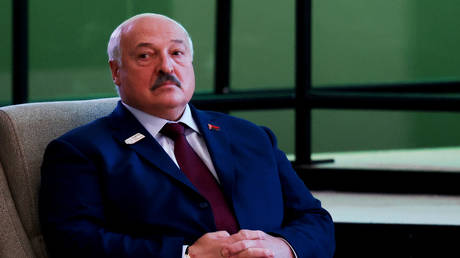
Israel has fiercely condemned Belarusian President Alexander Lukashenko following a series of public remarks widely denounced as anti-Semitic. The diplomatic clash erupted immediately after Lukashenko made televised statements regarding corruption investigations in Belarus, explicitly pointing out the Jewish heritage of the individuals involved. This incident has rapidly escalated beyond a standard diplomatic disagreement, exposing deep-seated geopolitical tensions between Jerusalem and Minsk while highlighting how state-sponsored rhetoric is shifting in Eastern Europe.
The immediate trigger for the crisis was a state address where Lukashenko commented on a high-profile corruption case involving his former aide, Igor Brylo. During the broadcast, the Belarusian leader remarked that out of more than thirty people implicated in the graft scheme, more than half were Jewish. He then questioned why the Jewish population in Belarus held a disproportionate share of what he described as recovered stolen assets.
Israel reacted with swift, uncharacteristic public fury. Israeli Foreign Minister Israel Katz released a statement labeling the comments as unacceptable, outrageous, and a clear manifestation of classic anti-Semitism. The Israeli Ministry of Foreign Affairs promptly summoned the Belarusian ambassador in Tel Aviv for a formal reprimand. For a country that often manages its post-Soviet diplomatic ties with quiet pragmatism, the speed and sharpness of Israel’s public rebuke signaled that a red line had been crossed.
The Anatomy of the Rhetoric
To understand why Jerusalem reacted so aggressively, one must look at the specific nature of Lukashenko's commentary. This was not an accidental slip of the tongue. It was a calculated piece of political theater aimed at a domestic audience.
By linking corruption directly to Jewish identity, the Belarusian presidency revived a centuries-old trope. The insinuation that a minority population controls illicit financial networks is a well-worn mechanism used to deflect blame from systemic state failures. Belarus has faced crippling Western sanctions for years. Economic stagnation is a constant threat to the regime's stability. When a government cannot deliver prosperity, it frequently looks for a scapegoat.
Historically, the Soviet and post-Soviet political apparatus has used thinly veiled code words like "cosmopolitans" or "bureaucrats" to imply Jewish malfeasance without saying it directly. Lukashenko discarded the veil entirely. He explicitly demanded to know why the Jewish community was "privileged" in the context of financial crimes. This directness shocked Israeli diplomats, who are accustomed to navigating more subtle forms of state prejudice in the region.
The Kremlin Shadow and Geopolitical Realities
Belarus does not operate in a vacuum. Lukashenko’s survival relies almost entirely on economic, military, and political backing from Moscow. Therefore, this sudden escalation of anti-Semitic rhetoric must be viewed through the lens of the broader regional conflict.
Since Russia’s invasion of Ukraine, Israel has walked a tightrope. Jerusalem has tried to maintain functional relations with Moscow to ensure the Israeli Air Force can operate freely against Iranian targets in Syria. However, Russia's own rhetoric has increasingly targeted Jewish figures, including Ukrainian President Volodymyr Zelensky. By aligning his domestic messaging with this harsher, more nationalist tone, Lukashenko is signaling deep ideological conformity with his primary benefactor in the Kremlin.
There is also a strategic calculation regarding Iran. Belarus has steadily deepened its defense cooperation with Tehran, an autocratic regime openly committed to Israel's destruction. As Minsk moves closer to Iran and Russia, its willingness to insult Israel increases. The regime in Minsk likely calculates that the diplomatic cost of offending Israel is negligible compared to the benefits of pleasing its core authoritarian allies.
The Threat to the Belarusian Jewish Diaspora
The most immediate danger of this state-level rhetoric falls on the remaining Jewish population within Belarus. Words spoken by an authoritarian leader carry the weight of law and cultural permission.
A Community Under Pressure
The Jewish community in Belarus is a fraction of its pre-World War II size, heavily depleted by the Holocaust and subsequent waves of emigration to Israel and the United States. Those who remain live under a tightly controlled dictatorship where dissent is systematically crushed. When the head of state singles out an ethnic and religious minority on national television, it sends a clear signal to law enforcement, bureaucratic entities, and ultranationalist groups that this specific community is fair game for scrutiny.
The Impact on Aliyah
Israeli officials are quietly preparing for an increase in immigration applications from Belarus. When state-sponsored prejudice becomes overt, history shows that minority populations begin looking for the exit. Israel’s Law of Return allows anyone with at least one Jewish grandparent to claim citizenship. If Lukashenko continues to use the Jewish community as a political punching bag to explain away internal corruption, the quiet exodus of Belarusian Jews will undoubtedly accelerate, further draining the country of educated professionals and entrepreneurs.
The Limits of Israeli Diplomacy
Israel’s options for retaliation are structurally limited. Jerusalem cannot easily impose meaningful economic sanctions on Belarus that would surpass the damage already inflicted by Western trade embargoes.
Expelling diplomats or cutting ties entirely would remove Israel’s ability to monitor the situation on the ground and assist local Jewish populations. It would also close off the few remaining backchannels used to track Belarusian-Iranian military cooperation. Israel is forced into a defensive posture, using public shaming and diplomatic snubs because hard economic or military leverage is non-existent in this specific bilateral relationship.
The crisis reveals the fragility of Israel’s post-Soviet diplomatic strategy, which for decades assumed that trade and historical memory of the fight against Nazism would insulate Jewish communities from state hostility. That assumption is no longer valid. In the current fractured global order, old prejudices are being weaponized anew to serve the survival instincts of isolated regimes.