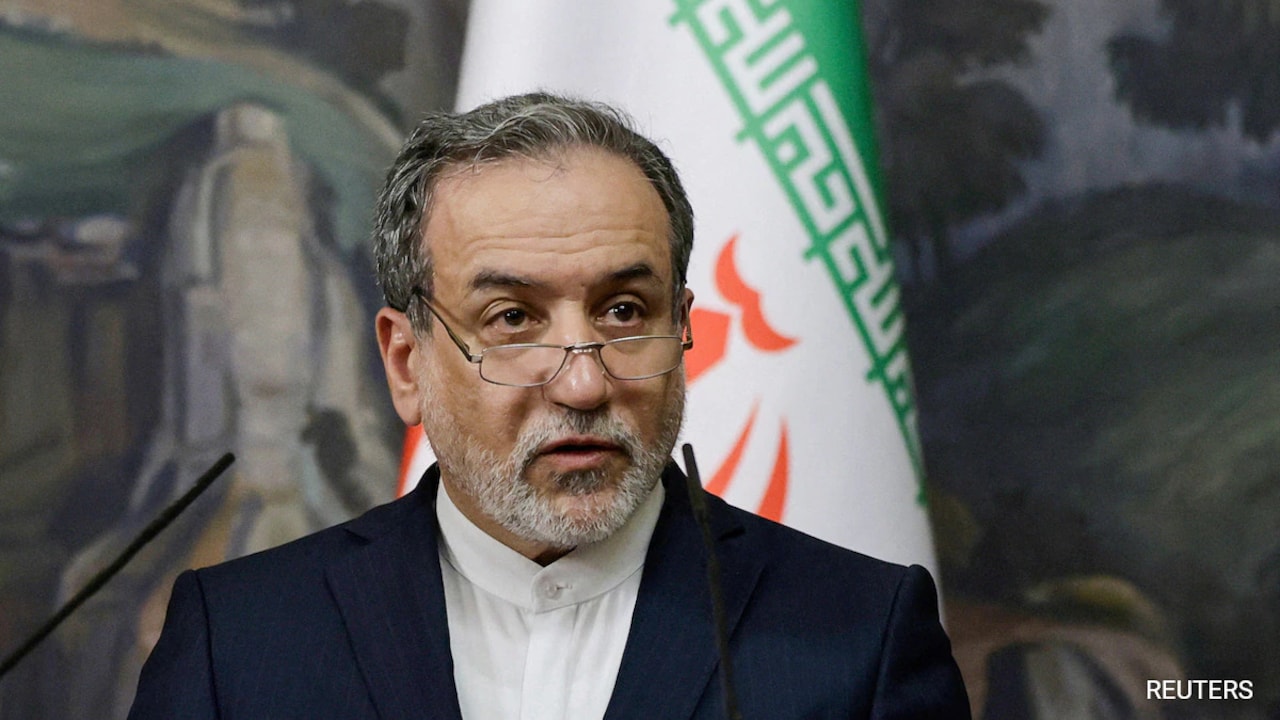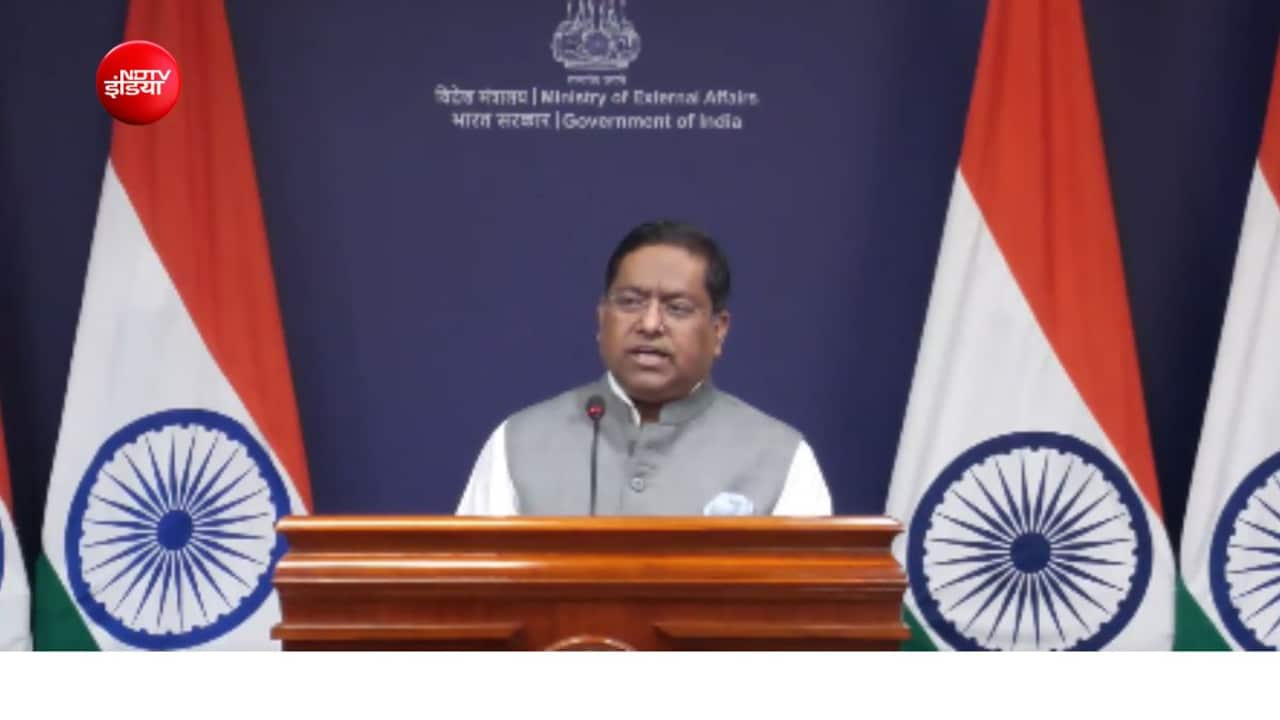
Bilateral diplomatic disputes over religious freedom assessments operate on a predictable institutional loop: a statutory advisory body publishes a risk assessment, the target state rejects the methodology as an infringement on internal sovereignty, and executive branches insulate broader strategic alliances from the rhetorical fallout. When India's Ministry of External Affairs (MEA) dismissed remarks from the United States Commission on International Religious Freedom (USCIRF) regarding attacks on Gurdwaras as "blatantly political," the exchange exposed a structural divide between independent legislative oversight mechanisms and executive-level realpolitik. Understanding this friction requires separating domestic legal architectures from international diplomatic signaling.
The Structural Asymmetry of Diplomatic Actors
Standard media coverage treats statements from USCIRF and the Indian MEA as equivalent exchanges between two governments. This is a category error. The two entities operate under entirely different mandates, constituencies, and accountability frameworks.
- USCIRF (The Statutory Watchdog): Established under the International Religious Freedom Act (IRFA) of 1998, USCIRF is an independent, bipartisan U.S. federal government commission. Its commissioners are appointed by the President and congressional leadership. Crucially, USCIRF holds zero executive authority. It cannot impose sanctions, alter visa policies, or direct diplomatic cables. Its sole output is policy recommendations directed at the President, the Secretary of State, and Congress. Because it bears no operational responsibility for managing bilateral trade, defense procurement, or regional security partnerships, its analytical mandate prioritizes normative human rights benchmarks over diplomatic friction costs.
- The Ministry of External Affairs (The Sovereign Executive): The MEA is the primary diplomatic instrument of the Government of India. Its mandate is the preservation of national sovereignty, security, and international standing. When the MEA responds to external criticism, it addresses both an international audience and a domestic electorate. Allowing a foreign statutory body to define the security status of domestic religious sites—specifically Gurdwaras, which hold deep historical and political significance in Punjab and across the Sikh diaspora—creates a precedent for external interference in internal law-and-order jurisdiction.
This asymmetry guarantees friction. A body designed to maximize normative pressure will inevitably clash with an executive ministry designed to minimize external oversight.
The Three Pillars of the Diplomatic Rejection Framework
When a sovereign state rejects an external human rights assessment, the rebuttal rarely relies on granular statistical counter-arguments. Instead, diplomatic pushback relies on three specific rhetorical pillars designed to invalidate the evaluator's standing before addressing the underlying incidents.
1. Jurisdictional Delegitimization
The primary move is to challenge the locus standi of the commenting body. By characterizing USCIRF as an entity lacking both jurisdiction and factual grounding, the MEA shifts the debate from the security of religious sites to the legitimacy of foreign commentary. In international relations theory, this invokes the Westphalian principle of non-interference: domestic criminal acts, vandalism, or communal tensions fall strictly under the purview of domestic law enforcement and judicial review, not foreign legislative commissions.
2. Attribution of Political Motivation
Labeling an assessment "blatantly political" serves a specific analytical function. It reframes an ostensibly objective, criteria-based evaluation as a partisan or ideologically driven narrative. Once a report is categorized as political rather than empirical, the target state is relieved of the diplomatic obligation to rebut individual data points. The critique is absorbed into the broader noise of international political lobbying, effectively neutralizing its moral authority among neutral observers.
3. Reciprocal Vulnerability Highlighting
While not always deployed in every brief statement, standard diplomatic doctrine pairs rejection with a subtle or explicit reminder of the criticizing nation's own domestic vulnerabilities. In the context of Gurdwara security, incidents of vandalism and anti-Sikh hate crimes have occurred within the United States and other Western jurisdictions, alongside domestic incidents within India. Pointing to the global nature of hate crimes and property vandalism undermines the implicit hierarchy of a U.S. body grading Indian internal security.
The Decoupling Mechanism in U.S.-India Relations
A critical analytical failure in surface-level reporting is the assumption that USCIRF criticisms directly degrade U.S.-India bilateral ties. In practice, Washington and New Delhi operate a strict institutional firewall between legislative human rights reporting and executive strategic cooperation.
Under IRFA, USCIRF routinely recommends that the U.S. Department of State designate India as a "Country of Particular Concern" (CPC)—a classification reserved for nations engaging in or tolerating systematic, ongoing, and egregious violations of religious freedom. Despite repeated recommendations from the commission over multiple consecutive years, the U.S. Department of State has consistently declined to apply the CPC designation to India.
This divergence illustrates the operational reality of foreign policy prioritization:
- The Recommendation Phase: USCIRF aggregates reports from non-governmental organizations, media accounts, and diaspora advocacy groups regarding incidents such as Gurdwara vandalism, communal clashes, or legislative changes. It maps these incidents against international religious freedom covenants and issues a public recommendation.
- The Executive Filter: The State Department's Office of International Religious Freedom compiles its own annual report, which generally adopts more measured diplomatic language than USCIRF. Subsequently, the Secretary of State evaluates whether a CPC designation serves overarching U.S. national security interests.
- The Strategic Override: Geopolitical imperatives—specifically Indo-Pacific maritime security, defense technology transfers, supply chain diversification, and intelligence sharing—override statutory recommendations that would trigger mandatory economic or diplomatic sanctions.
The MEA's sharp public rebuke is calibrated for this exact environment. New Delhi knows the State Department will not impose sanctions based on USCIRF's remarks, allowing the MEA to use forceful language to satisfy domestic political expectations without risking tangible losses in defense or trade agreements.
Methodological Challenges in Tracking Communal and Vandalism Incidents
Evaluating claims regarding attacks on Gurdwaras requires rigorous definitional clarity, which is frequently absent from both commission summaries and diplomatic denials. When tracking incidents involving religious sites, analysts must distinguish between three distinct operational categories:
- Targeted Ideological or Communal Attacks: Violence or desecration explicitly motivated by religious animus or political extremism aimed at intimidating a specific religious community.
- Opportunistic Criminality: Property crime, theft of donation boxes (golaks), or non-ideological vandalism that occurs at a religious site simply because the building is accessible or contains cash, without an underlying sectarian motive.
- Diaspora-Linked Political Friction: Incidents tied to geopolitical disputes—such as tensions surrounding separatist movements abroad—where Gurdwaras become flashpoints for political demonstrations or counter-protests, blurring the line between religious persecution and political conflict.
External watchdogs often aggregate all three categories under the umbrella of "attacks on religious minorities" to demonstrate a broad pattern of vulnerability. Conversely, domestic authorities tend to classify ambiguous incidents strictly as routine law-and-order offenses or isolated criminal acts to avoid conceding systemic communal failure. Without transparent, disaggregated law enforcement data—tracking arrest rates, prosecution timelines, and judicial determinations of motive—both the external critique and the official denial remain locked in an empirical stalemate.
The Limitations of Declaratory Diplomacy
Both the USCIRF reporting model and the MEA's rejection strategy face hard operational limits.
For statutory commissions, maximizing rhetorical pressure yields diminishing returns. When every annual cycle produces identical warnings and identical executive waivers, the signaling mechanism loses its coercive power. Target governments cease viewing the commission as a credible threat to bilateral relations and treat its reports as predictable seasonal irritants. Furthermore, perceived ideological bias or reliance on contested secondary sources allows target states to dismiss legitimate localized security failures alongside exaggerated claims.
For sovereign ministries, blanket dismissals carry a different risk: the erosion of informational credibility. When a government reflexively labels all external scrutiny as "motivated" or "inaccurate" without publishing granular counter-data—such as conviction statistics for perpetrators of vandalism or rapid-response protocols for minority religious sites—it cedes the empirical narrative to external critics. In international diplomacy, silence on verifiable local metrics creates an information vacuum that advocacy groups will inevitably fill.
Strategic Calibration for Bilateral Risk Management
To prevent recurring friction over religious site security from spilling over into legislative bottlenecks—such as congressional holds on defense sales or trade negotiations—diplomatic practitioners must shift from reactive verbal sparring to structured transparency.
First, domestic security ministries should standardize the public reporting of hate crimes and vandalism against places of worship, separating property theft from ideological desecration and publishing clear prosecution outcomes. Verifiable, open-source judicial data neutralizes broad-brush external narratives far more effectively than diplomatic adjectives. Second, bilateral dialogues should formalize quiet, working-level channels between law enforcement agencies to address transnational vandalism and diaspora-linked threats collaboratively. Moving the issue from public commission hearings to technical policing cooperation strips the subject of its political theater and grounds it in measurable security outcomes.