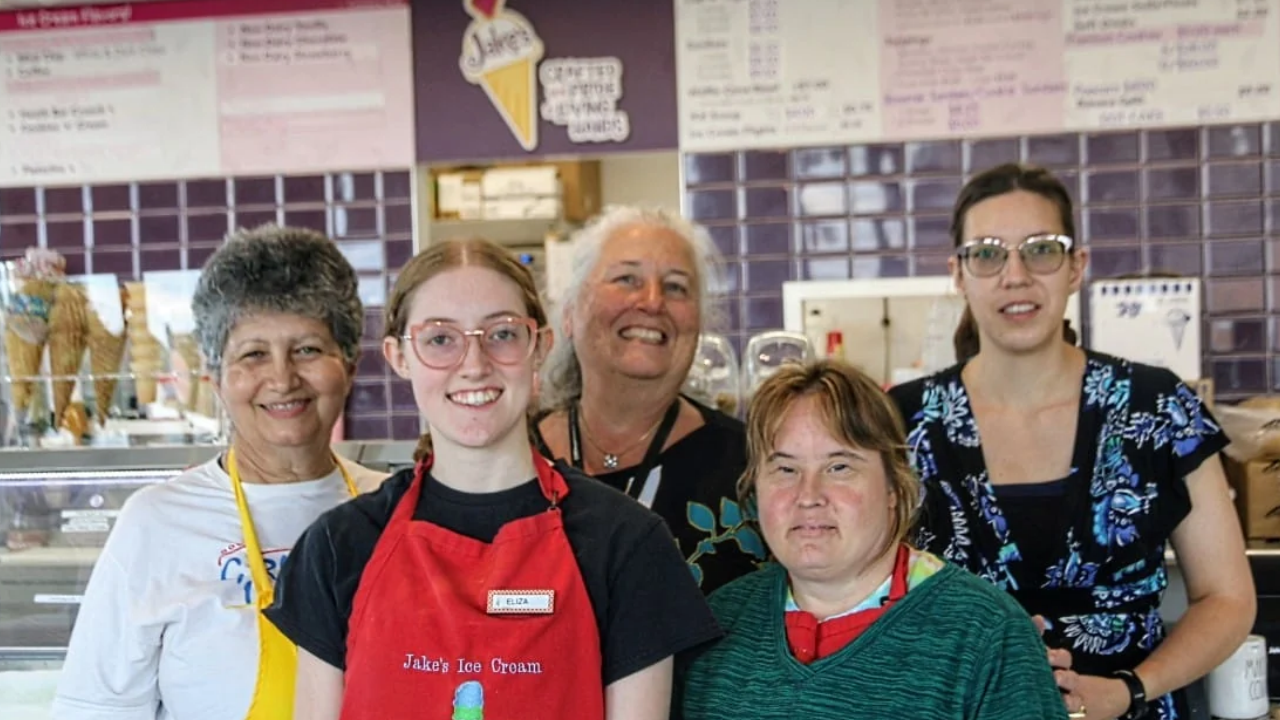
A waiting list to scoop ice cream in Virginia is not a retail revolution. It is an indictment of how badly mainstream employers have failed.
Every time a local feature highlights Robin Rinearson running Jake's Ice Cream and Jake's Gourmet Popcorn in Northern Virginia, the applause is predictable. Two confectionary shops employing around 35 people, with workers sticking around for years and more people lining up for a shot at the counter. Awards follow. County supervisors clap. Columnists declare that inclusive hiring solves staffing shortages and proves that treating workers with dignity creates loyalty.
That is the lazy consensus. And it is dangerously incomplete.
Praising a two-shop confectioner for having a waiting list while millions of adults with disabilities remain locked out of standard employment confuses a bright spot with a structural fix. Worse, it lets every other employer in town off the hook. If a retired optometrist with a background treating special-needs pediatric patients and a doctoral thesis touching on Down syndrome can build a beloved local shop with a waiting list, why aren't regional grocers, logistics hubs, banks, and corporate offices doing the same at scale?
They aren't doing it because mainstream labor markets are built for rigid speed, rigid schedules, and uniform throughput—not human variation. When one small business becomes a magnet for workers with disabilities, demand outstripping supply doesn't prove that retail is suddenly welcoming. It proves how starved people are for a workplace that actually fits how they operate.
The Lazy Consensus About Inclusive Hiring
Standard coverage of inclusive shops follows a neat, feel-good script. Step one: a founder opens a mission-driven store. Step two: employees with disabilities thrive, stay put, and refer friends. Step three: critics who worried about accommodations or pace look foolish, and other business owners are told to just "offer real work" and watch turnover vanish.
That script misses three harsh mechanics that any operator who has managed real payroll knows too well.
First, retention in a high-belonging niche does not automatically equal universal retail scalability. Retail and food service are notorious for churn across almost every demographic. When an environment provides structure, respect, and steady shifts rather than chaotic clopenings and shifting schedules, people stay. Loyalty comes from job design and management quality, not from slapping an inclusion label on a counter.
Second, a waiting list for a handful of part-time retail roles is a sign of scarcity, not abundance. Data from organizations like the National Core Indicators and the U.S. Bureau of Labor Statistics consistently show wide employment gaps for people with intellectual and developmental disabilities and broader disability cohorts compared with nondisabled peers. When thousands of capable people compete for a few dozen local spots, demand outstripping supply is math, not magic.
Third, training and pacing are real operational variables, not imaginary bogeymen. Pretending accommodations cost nothing or require zero workflow redesign is dishonest. Some tasks take longer. Some roles need clearer visual cues, predictable routines, or job coaching. Pretending friction doesn't exist makes serious operators tune you out. Acknowledging the friction—and engineering around it—is how real businesses survive.
What Operators Get Wrong About Disability Friendly Jobs
I have watched mid-sized companies blow six figures on flashy branding campaigns, keynote speakers, and compliance checklists while leaving their actual hiring funnels broken from top to bottom. They write job descriptions full of fluff—"must thrive in a fast-paced, high-stress environment with ambiguous priorities"—that screen out sharp, reliable workers before a human ever reads an application.
Let's be precise about terms before going further. Workplace accommodations are targeted adjustments to how work is performed, scheduled, or communicated so a qualified person can do the job. Job crafting is reshaping tasks and workflows around actual strengths and rhythms. Supported employment brings external coaching or structured onboarding to help workers build independence on the job. None of those words mean charity. Charity is handing out money without expecting value in return. Good job design is aligning human capability with real customer demand.
Consider disability employment researchers and vocational rehabilitation scholars like David Mank, Thomas Wehmeyer, and researchers at the Institute for Community Inclusion at UMass Boston. Across decades of research on supported employment and workplace inclusion, the core finding is consistent: people with significant disabilities succeed in competitive, integrated roles when employers pair clear expectations with structured support and natural workplace routines rather than isolating them in dead-end busywork.
Imagine a scenario where a regional warehouse or grocery chain stops treating accommodations as a special favor and treats workflow clarity as a baseline standard for everyone. Picture clear step-by-step station guides, predictable shift blocks, cross-trained backup roles, and supervisors trained to give direct, unambiguous feedback. Suddenly, the worker who needs routine gets it. The worker who thrives on physical repetition excels. Even nondisabled hires benefit from fewer mixed signals and less chaos.
Why "Just Raise the Bar" Is Half-Baked Advice
One popular counter-argument in feel-good business writing goes like this: Don't lower standards; hold everyone to the exact same bar and watch people rise.
Sounds tough. In practice, it is often lazy management disguised as grit.
If your "standard" requires juggling three register screens, answering phones, making espresso, and covering someone else's no-show shift on twenty minutes' notice, you haven't set a noble standard. You have built a fragile single-point-of-failure job that burns out half your staff every six months. Raising the bar means setting clear quality, safety, and customer-service standards—and then designing the process so people can actually hit them consistently.
At a shop like Jake's, workers learn real production and service skills—making cones, packing orders, decorating, greeting guests—with expectations that aren't phony. That part deserves credit. High expectations paired with real training beat patronizing "make-work" every day of the week. Still, an ice cream parlor or popcorn shop has a very specific rhythm: seasonal peaks, discrete tasks, and a founder who knows the territory personally. Translating that spirit into a 200-person logistics operation or a multi-branch service firm requires systems, not just founder grit.
The Downsides of My Own Contrarian Take
If I tell you that feel-good small-business spotlights aren't a cure-all and that employers need systematic job redesign, I owe you the ugly trade-offs of my own argument.
First, waiting for systemic reform is a terrible excuse for doing nothing today. A single shop creating 35 jobs with real belonging matters enormously to those 35 workers and their families. Cynicism that dismisses real wins just because they aren't nationwide policy is cheap.
Second, pushing job redesign can strain thin-margin businesses. Independent shops and small operators already wrestle with razor-thin margins, rent hikes, supplier swings, and seasonal slumps. Telling a stretched owner to overhaul workflows without practical local support ignores cash-flow reality.
Third, over-indexing on "great culture" can mask pay and career-path ceilings. A welcoming shop with a waiting list can still trap workers in entry-level wages or part-time hours if there is no ladder to higher responsibility or better pay. Belonging is necessary, not sufficient. Real economic mobility requires skill progression and fair compensation over time.
Questions People Keep Asking (And Why They Miss the Point)
Why do inclusive shops have a waiting list while other businesses complain about labor shortages?
Because the supposed "labor shortage" in many service and entry-level roles is often a quality-of-job shortage. When you offer erratic schedules, zero predictability, chaotic training, and indifferent supervision, nobody wants to stay. When a workplace offers clear roles, steady routines, and basic human respect, word spreads fast—especially among workers who have been routinely passed over elsewhere. Asking why a good job draws applicants answers itself. A better question is why so many employers make their jobs miserable to keep.
Are employees with disabilities more loyal than other workers?
Don't fall for sweeping stereotypes in either direction. No demographic is a monolith. What tends to drive higher tenure in inclusive workplaces is fit and opportunity. When someone finally lands a role that matches their strengths, respects their dignity, and isn't treating them as disposable, they have strong reasons to stay put. Meanwhile, if a workplace lacks fair pay, growth, or solid management, even loyal hires will eventually look elsewhere.
How can a business start hiring more disability friendly workers without losing money?
Stop treating inclusion as a side project and start by auditing bottlenecks in your current operation. Look at where new hires fail in their first 30 days. Usually, it isn't lack of heart; it's vague instructions, unstandardized training, or noisy, distracting environments. Fix those first. Partner with local vocational rehabilitation agencies or school transition programs that bring built-in coaching and structured onboarding. Define clear tasks, match people to tasks where they can hit quality targets reliably, and track actual output—not vibes.
How to Actually Build a Shop That Works
If you run a business or manage a team and want more than a pat on the back, stop chasing applause and change how you operate:
- Rewrite job postings around actual outcomes. Strip out cliché buzzwords and list the specific tasks, tools, and pace the role requires. If multitasking isn't strictly needed for a station, stop requiring it.
- Standardize training before blaming workers. If three hires in a row struggle with a step, your training process is broken. Break complex jobs into repeatable steps with clear visual or written checklists.
- Build real skill ladders. Don't stop at "welcome to the team." Create clear milestones—from basic prep or greeting to inventory, specialty production, or shift support—tied to higher pay and real autonomy.
- Measure performance honestly. Hold every employee to clear, fair standards suited to their role, with appropriate accommodations in place. Respecting someone's capability means giving them honest feedback, not handing out participation trophies.
A waiting list at a neighborhood shop should make you proud of the people running it—and furious at the rest of the economy for setting the bar so low. Fix your job design, or keep whining about help-wanted signs.