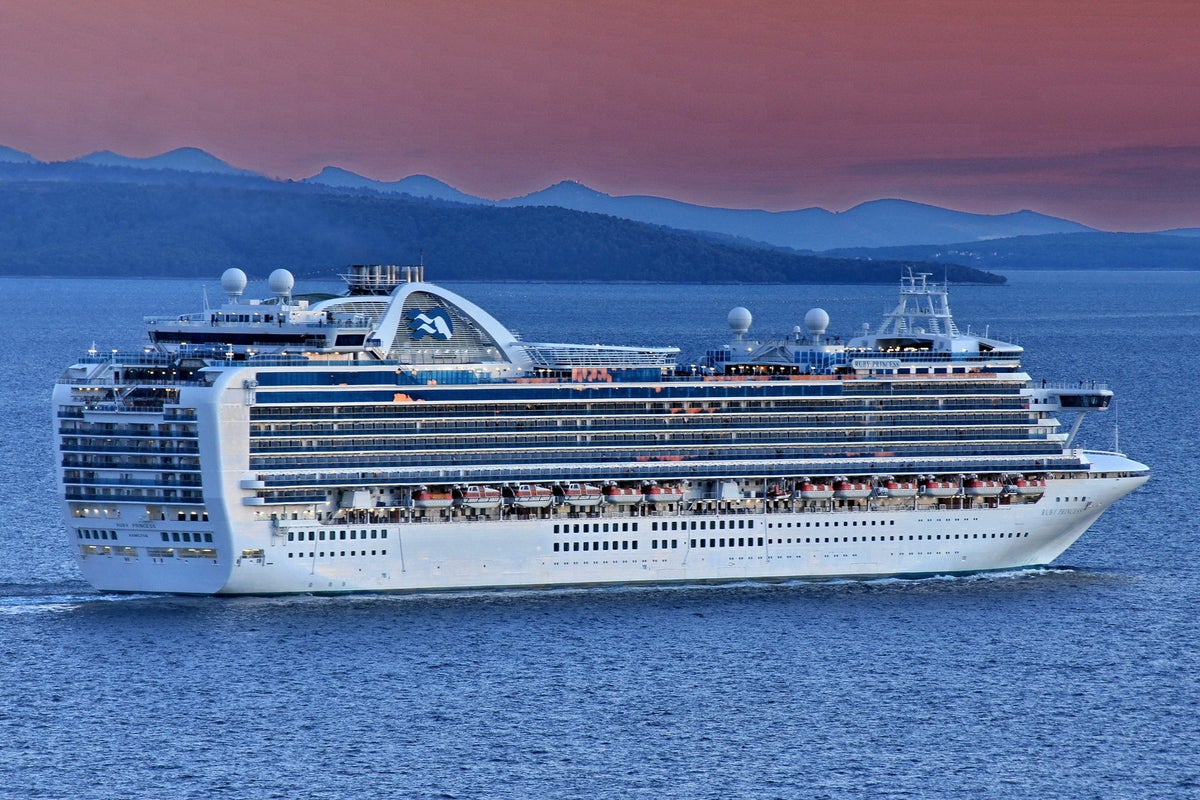
The air conditioning on a modern cruise ship is a marvel of engineering. It hums with a sterile, relentless efficiency, masking the salt air of the open ocean with a faint scent of industrial laundry and buffed brass. To the two thousand passengers aboard the Oceanic Horizon, that cool breeze was the backdrop to paradise. They were three days out from port, suspended in that golden, timeless vacuum where the only scheduled events are dinner seatings and trivia nights.
Then, a retired schoolteacher from Ohio stopped tasting his morning coffee.
By noon, his muscles ached with a ferocity that ached deep in the marrow. By midnight, his lungs felt as though they were filling with wet sand. The ship’s infirmary, usually a quiet place dealing in seasickness bands and minor sunburns, suddenly became the most critical coordinates on the planet.
When the World Health Organization issued its urgent update regarding a Hantavirus outbreak tracing back to a luxury cruise vessel, the global headline read like a clinical data point. It listed case numbers, geographical vectors, and transmission probabilities. But statistics do not sweat through cotton sheets in a windowless isolation cabin while the dark Atlantic swells heave outside.
To understand what happened on that ship—and what it means for the future of how we move across the globe—we have to look past the bureaucratic acronyms. We have to look at the dust.
The Ghost in the Vent
Hantavirus is not like the viruses we have grown accustomed to fearing. It does not hang in the air from a stranger’s cough in a crowded theater. It does not linger on a poorly washed hand. It is a pathogen born of the quiet, forgotten corners of the earth.
Imagine a rural cabin, locked up for the winter, where deer mice have made a home in the insulation. When the owners return in the spring and sweep up the droppings, an invisible mist of dried urine and saliva rises into the air. If breathed in, that mist carries a microscopic invader that can cause Hantavirus Pulmonary Syndrome (HPS). It is a swift, brutal disease with a mortality rate that hovers terrifyingly near forty percent.
But a cruise ship is not a dusty cabin in the woods. It is a multi-million-dollar floating palace of steel and glass. How does an wilderness pathogen find its way into the ventilation of a luxury liner?
The answer lies in the invisible logistics of global travel. Before a ship welcomes its passengers under a shower of confetti, it sits at a shipyard or a commercial port. Provisions are loaded from deep-storage warehouses. Linens, dry goods, and structural materials are carted in from rural supply chains. Somewhere along that chain, in a quiet warehouse where the concrete meets the grass, a single rodent nested. A crate was moved. A microscopic spore of dust adhered to a pallet of extra blankets destined for the lower decks.
Once inside the ship’s sealed environment, the virus found an artificial ecosystem. The air conditioning did not just cool the passengers; it distributed the ghost.
The Anatomy of an Isolation
For the first few days, the symptoms are a cruel camouflage. The early signs of Hantavirus—fever, severe muscle aches in the thighs and back, fatigue—look exactly like the common flu. Or perhaps just the exhaustion of a long flight to the departure port.
Consider the perspective of the ship’s chief medical officer. You are miles from the nearest tertiary care hospital. Your diagnostic tools are limited. A passenger presents with a high fever. Do you quarantine the cabin and spark a panic among thousands of vacationers, or do you prescribe fluids and rest, hoping it is just a standard bug?
The turning point with Hantavirus is catastrophic in its speed. Within a matter of days, the dry cough begins. The lungs begin to fail as fluid leaks into the air sacs. It is a condition known as non-cardiogenic pulmonary edema, which is a sterile medical term for a terrifying reality: the body’s immune system overreacts so violently to the virus that it effectively drowns its own respiratory system.
When the WHO stepped in, it was because the patterns became undeniable. Three passengers, completely unrelated, occupying different decks, all developed acute respiratory distress within forty-eight hours of each other. The common denominator was not a shared dining table or a shore excursion. It was the ship itself.
The response was a masterclass in modern epidemiological containment, but to those inside, it felt like a slow-motion thriller. The vessel was diverted from its tropical itinerary. Passengers were instructed to remain in their staterooms. The cheerful announcements from the cruise director were replaced by the measured, solemn tones of the captain. The hum of the air conditioning, once a comfort, suddenly felt like a threat. Every breath became an act of conscious calculation.
Decoding the Threat
The public panic that followed the WHO announcement stems from a fundamental misunderstanding of how this virus operates. People hear "outbreak on a ship" and immediately think of norovirus or the early days of the coronavirus pandemic. They picture a chain reaction of human-to-human infection tearing through the dining room.
But Hantavirus is a dead-end road in the human body.
With very rare exceptions found only in specific South American strains, Hantavirus cannot be passed from one human to another. The schoolteacher from Ohio could not infect the nurse treating him. The virus requires that direct, primordial link back to the rodent vector.
This truth is simultaneously reassuring and deeply unsettling. It means there is no risk of a global pandemic originating from this cruise ship. The virus will not sweep through port cities like wildfire. But it also means that the danger is structural. If the ship’s environment itself is contaminated, every passenger breathing that air is at risk, independent of anyone else's health status.
The WHO update was not a warning to the public to mask up against their neighbors. It was a severe, urgent wake-up call to the maritime industry regarding its supply chains and deep-cleaning protocols. It exposed a vulnerability in the armor of luxury travel: we can sanitize every surface until it shines, but we are still at the mercy of the raw, untamed biology of the places where our goods are stored.
The Cost of the Clean Air
The Oceanic Horizon eventually docked at a secure commercial terminal, far from the cameras and the tourists. Teams in positive-pressure biohazard suits boarded the vessel, looking like astronauts stepping onto a deserted planet. They carried specialized chemical foggers and high-efficiency particulate air filtration systems, designed to neutralize the invisible particles lodged deep within the ship's mechanical veins.
The affected passengers were transferred to specialized isolation units on land. For many, the intervention came in time. Modern supportive care—specifically mechanical ventilation and maintaining oxygen levels—can pull a patient through the critical window while the body fights off the infection. But the emotional scars of that voyage do not wash away with bleach.
We live in an era where we expect the world to be entirely tamed for our consumption. We buy tickets to ride across oceans, expecting the comfort of a five-star hotel with the safety of a gated community. We forget that travel is, at its core, a transgression across boundaries. We cross into new ecosystems, and occasionally, those ecosystems cross back into us.
The true legacy of the cruise ship outbreak is not found in the revised health regulations or the updated WHO briefs that will sit in digital archives. It is found in the quiet moments of the next voyage. It is the realization that the line between civilization and the wild is as thin as a particle of dust, floating silently through a silver vent while the music plays on the lido deck.