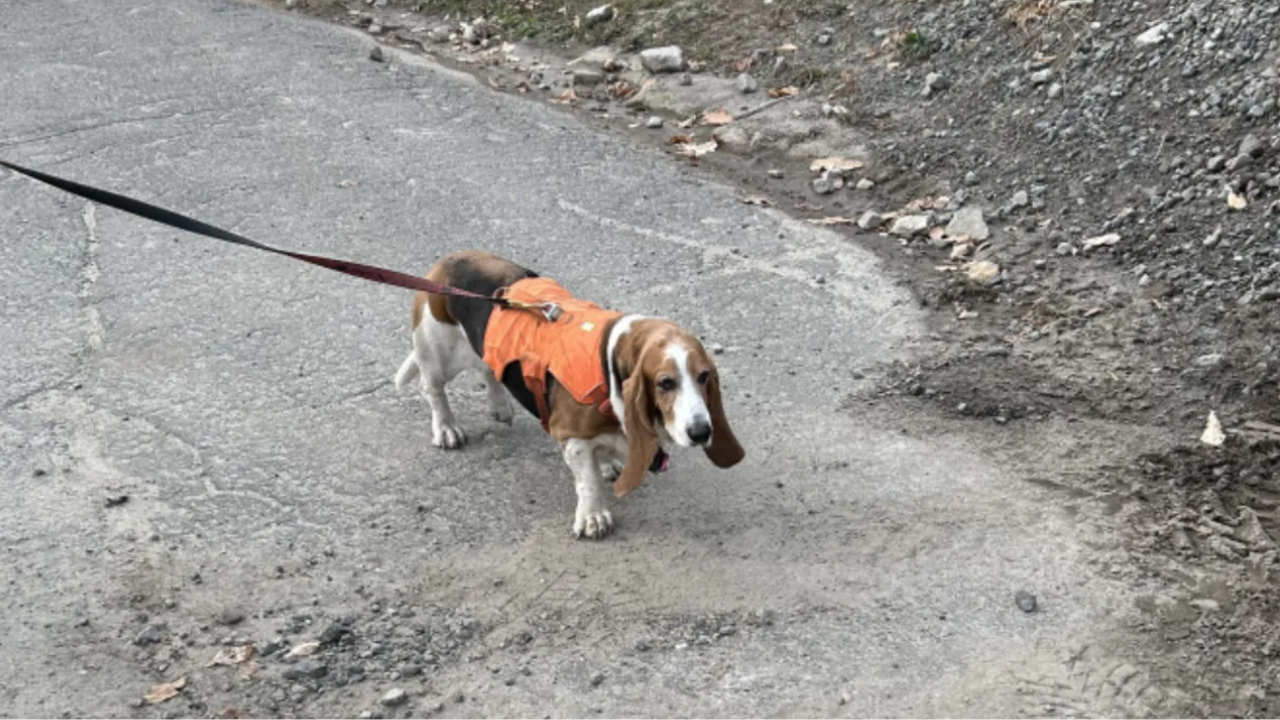
When Becky, a loyal canine companion, emerged alone from the dense timber of New York’s Adirondack Park, she did not need to bark to sound an alarm. Her solitary arrival at a trailhead or nearby residence instantly triggered a coordinated, high-stakes Adirondack mountain rescue operation that ultimately located her injured or stranded owner alive in the backcountry. In the six-million-acre wilderness of Upstate New York, a domestic dog appearing without its handler is treated by state forest rangers not as a stray animal problem, but as a critical distress beacon signaling a ticking clock for a human life.
The Anatomy of a Canine-Triggered Search
Most wilderness rescues begin with a missed check-in call, a frantic family member watching a clock pass midnight, or an overdue car sitting alone at a remote parking area. Those scenarios come with a built-in handicap. Rescuers often lose twelve to twenty-four hours before anyone even realizes a hiker is missing.
Becky changed that equation.
When a dog appears alone near a trail system, the timeline compresses immediately. New York State Department of Environmental Conservation (DEC) Forest Rangers operate under a strict set of behavioral assumptions when dealing with trail dogs. Dogs rarely abandon their owners in unfamiliar, rugged terrain unless something has gone severely wrong, or unless the dog has been intentionally or instinctively driven to seek help. Even in cases where a dog bolts after wildlife and gets separated, the animal's presence confirms three vital data points for search managers right out of the gate:
- Proof of presence: Someone entered this specific sector of the woods recently.
- A narrowed geographic box: Domestic dogs rarely travel more than a few miles from their point of separation in unfamiliar, steep terrain before intersecting a road, trail, or human scent.
- Physical condition clues: A dog arriving muddy, exhausted, or wearing a pack or leash tells rangers whether the owner was outfitted for a day hike or an overnight expedition, and roughly how long the pair had been moving.
By the time dispatchers log the call, rangers are already cross-referencing the dog’s breed, temperament, and physical state against trailhead parking lots. A vehicle registered to the dog's owner—identified quickly via microchip, collar tags, or local inquiries—locks in the Point Last Seen (PLS). In search and rescue operations, establishing a verified PLS within hours rather than days is often the difference between a medical evacuation and a recovery mission.
Why the Adirondacks Turn Minor Mistakes into Emergencies
To outsiders looking at a topographic map, the Adirondack Mountains do not look intimidating. Mount Marcy tops out at 5,344 feet. Compared to the jagged, fourteen-thousand-foot peaks of the Colorado Rockies or the glaciated walls of the Pacific Northwest, the Adirondacks appear gentle, rounded, and forgiving.
That perception kills people.
The Adirondack Park is larger than Yellowstone, Yosemite, Grand Canyon, Glacier, and the Great Smoky Mountains National Parks combined. Unlike western mountain ranges, where switchbacks are graded for pack animals and timberline offers clear sightlines for miles, Adirondack trails were largely cut straight up the fall line. Hikers spend hours scrambling over wet, house-sized boulders, navigating slick tree roots, and wading through ankle-deep mud even in the middle of July.
Underneath that dense canopy of spruce, balsam fir, and yellow birch, standard navigation tools frequently fail. The thick tree cover blocks GPS signals on consumer smartphones, causing location pins to jump hundreds of yards across steep ravines. Cell service is virtually nonexistent once you drop off the highest ridges. A hiker who steps twenty feet off the herd path to answer nature's call or avoid a blowdown can lose sight of the trail blazes in seconds. Once disoriented in the krummholz—the stunted, tangled evergreen thickets near high elevations—moving even a quarter-mile takes agonizing physical effort.
When an accident happens in this environment—a snapped ankle on wet slab rock, sudden hypothermia from an afternoon rain squall, or a medical event like a heart arrhythmia—the victim is instantly isolated. Without a satellite messenger or a passing hiker, they have no way to broadcast their coordinates.
Inside the DEC Forest Ranger Playbook
When Becky’s arrival set off the alarm, she activated one of the most specialized search and rescue apparatuses in North America. Unlike many western states that rely almost entirely on county sheriff departments and volunteer mountain rescue teams, New York maintains a professional, sworn force of DEC Forest Rangers who serve as the primary wildland search and rescue managers across the state.
Their response follows the Incident Command System (ICS), a standardized hierarchy designed to prevent chaos when multiple agencies converge on a remote trailhead. The moment a canine-triggered search is verified, the Incident Commander initiates a containment strategy.
Rapid Containment and Hasty Teams
Before grid searches ever begin, rangers deploy hasty teams. These are small, fast-moving units of two or three experienced rangers carrying minimal gear, tasked with moving rapidly along the primary trails, drainages, and obvious terrain traps radiating from the Point Last Seen.
Rangers think like lost or injured hikers. People rarely walk uphill when they are hurt or confused; gravity pulls them down into river drainages and gullies, which happen to be the steepest, thickest, and most dangerous places to get stuck in the Adirondacks. Hasty teams sweep these corridors while calling out and listening for whistles or shouts.
Reading the Dog
In cases where a dog leads rescuers or triggers the search, rangers pay close attention to the animal's behavior if it is brought back toward the trailhead. While search and rescue organizations maintain strictly trained trailing bloodhounds and air-scent dogs, an owner’s personal pet is an unpredictable variable.
Some dogs, overwhelmed by stress and separation, will refuse to go back into the woods. Others, once comforted and put on a long lead, will pull directly back toward the exact drainage where their owner lies injured. Rangers never rely solely on an untrained pet to solve a search, because a domestic dog might simply follow its own outbound scent trail rather than the shortest route to the victim, or worse, chase a squirrel off-course. Instead, the dog’s track is treated as one piece of intelligence layered onto topographic probability models.
Reflexive Tasking
While hasty teams comb the high-probability corridors, other rangers establish containment at surrounding trailheads and logging roads. If the owner is mobile and disoriented, they might walk out miles away from their starting point. Rangers check trail registers—those wooden kiosks at Adirondack trailheads where hikers sign in and out—though seasoned rescuers know that roughly thirty to forty percent of day hikers walk right past them without picking up a pencil.
The Myth of the Hero Dog vs. Reality
Media headlines love a tidy narrative. When a dog walks out of the woods and rescuers subsequently find the owner alive, the public inevitably frames the story as a real-life episode of Lassie—a calculated, heroic act of canine intelligence where the animal purposefully went to fetch help.
Veterans of backcountry rescue look at the phenomenon with more nuance.
Dogs possess extraordinary sensory capabilities and deep social bonds with their handlers, but they do not possess human concepts of emergency medical services. When a hiker falls, becomes unresponsive, or is immobilized by pain, the dynamic between human and dog fractures. The hiker stops moving, stops issuing commands, and often exhibits altered breathing or distress scents caused by adrenaline and cortisol.
For a dog, this sudden lack of leadership triggers acute anxiety. Some dogs will curl up beside their owner and refuse to leave, providing critical body heat that has genuinely saved hypothermic hikers from freezing to death overnight. Other dogs, driven by panic, hunger, or an instinctual drive to return to a familiar safe zone like the parked car or a nearby road, will backtrack along the scent trail they laid down hours earlier.
Does it matter whether Becky left her owner out of calculated heroism or sheer canine anxiety? Not to the person lying injured in the woods. The outcome is identical. By returning to human civilization alone, the dog functioned as an organic emergency locator beacon, cutting through the silence of the wilderness and bringing trained professionals directly to the scene before exposure or trauma turned fatal.
The Hidden Risks of Hiking with Dogs in Rugged Terrain
For every story like Becky’s where a dog saves a life, Adirondack rangers deal with dozens of incidents where a dog is the direct cause of the emergency. Bringing a dog into the High Peaks or remote wilderness areas introduces variables that many owners radically underestimate.
Terrain mismatches are the most common failure point. A golden retriever or a lab mix that easily jogs five miles on suburban asphalt can suffer torn paw pads on sharp Adirondack granite within two hours. Steep rock scrambles—like the vertical stone staircases on Algonquin Peak or Mount Colden—require upper-body pulling that dogs simply cannot execute. Owners frequently try to lift sixty-pound dogs up sheer rock faces, resulting in blown discs, torn rotator cuffs, or falls that injure both human and animal.
Dehydration and heat exhaustion hit dogs faster than humans. Because dogs only sweat through their paw pads and cool themselves primarily through panting, high humidity under a dense forest canopy impairs their thermoregulation. A dog that collapses from heatstroke three miles from the trailhead becomes dead weight. Rangers are routinely called upon to carry out exhausted or injured dogs alongside their stranded owners, doubling the manpower required for a carry-out.
Then there is the porcupine and wildlife factor. Unleashed dogs routinely tangle with porcupines, resulting in faces full of barbed quills that require immediate veterinary surgery, or chase black bears straight back to their terrified owners. New York state regulations require dogs to be leashed in high-use areas like the Eastern High Peaks Wilderness, yet compliance remains spotty at best.
What Hikers Must Do Before Stepping Off the Pavement
The rescue triggered by Becky ended in relief, a testament to the dog’s resilience and the rapid mobilization of New York’s search and rescue personnel. Relying on a pet to accidentally summon help, however, is not a backcountry safety plan. Every hiker entering the Adirondacks—whether for a two-hour afternoon loop or a multi-day traverse—needs redundancies built into their pack.
- Leave a granular itinerary with a reliable contact. Telling someone "I'm going hiking in the Adirondacks" is useless when searching six million acres. Specify the exact trailhead, the intended route, the planned turnaround time, and a hard deadline for when that contact must call 911 or the DEC Emergency Dispatch (1-833-NYS-RANGERS) if you haven't checked in.
- Carry a dedicated satellite communicator. Devices like a Garmin inReach or the satellite SOS features built into modern smartphones allow two-way text communication and transmit exact GPS coordinates directly to rescue coordinators, bypassing the lack of cellular towers entirely.
- Pack the Ten Essentials on every single trip. Even in July, temperatures on exposed Adirondack summits can plummet into the forties with driving rain and forty-mile-per-hour winds. A headlamp, an emergency bivy sack, extra calories, water filtration, and a physical map and compass weigh less than three pounds combined and keep a stranded hiker alive until rescuers arrive.
- Outfit your dog like a backcountry partner. Put a bright, durable collar or harness on your dog with legible contact information, ensure their microchip registry is current, pack extra water specifically for them, and carry a compact emergency dog-carrying sling if you are hiking in rocky terrain where a paw injury could immobilize them.
The woods do not care about your intentions, your fitness level, or how many times you have hiked a trail before. When things go sideways beneath the canopy, survival comes down to how quickly someone realizes you are missing and how accurately rescuers can shrink the map. Becky gave her owner the gift of time, and the rangers did the rest.