The ink dries much faster than concrete crumbles. In the quiet, air-conditioned briefing rooms of Moscow, a line is drawn across a digital map, a declaration is signed, and a town is officially pronounced dead, conquered, and claimed. The state media broadcasts the victory to millions. The narrative is neat. It has a beginning, an operational middle, and a triumphant end.
But fifty miles away, inside a subterranean cellar that smells of damp earth and burnt plastic, the world looks entirely different. You might also find this related article interesting: The Real Reason Pakistan is Losing Control of Its Own Side of Kashmir.
Here, the ground shakes every eleven seconds. A young Ukrainian sergeant named Mykhailo—whose name has been changed for his security—wipes a mixture of sweat and grey plaster dust from his eyes. He is not reading the Kremlin’s press releases. He is listening to the rhythmic, terrifying thud of 122mm artillery chewing away at the remains of the street above him. His radio crackles to life. A voice, breathless and distorted by static, confirms that the northern crossroads is still being held, barely, by a three-man fire team.
To the bureaucrats who track the war from afar, this town is a strategic checkpoint, a geometric point on a topographic chart. To the men shivering in its ruins, it is an absolute reality that cannot be signed away by a foreign decree. When Ukrainian President Volodymyr Zelensky stands before a microphone and insists that the fight continues, he isn’t just engaging in political theater or wartime rhetoric. He is speaking for the men in the cellars who are still breathing, still loading magazines, and still refusing to become ghosts in someone else's victory speech. As reported in detailed articles by NBC News, the results are widespread.
This is the anatomy of a contested reality, a place where geopolitical narratives collide with the stubborn refusal of human beings to yield.
The Fiction of the Clean Sweep
We have become accustomed to treating modern warfare like a scoreboard. One side advances, the other retreats; a town changes color on an interactive graphic, and the audience moves on to the next headline. This macro-view creates an illusion of clarity that simply does not exist on the ground.
When a superpower claims it has seized a town, the public envisions soldiers marching down the main avenue, raising a flag over city hall, and establishing order. The reality of modern urban combat is far more fractured, chaotic, and incomplete. A city is not a single prize to be captured; it is a sprawling, three-dimensional labyrinth of hundreds of individual fortresses. A factory basement can hold out for weeks after the administrative buildings have been flattened. A single sniper nestled in the jagged teeth of a ruined grain elevator can deny an entire regiment access to a crucial supply route.
Consider what happens when an army moves through these spaces. They do not occupy the terrain so much as they flow around its obstacles. The Kremlin may control the main roads and the charred remains of the central square, but control is an incredibly fragile thing when the enemy still occupies the sewer systems, the industrial zones, and the labyrinthine network of residential basements.
This creates a deadly twilight zone. Moscow declares the sector secure to maintain political momentum and justify the staggering cost in human lives to its domestic audience. Meanwhile, Ukrainian forces utilize the asymmetric advantage of knowing every alleyway, every basement window, and every blind spot. They launch sudden, stinging counter-attacks from areas that were supposed to be cleared hours ago. The town becomes a meat grinder that swallows battalions whole, operating under two entirely different realities depending on which side of the radio transmission you occupy.
The Ghost in the Machine
To understand why these ruined towns are contested so fiercely long after they have ceased to resemble habitable human settlements, we must look at the psychological weight they carry.
Imagine a town that once held twenty thousand people. It had schools, parks, a local bakery that smelled of rye bread every morning, and a soccer field where kids argued over penalty kicks. Now, it has no roof intact. The trees are splintered stumps. The soil is poisoned with heavy metals and unexploded ordnance. Stripped of its economic and civilian value, the town undergoes a grim metamorphosis. It becomes a symbol.
For the invading forces, capturing the town is a psychological necessity. After months of grinding war, their command structure needs a tangible trophy to present to the leadership, a justification for the columns of burnt armor and the thousands of letters sent home to grieving families. They need the town to be captured, and so, in their minds and in their reports, it becomes captured.
For the defenders, the town is a psychological line in the sand. Every square meter surrendered is a betrayal of the people who once called it home. More practically, every retreat means establishing a new defensive line in an open field, digging fresh trenches under drone-infested skies without the protection of urban concrete. The ruins, as broken as they are, offer a shield. They provide a basement to sleep in, a wall to lean against, and a vantage point to spot the next incoming assault.
The struggle is not just over territory; it is a battle for the definition of truth itself. If the Kremlin can convince the international community that the town is completely lost, they can weaken the resolve of foreign allies who question the utility of sending more aid. If Zelensky can demonstrate that his forces are still bleeding the enemy within the city limits, he preserves the vital narrative of resistance. The soldiers on the front lines are acutely aware of this invisible pressure. They know that their ability to hold a single ruined schoolhouse for another forty-eight hours can directly influence decisions made in capital cities thousands of miles away.
The Cost of the Disconnect
The most terrifying aspect of this narrative war is the disconnect between the language of strategy and the reality of the human body.
In the official communiqués, commanders speak of operational attrition, flanking maneuvers, and tactical readjustments. These words are clean. They do not bleed. They do not scream for their mothers in the dark.
But the real problem lies elsewhere, far from the clean prose of military analysts. The real problem is found in the physical toll of holding a town that has been declared captured. When a position is surrounded on three sides, resupply becomes a suicide mission. Every crate of ammunition, every gallon of drinking water, and every medical kit must be carried by hand across kilometers of open ground targeted by artillery and hunted by first-person-view drones.
The men who volunteer for these logistical runs are the unsung marrow of the defense. They drive unarmored civilian vehicles through mortar fire at ninety miles an hour, hoping the speed will save them from the shrapnel. When the roads become impassable, they walk, carrying sixty pounds of gear through knee-deep mud, guided only by the distant flashes of explosions and the desperate prayers of their comrades waiting in the cellars.
When we read that a town is contested, this is what it means. It means a handful of exhausted men are surviving on crackers and muddy water, rationing their bullets, and using tourniquets on wounds that should be treated in an intensive care unit. They are holding on because they have been told that their presence matters, that they are the plug holding back the floodwaters.
Beyond the Map Lines
The tragedy of these battles is that they rarely end with a clean whistle. Long after the headlines fade and the world’s attention shifts to another sector of the map, the ghosts of the contested town remain. The fighting does not simply stop because a flag is planted; it decays into a bitter, low-intensity war of attrition that continues to claim lives in the shadows of the rubble.
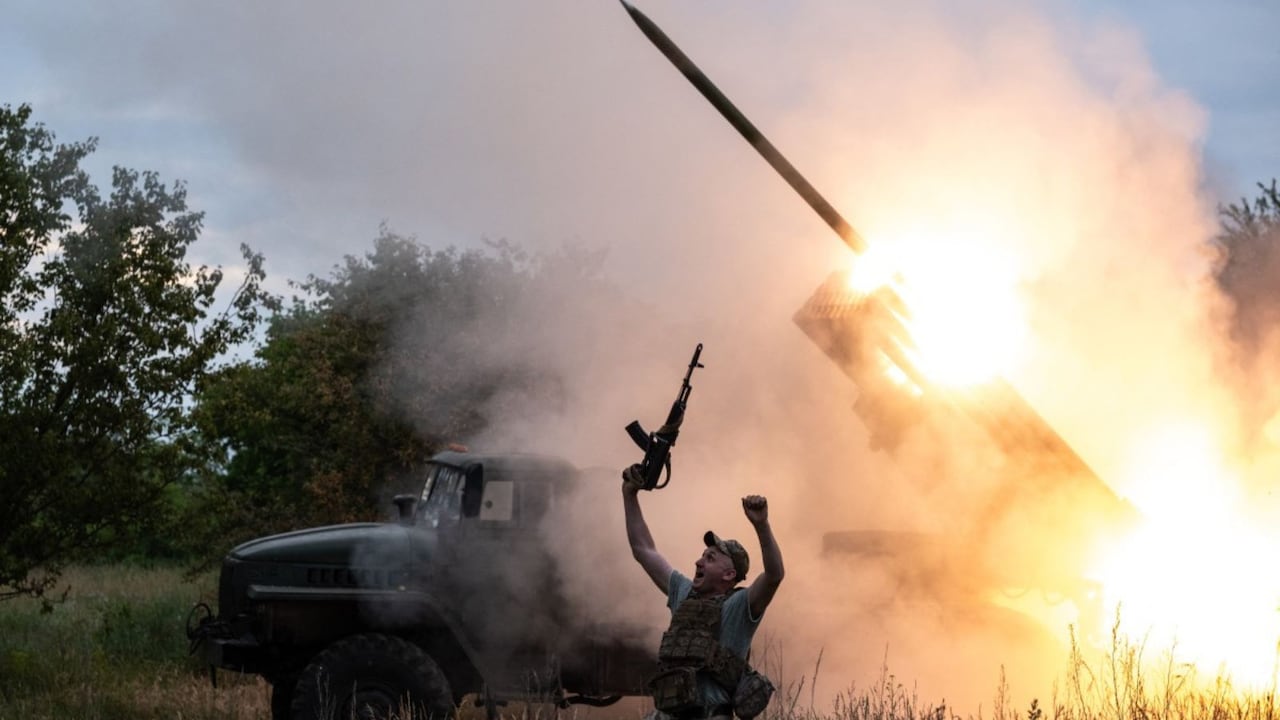
The Kremlin may claim the town today, next week, or next month. They can print new maps and pass new laws absorbing the ruins into their federation. But as long as there is a basement where a Ukrainian radio still hums, as long as there is an artillery crew hidden in the treeline three miles away waiting for the enemy to gather in the open, the victory remains an illusion.
The true metric of possession in this war is not a line drawn by a cartographer or a declaration made by a politician. It is the ability to walk down a street without fear. By that metric, neither side truly owns these broken towns. They belong only to the violence that created them, and to the stubborn, battered men who refuse to let the dust settle.