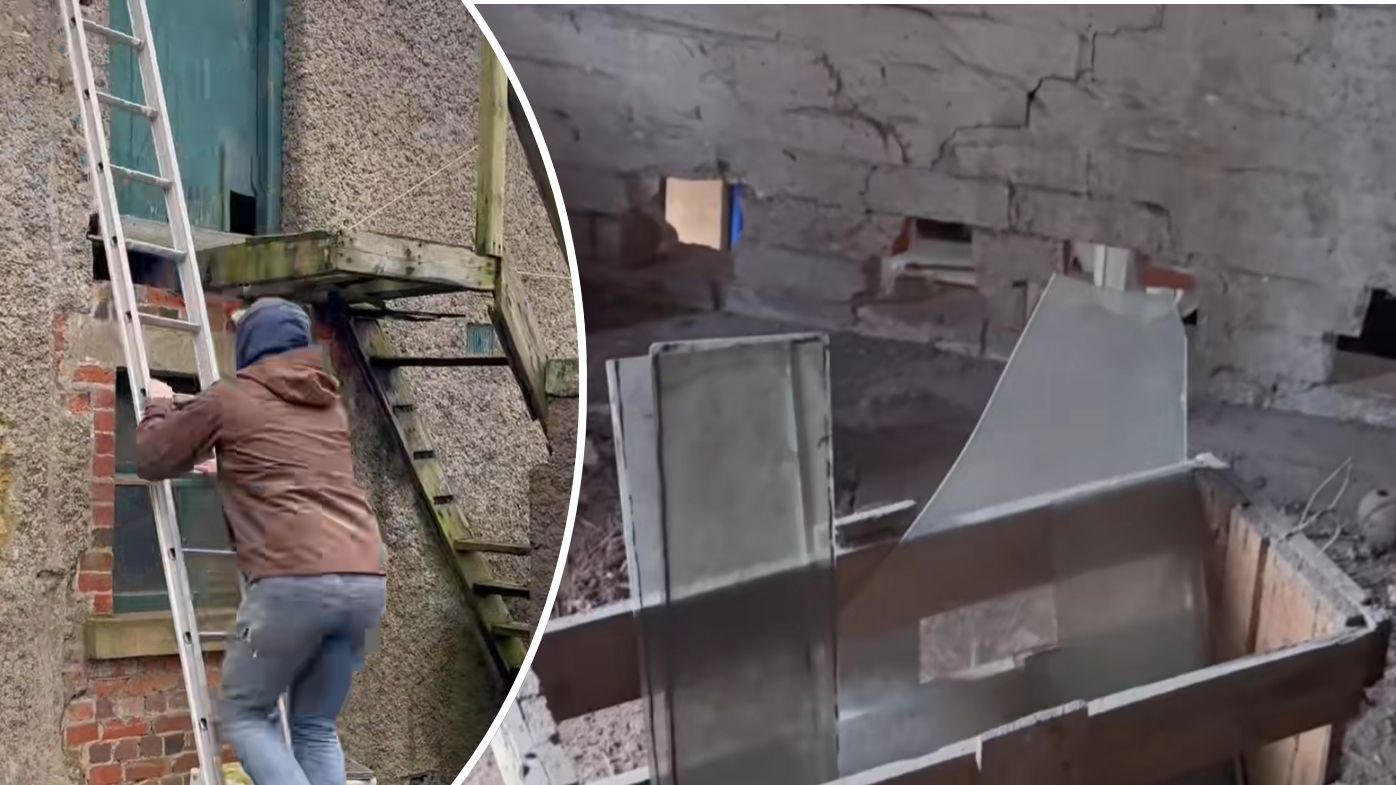
The iron gate didn't just creak; it groaned with the weight of forty years of rusted silence.
Mark and Sarah stood before the manor, their breath hitching in the damp morning air of the French countryside. This wasn’t the romantic getaway they had pitched to their friends back in London. It was a gamble wrapped in limestone and ivy. They had purchased the estate sight-unseen at an estate auction, lured by a single, grainy photograph and a price tag that suggested the house was more burden than blessing. For another look, check out: this related article.
Standing on the threshold, the air smelled of wet slate and something older—the scent of time itself holding its breath. They pushed the heavy oak doors open.
Shadows danced across the grand foyer. Dust motes, disturbed for the first time in decades, swirled in the shafts of light cutting through cracked shutters. To a surveyor, this was a disaster of rotting floorboards and precarious masonry. To Mark and Sarah, it was a cathedral of "what ifs." Further analysis on the subject has been provided by Travel + Leisure.
The Weight of the Unseen
Renovating an abandoned manor isn't a weekend project; it’s an archaeological dig into someone else’s psyche. For the first three weeks, the "treasures" they found were mundane. Broken chairs. Water-damaged ledgers. A single, solitary leather shoe.
The couple worked in a rhythmic silence, peeling back layers of floral wallpaper that flaked off like sunburnt skin. They were looking for structural integrity, but they were finding the echoes of a life interrupted. The previous owner, a reclusive countess who had vanished into the haze of a state-run nursing home, had left the house as if she were coming back in five minutes. A tea set sat on a side table, the residue in the cups dried into a dark, cracked glaze.
Then came the library.
It was a room that seemed to swallow sound. Floor-to-ceiling shelves held thousands of volumes, their spines bleached by the sun. Mark was clearing a stubborn stack of damp encyclopedias near the fireplace when he felt the floor give way. Not a collapse, but a mechanical click.
A section of the shelving, heavy with the history of the 19th century, swung inward.
Behind the False Front
Behind the books lay a space no larger than a pantry. It was cold.
Sarah held the flashlight, its beam trembling as it cut through the darkness of the hidden chamber. This wasn't a room for people. It was a vault. Inside, stacked with the precision of a bank heist, were wooden crates marked with fading wax seals.
They didn't find gold bars. They found something far more volatile.
The first crate contained hundreds of hand-painted porcelain dolls, their glass eyes reflecting the flashlight with an eerie, lifelike intensity. These weren't toys. They were artisanal masterpieces from a defunct Parisian workshop, preserved in straw, each one worth a small fortune to the right collector.
But the second crate changed everything.
Inside were rolled canvases, stripped from their frames long ago. As Mark carefully unfurled the first one, the vibrant blues of a Mediterranean harbor exploded into the room. These were sketches and finished works by some of the most influential "Lost Generation" artists who had frequented the French Riviera between the wars.
The "dry facts" of the discovery would later report that the haul was valued at over two million Euros. But standing in that dark, cramped space, the value felt different. It felt like a heavy responsibility. Someone had loved these objects enough to hide them from the world—perhaps from the war, perhaps from creditors, or perhaps from the crushing weight of their own memories.
The Cost of Discovery
The psychological shift from "homeowner" to "custodian" happens in an instant.
Suddenly, the leaking roof wasn't just an inconvenience; it was a threat to a heritage they hadn't asked to inherit. Mark and Sarah stopped seeing the house as a renovation project. They began to see it as a puzzle where every piece was made of glass.
They spent nights researching the markings on the crates. They learned about the "Great Lock-up" of the mid-20th century, where families across Europe hid their assets during periods of political upheaval, often taking the secrets of their locations to the grave. This manor was a physical manifestation of that paranoia and protectionism.
The stress began to show.
"Should we even be the ones to have this?" Sarah asked one night, her fingers stained with the soot of the fireplace they were finally cleaning.
It’s a question that haunts every treasure hunter. The law is clear—finders keepers, provided the paperwork is in order—but the ethics are murky. They were living in a dead woman's jewelry box. Every meal they ate in the kitchen felt like an intrusion on a ghost.
The Human Element of Stone and Mortar
To understand the magnitude of what they found, you have to look past the auction estimates.
Consider a hypothetical scenario: A young woman in 1940, hearing the rumble of engines in the distance, realizes that her beauty and her history are no longer safe. She hides her most precious belongings behind the one thing she thinks no soldier will bother with—a wall of boring books. She survives, but the trauma settles in her bones. She grows old. The secret becomes a part of the architecture, forgotten even by her as her mind begins to fray.
Mark and Sarah weren't just uncovering "hidden treasures." They were completing a narrative arc that had been frozen for half a century.
They decided not to sell everything.
While the porcelain dolls went to a museum in Paris to fund the massive structural repairs the manor desperately needed, the paintings stayed. They were re-framed and hung back on the walls of the library, not behind a secret door, but where the light could actually reach them.
The Transformation of Space
The manor is no longer "abandoned."
The gardens have been cleared of the brambles that acted like barbed wire. The windows are replaced. But if you walk through the foyer today, you still feel that slight chill, that vibration of a house that spent too long keeping secrets.
Wealth, in its truest form, isn't the number in a bank account or the valuation of a canvas. It’s the stories we leave behind in the floorboards. Mark and Sarah started as flippers looking for a profit, but they ended up as the curators of a forgotten life.
They realized that the house didn't belong to them. They belonged to the house.
The most valuable thing they found wasn't in a crate. It was the realization that we are all just temporary residents in spaces that will outlive us. We spend our lives filling rooms with objects, hoping they will say something about who we were after we’ve gone.
As the sun sets over the manor now, the light hits the library shelves, illuminating the gap where the secret door used to be. The ghosts are still there, but they seem less restless now that the door is open.
The dust has finally settled.


