Seven American aid workers are sleeping on army cots in tents inside a highly controversial bio-isolation facility at the Laikipia Air Base in Nanyuki, Kenya. They aren't sick, but they can't leave.
This isn't a routine medical screening. It is a full-blown diplomatic and legal mess that exposes the uncomfortable power dynamics of global health logistics.
The workers belong to Samaritan’s Purse, a Christian humanitarian organization that has been responding to a deadly Ebola outbreak in the Democratic Republic of Congo (DRC). They got caught in a bureaucratic trap when Washington suddenly slammed down new travel restrictions. The new rules demand that any American citizen returning from Ebola-affected areas in the DRC must spend 21 days in a third country before stepping foot on US soil.
So, they ended up in Kenya. But here is the kicker: Kenya’s own foreign ministry claims they had absolutely no idea this was happening.
A Sovereignty Clash Disguised as Healthcare
While a US State Department official claims that "Kenyan authorities have authorized their movement into the facility," the left hand doesn't seem to know what the right hand is doing. Top officials within Kenya's Ministry of Foreign Affairs explicitly stated they had zero information about the arrival of these Americans.
How does an entire group of foreign nationals under mandatory Ebola surveillance enter a military base without the state's diplomatic arm being briefed?
The answer lies in how this facility was built. The US government funded and constructed this bio-isolation unit specifically to house asymptomatic Americans who might have been exposed to Ebola while working in Central Africa. The project has felt less like a collaborative international effort and more like Washington outsourcing its biosecurity risks to African soil.
Locals are furious, and honestly, can you blame them?
Contempt of Court and Continuing Construction
The presence of these seven aid workers violates the spirit, if not the letter, of Kenyan law. The facility is the center of an intense legal battle spearheaded by the Katiba Institute.
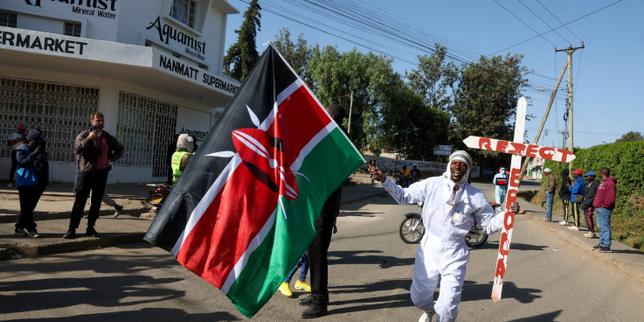
Kenyan courts previously issued a strict injunction ordering all construction and activity at the site to stop immediately. Public protests erupted, with one man shot dead during a demonstration against the site.
Kenyans have openly questioned why their country should bear the psychological and medical burden of hosting potentially infected foreign nationals when the US has the resources to handle them at home.
Just last month, Kenya's Health Cabinet Secretary Aden Duale was found guilty of contempt of court for failing to halt the project. He promised the High Court that work had stopped. Yet, satellite imagery and statements from US officials confirm that construction pushed right ahead anyway. Now, the facility has its very first occupants.
The Real Risk Factors Inside the Tents
Franklin Graham, president and CEO of Samaritan’s Purse, confirmed that none of the seven quarantined staff members are showing symptoms. But the risk isn't entirely uniform.
While some of the quarantined Americans worked in support roles like construction, others were medics directly treating Ebola patients at treatment centers in the DRC. According to internal sources, at least one worker had a known high-risk exposure event.
They are being monitored closely by clinicians from the US Public Health Service. They are under strict orders not to leave the perimeter.
The virus driving this strict response is a rare species of Ebola that has already claimed over 800 lives since mid-May. Because there are no proven vaccines or standard treatments for this specific strain, health agencies are terrified of it jumping borders undetected.
Franklin Graham has defended the Nanyuki site, calling it a "state-of-the-art facility" and arguing that if an American aid worker gets sick, that is exactly where they should want to be treated. But that defense misses the point entirely. The issue isn't the quality of the medical gear inside the facility; it's the blatant disregard for local judicial orders and national communication channels.
What Needs to Happen Next
This situation can't just be swept under the rug as a minor logistical oversight. If you are watching global health policy or international relations, there are distinct issues that need immediate resolution.
- Establish Real Transparency: The US State Department and the Kenyan Ministry of Health must issue a joint, clear statement outlining exactly who permitted this transfer and why the Foreign Ministry was bypassed.
- Respect Local Legal Rulings: Disregarding a High Court injunction sets a dangerous precedent. The legal status of the Laikipia facility needs a definitive ruling before any more individuals are processed through it.
- Clarify Third-Country Protocols: The US needs to provide a transparent framework for how it intends to use foreign bases for its domestic travel bans, rather than relying on backroom military agreements that blindside local civil governments.
The coming days will reveal whether Kenya enforces its own judicial sovereignty or bows to bilateral pressure from Washington. For now, seven Americans wait out their 21 days in the Kenyan dirt, caught between international health fears and a local legal firestorm.