The morning air in Berlin carried something heavier than the usual autumn chill. Inside the Bundestag, the weight was palpable, pressing against the mahogany benches and the glass ceilings. Just days prior, the polling booths in Saxony-Anhalt had closed, and the resulting tally had sent a tremor clear across the republic. The Alternative for Germany had claimed a landmark regional victory, a triumph that felt less like a political shift and more like tectonic plates grinding beneath the surface of modern European democracy.
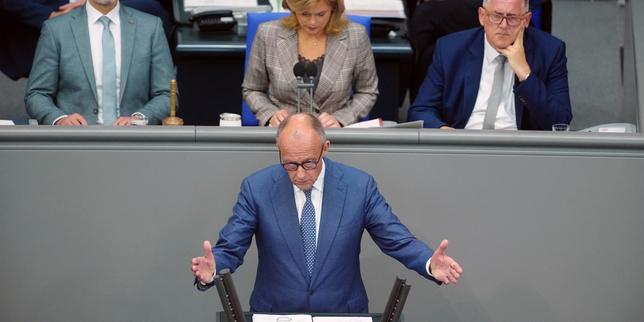
Chancellor Friedrich Merz stood up to address the storm. Recently making headlines recently: Inside Finland's Brutal Pivot to Mobile Mortars That Changes European Ground Warfare.
He did not offer platitudes. He did not soothe. Instead, he reached into the political lexicon of the far right and pulled out its most sanitized, bloodless term: remigration. For months, that word had floated through online forums and backroom party meetings like a polite euphemism. It sounded administrative. Almost bureaucratic.
Merz stripped it bare. Additional details on this are covered by The Washington Post.
"The word remigration is nothing other than a synonym for ethnic cleansing according to origin and skin color," Merz declared from the podium, his voice cutting sharply through the rising murmur of the opposition benches.
Silence followed. Then, uproar.
To understand why those syllables struck with such violence, one must look away from the marble halls of Berlin and step into the quiet corridors of a regional hospital in Magdeburg, or a family-run bakery in Halle. Consider a hypothetical nurse named Elena, who arrived in Germany a decade ago with a heavy suitcase, a nursing degree, and a tenuous grasp of the language. Today, she knows the rhythm of her ward by heart. She knows which patients take their tea with honey, who needs a hand held through the twilight hours, and how to keep a critical unit running when the night shift is skeletal.
Statistics tell us a dry story: roughly every sixth worker in Germany's craft trades holds a foreign passport. But the human story is simpler and more fragile.
If you sweep away the people who build the houses, tend the elders, and man the emergency rooms under the banner of forced demographic sorting, the machinery of daily life grinds to an absolute halt. Merz made this precise mathematical reality clear to the parliament. When the applause from his allies finally crested, he painted the alternative: an emptied nation, struggling against its own demographic decline, amputating its own hands to spite its face.
Across the aisle, Alice Weidel and her party colleagues wore the sharp, unyielding smiles of victors. To them, the vote in Saxony-Anhalt was a mandate. They pointed to public frustrations, to housing strains, to the deep-seated anxieties of a changing world, demanding the mass expulsion of over a million rejected asylum seekers. They called it realism. They called it reclaiming safety.
But the clash in the Bundestag revealed a deeper fracture, one that goes beyond left and right, coalition and opposition. It is a battle over memory and identity.
Germany knows better than almost any nation what happens when a state begins categorizing human beings by bloodlines and ancestry. The shadows of history are long here; they stretch across schoolyards, memorial stones, and family histories. When a modern chancellor uses a phrase as grave as ethnic cleansing in an active parliamentary debate, he is invoking ghosts that modern Europe swore it had buried.
Yet, the voters in the east spoke with a fury born of feeling forgotten. Decades after reunification, many in Saxony-Anhalt still feel like second-class citizens in their own country, watching wealth concentrate in the west while their local infrastructure frays. Anger is a fertile soil. Extremism knows how to plant seeds in it, offering simple enemies for complex, systemic grief.
The political math remains complicated. The far right did not secure an absolute majority, but their shadow has lengthened over every governing calculus in Berlin. The coalition government finds itself cornered, forced to choose between tightening immigration controls to appease a terrified populace or standing firm on human rights, risking further electoral erosion.
The debate in the Bundestag eventually ended, as parliamentary sessions do, with procedural votes and retreating footsteps. But the words hung in the air long after the microphones were switched off.
Outside, the autumn wind rustled through the Tiergarten, stripping the last stubborn leaves from the branches. The country moves forward into an uncertain winter, caught between the pull of an insular past and the messy, vital reality of a multi-ethnic present. The argument has only just begun.