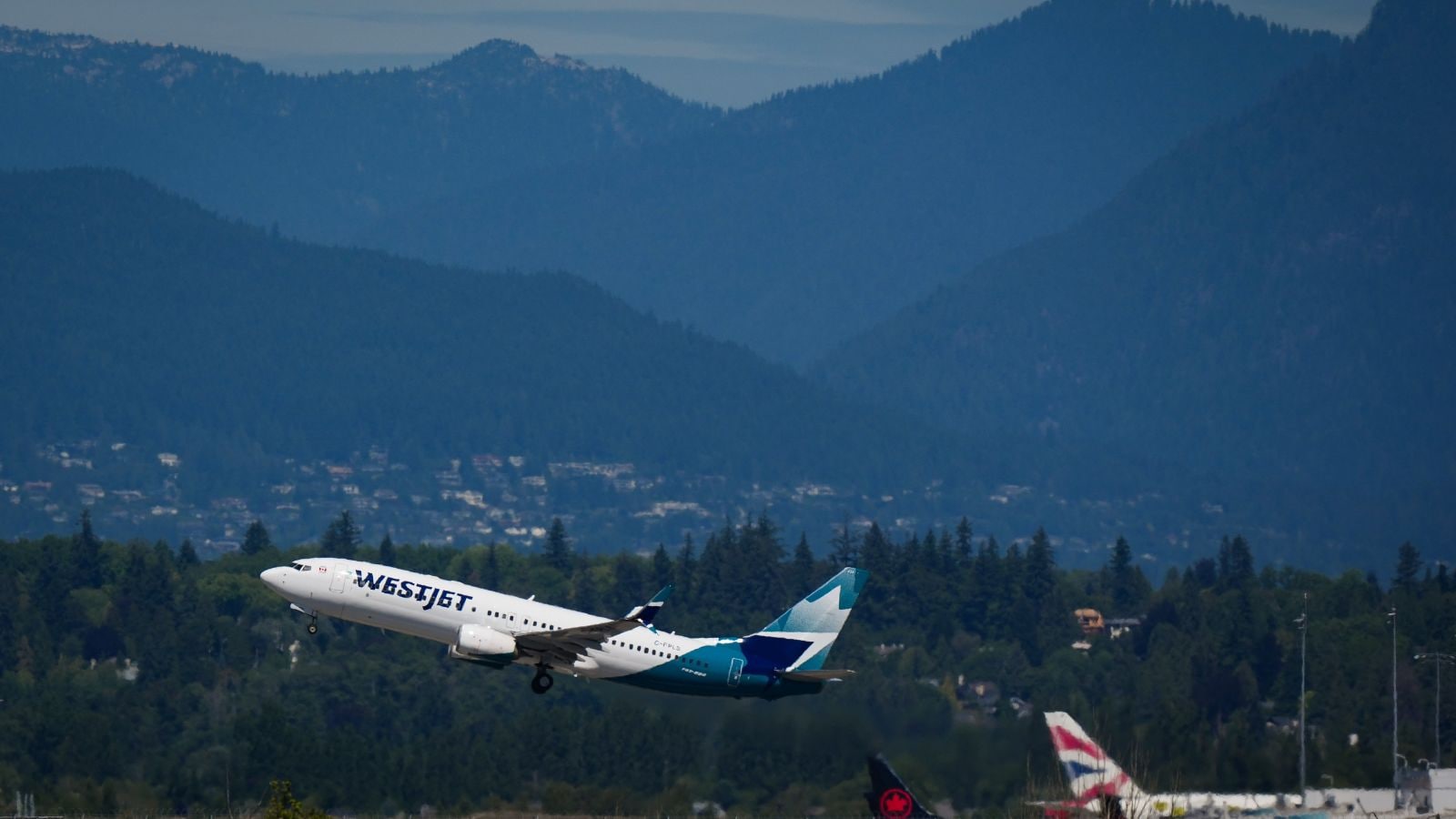
Labor friction within the commercial aviation sector stems from structural obsolescence rather than isolated negotiating failures. When 4,400 cabin crew members represented by the Canadian Union of Public Employees walked off the job at WestJet, grounding over 300 mainline Boeing 737 and 787 flights during a peak holiday weekend, the disruption signaled a deeper economic fracture. The core conflict centers on the mechanics of time valuation: the systemic exclusion of pre-flight, boarding, and post-flight ground duties from baseline hourly compensation. Understanding this dispute requires dissecting the cost functions of network carriers, the limitations of legacy credit-hour models, and the systemic ripple effects of labor stoppages on regional transit networks.
The Cost Function Divergence
Traditional airline compensation relies on a credit-hour system where cabin personnel accrue earnings primarily when aircraft doors close and the wheels leave the tarmac, or via calculated trip-rig minimums. Under this architecture, hours spent executing mandatory safety briefings, managing passenger boarding friction, conducting cabin security sweeps, and facilitating tarmac delays generate zero direct hourly yield. Carriers defend this model through integrated productivity metrics, arguing that credit hours bundle ground time into broader trip calculations.
The economic mismatch occurs because ground duties have expanded significantly due to tighter turnaround windows, higher load factors, and escalating passenger baggage volumes. When turnaround compression increases the physical output demanded of cabin crews without altering the underlying compensation trigger, the effective hourly wage drops below the nominal rate. Labor organizations evaluate this delta as uncompensated labor extraction, whereas executive management models it as a fixed operational overhead amortized across block-hour productivity.
Operational Vulnerability Matrices
A sudden labor withdrawal exposes airlines to exponential financial decay functions. Fixed asset costs, including aircraft leases, facility rentals, and capital debt servicing, remain constant regardless of whether a Boeing 737 is airborne or parked. Variable savings achieved by cancelling flights—primarily jet fuel and minor landing fees—are dwarfed by the immediate revenue evaporation and downstream liabilities.
[Operational Bottleneck] -> [Ground Duty Unpaid Friction] -> [Union Mandate Activation] -> [Mainline Grounding / 300+ Cancellations] -> [Network Revenue Decay]
When mainline operations halt completely, secondary economic vectors activate:
- Passenger reaccommodation costs strain customer service reserves.
- Contractual refund obligations trigger immediate cash outflows.
- Brand equity erosion redirects high-yield business travelers toward competitor networks.
Regional subsidiaries operating distinct fleets, such as WestJet Encore using Q400 turboprops, often remain operational due to separate collective agreements or distinct legal frameworks. However, their capacity constraints prevent them from absorbing displaced mainline volume, leaving entire domestic transit corridors bottlenecked.
The Macro Industry Shift Toward Ground Pay
The WestJet stoppage mirrors a continental realignment in aviation labor standards. Historically, North American carriers maintained uniform resistance against hourly ground pay to protect operating margins. This barrier cracked when major United States carriers introduced dedicated boarding pay provisions into recent collective bargaining agreements.
When network flag carriers alter their compensation frameworks, peer institutions face immediate retention and recruitment pressures. The marginal cost of matching industry-standard ground pay must be weighed against the catastrophic cost of system-wide strikes during peak revenue windows. Management proposals offering double-digit first-year wage increases alongside restructured credit formulas fail to satisfy labor unions if they preserve the structural separation between ground presence and monetary accrual. Crews view hourly parity for all on-duty minutes as a binary threshold rather than a negotiable variable.
Strategic Outlook
Resolving recurrent cabin crew disputes requires abandoning legacy credit-hour frameworks in favor of continuous time-tracking models that initiate pay at the designated report time. Airlines that proactively internalize ground compensation into their baseline CASM (cost per available seat mile) calculations insulate themselves from catastrophic holiday disruptions. Those that rely on legal friction and administrative self-audits to defend historical pay structures will continue to invite operational paralysis whenever collective agreements expire. The financial burden of paying for boarding time is quantifiable and insurable through yield management; the financial burden of an unannounced holiday shutdown is absolute.