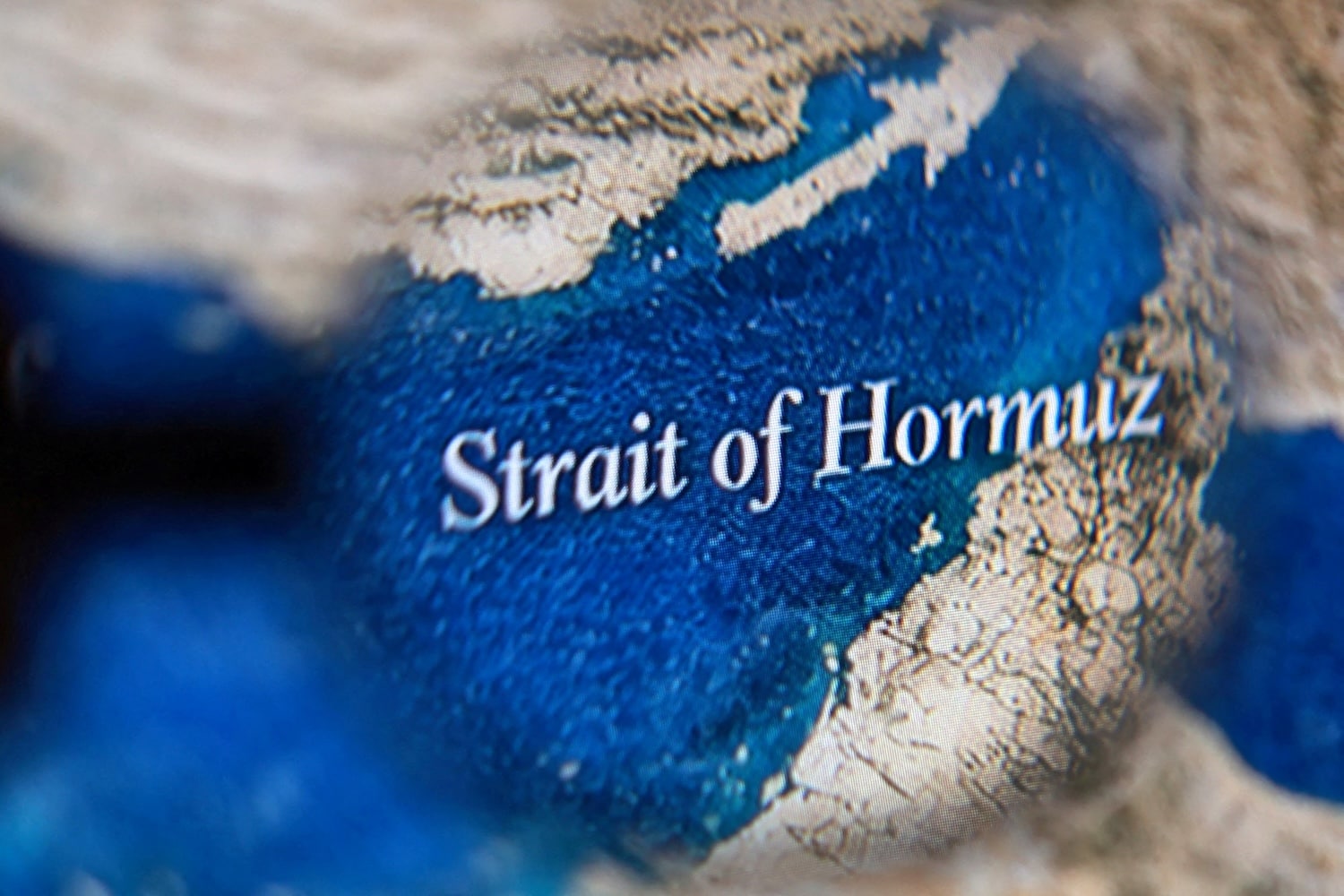
The Islamabad Memorandum of Understanding between Washington and Tehran was designed to re-establish commercial baseline traffic through the Strait of Hormuz following a highly disruptive three-month maritime conflict. However, the subsequent administrative architecture deployed by Iran’s newly formed Persian Gulf Strait Authority (PGSA) reveals a deliberate strategy to convert a temporary tactical pause into a permanent regulatory chokehold. By establishing a system of mandatory permits, restricted geographic corridors, and an initially subsidized insurance framework, Tehran is systematically testing the boundaries of international maritime law and rewriting the economic terms of global energy transit.
The immediate operational reality for global shipping companies is not a return to the pre-conflict status quo of free transit passage, but rather the introduction of a centralized state-managed clearinghouse. The PGSA framework replaces the historically recognized, internationally monitored Traffic Separation Scheme (TSS) with a highly localized, mandatory northern route routing traffic directly through Iranian territorial waters near Larak Island.
The Three Pillars of Irans Regulatory Framework
To evaluate the financial and operational risk to global trade, the new PGSA decree must be deconstructed into three distinct mechanisms. Each mechanism functions as an independent lever of administrative leverage.
1. The Pre-Authorization and Permit Mandate
Vessels intending to transit the strait are now required to submit comprehensive operational data and registration details to the PGSA platform at least 48 hours prior to arrival.
- Temporal Boundaries: Approved permits are single-use assets with a strict five-day validity window. Any delay due to port congestion, mechanical failure, or weather conditions nullifies the permit, forcing a re-application and stalling supply chains.
- Jurisdictional Claim: By requiring explicit approval before a ship enters the waterway, Tehran is legally attempting to shift the status of the Strait of Hormuz from an international strait governed by "transit passage" to an internal or territorial waterway governed by "innocent passage," where the coastal state exercises sovereign rights to suspend or condition entry.
2. Geographic Corridor Enforcement
The PGSA rules strictly prohibit the use of alternative routes, including the southern shipping lanes hugging the Omani coast that were heavily relied upon during the height of recent hostilities.
- The Spatial Bottleneck: Forcing all commercial traffic into a singular, narrow corridor near Larak Island maximizes Iran's physical monitoring and interdiction capabilities.
- The Minefield Pretext: Tehran justifies this geographic restriction by citing ongoing mine-clearance operations and lingering security hazards from the spring conflicts. In practice, this creates a state-monitored bottleneck, ensuring that non-compliance with Iranian routing dictates is treated instantly as a structural violation.
3. The Trojan Horse Insurance Mechanism
While the Islamabad MoU guarantees that no direct transit fees or tolls will be levied during the initial 60-day negotiation window, the PGSA has introduced a mandatory, state-approved insurance policy requirement.
- The Subsidized Phase: For the first 60 days, the Iranian government is absorbing the premium costs, framing the coverage as a safety measure.
- The Monetization Clause: The official PGSA documentation explicitly states that the authority reserves the right to introduce insurance fees at the conclusion of the 60-day period. This creates a turnkey fee-collection infrastructure that can be activated instantly once the diplomatic grace period expires.
The Microeconomic Cost Function of Chokepoint Management
For global shipping lines, bulk carriers, and energy firms, the true cost of this regulatory regime extends far beyond future toll fees. The introduction of the PGSA adds layered structural inefficiencies to the maritime cost function, which can be expressed conceptually as:
$$\text{Total Transit Cost} = C_{\text{base}} + C_{\text{delay}} + C_{\text{compliance}} + P_{\text{risk}}$$
Where:
- $C_{\text{base}}$ represents standard fuel, crew, and operating costs.
- $C_{\text{delay}}$ represents the compounding financial penalties of the 48-hour pre-registration requirement and the 5-day permit expiration window.
- $C_{\text{compliance}}$ encompasses the administrative overhead of registering with a US-sanctioned entity.
- $P_{\text{risk}}$ represents the volatile insurance premiums driven by legal ambiguity.
The immediate bottleneck is informational. Shipmasters must surrender sensitive manifest and crew data to a regulatory body currently designated under primary US Treasury sanctions. This creates an acute compliance paradox for Western shipowners: complying with local coastal state directives to ensure the physical safety of the vessel simultaneously risks violating Western sanctions regimes.
Furthermore, the International Maritime Organization (IMO) and regional states like Saudi Arabia and the United Arab Emirates have signaled intense opposition to the PGSA architecture. The core friction lies in precedent. If Iran successfully normalizes a state-administered, fee-bearing permit system in an international waterway, the foundational principles of the UN Convention on the Law of the Sea (UNCLOS) are compromised. This creates a scalable blueprint for other state actors controlling critical oceanic chokepoints, such as the Bab-el-Mandeb or the Strait of Malacca, to institute localized tariff regimes under the guise of environmental or security management.
Strategic Playbook for Maritime Operators
Navigating the 60-day transition window requires corporate operators to detach short-term tactical optimization from long-term risk exposure. Relying entirely on the current "free of charge" status of the Iranian insurance mechanism introduces severe vulnerability to sudden regulatory pivots.
- Implement Dual-Track Route Planning: Maintain active risk-modeling for the southern Omani corridor, despite current PGSA prohibitions. As diplomatic talks proceed at the Bürgenstock resort in Switzerland, the legal status of these alternate lanes remains fluid. Ocean carriers must preserve the operational agility to pivot routes the moment Western naval coalitions offer escort assurances within Omani waters.
- Contractual Indemnification Re-Drafting: Immediate updates are required for all upcoming charter party agreements transiting the Middle East Gulf. Legal teams must explicitly define which party bears the financial liabilities of a revoked or expired PGSA permit. "Detention" and "Off-Hire" clauses must be calibrated to account for administrative delays at the mouth of the strait, separating these state-induced bottlenecks from standard mechanical or weather delays.
- Sanctions Insulation Protocols: Establish isolated corporate compliance rings to handle interaction with the PGSA database. Because the US Treasury has previously targeted the PGSA for enforcing forced routing and collecting unauthorized data, all communications, permit requests, and documentation submissions should be managed via third-party maritime agents located in neutral jurisdictions to minimize direct exposure to primary sanctions hooks.