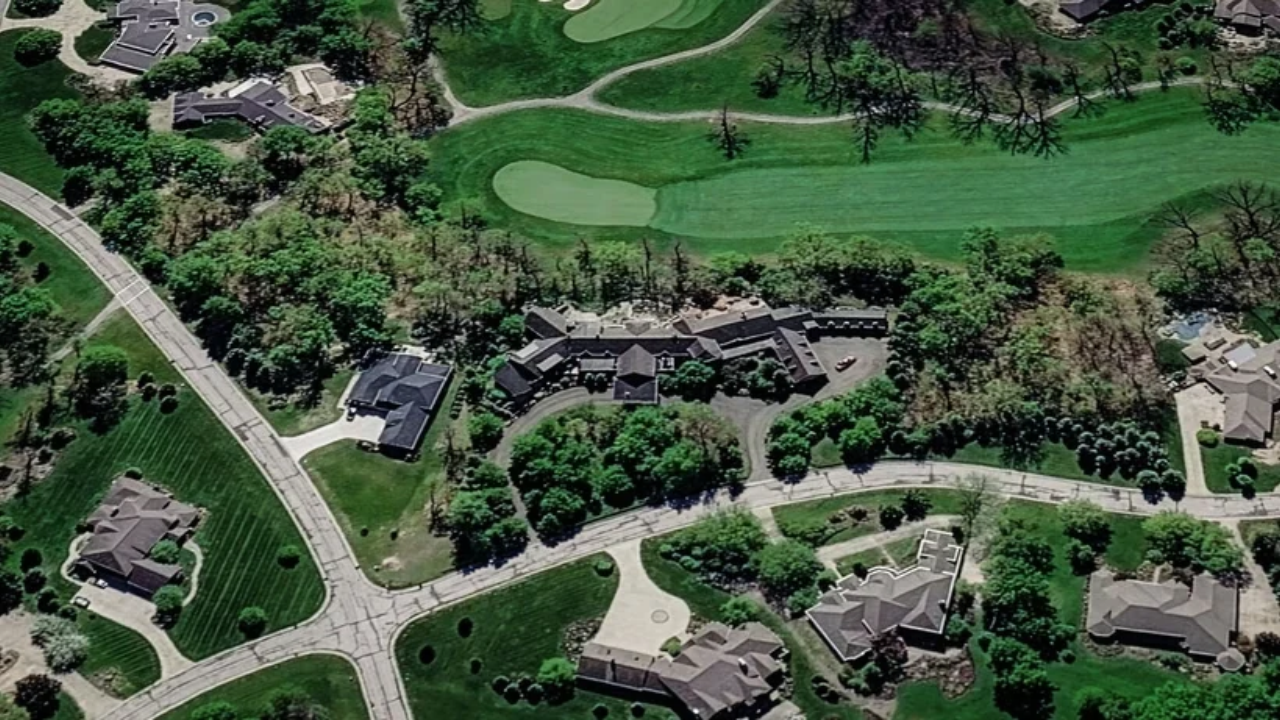
Long-duration residential foreclosure proceedings represent a structural friction within real estate markets, characterized by misaligned incentives between institutional lenders, distressed borrowers, and private capital acquirers. When legal latitude expands to accommodate fifteen years of litigation on a single asset—such as the protracted legal battle surrounding a 17,000-square-foot estate in Aurora, Ohio involving debtor Louis Telerico and institutional entities—the underlying mechanics reveal a predictable life cycle of asset depreciation, procedural exhaustion, and ultimate economic realignment.
The progression of such prolonged defaults follows three distinct operational phases: the jurisdictional stalling phase, the title consolidation phase, and the physical possession arbitrage phase. Understanding how these phases interact exposes the true cost functions borne by both defaulting homeowners and acquiring entities.
The Jurisdictional Stalling Phase
The initial phase of a multi-decade foreclosure is defined by the strategic exploitation of procedural safeguards. When Bank of America initiated foreclosure proceedings against the Aurora property in August 2011, the post-financial crisis judicial environment was already saturated with distressed inventory. This backlog created an inherent structural advantage for debtors with the legal capital to contest motions.
Borrowers leverage multiple overlapping legal mechanisms to preserve possession without servicing the underlying debt:
- Automatic Stays via Bankruptcy: Repeated filings introduce federal bankruptcy stays that legally halt state-level sheriff sales and eviction schedules.
- Appellate Interlocutory Challenges: Contesting every evidentiary ruling, summary judgment motion, and procedural misstep forces appellate courts to review minute details of note ownership and chain of title.
- Mediation Exhaustion: Courts often mandate long periods of settlement conferencing, extending timelines under the premise of pursuing loan modifications or short sales.
This multi-year friction imposes a high cost on lenders. The opportunity cost of capital, combined with ongoing property tax accruals, insurance maintenance, and legal fees, typically erodes the original recovery value of the asset. However, for the debtor, the economic utility of rent-free occupancy in a multi-million-dollar structure for over a decade often outweighs the compounding legal expenses.
The Title Consolidation Phase
The transition from default litigation to absolute ownership occurs through the sheriff sale mechanism, which functions as a judicial clearinghouse for distressed collateral. In the Telerico case, the turning point materialized when the Ohio Court of Appeals affirmed a lower-court ruling validating the January 2025 sheriff's sale to Bank of America.
Once appellate avenues are exhausted, the legal fiction of borrower equity is dissolved. The property transitions from a disputed mortgage asset to an institutional REO (Real Estate Owned) holding. Following this validation, secondary private capital enters the equation. In July 2026, an investment firm, ERADAL, acquired the estate for approximately $3 million—a steep discount relative to its historical valuation of $4.5 million.
This phase exposes a critical friction in property law: the divergence between de jure ownership (holding the deed) and de facto control (physical occupancy). Institutional buyers acquire titles at a discount precisely because they price in the operational drag of removing a holdover occupant.
The Physical Possession Arbitrage Phase
Securing a deed does not grant immediate physical possession. When a holdover occupant refuses to vacate post-sale, the acquiring entity must initiate forcible entry and detainer actions, commonly known as eviction proceedings.
In July 2026, the acquiring investment firm served a standard three-day notice to vacate, transitioning the dispute from mortgage law to landlord-tenant and ejectment law. When the statutory deadline elapsed without compliance, the firm escalated the matter to local magistrates, resulting in the formal approval of an eviction order.
Concurrently, prolonged vacancy under legal dispute creates severe physical depreciation. Large-scale residential assets require active climate control, structural maintenance, and groundskeeping. When these inputs are absent for extended periods, the physical asset undergoes accelerated degradation:
- Envelope Integrity Failure: Roof systems and flashing degrade without preventative maintenance, leading to water intrusion.
- Biological and Botanical Overgrowth: Unmanaged landscaping compromises exterior hardscapes and invites pest infestations.
- Capital Expenditure Deficit: The cost to restore a luxury asset to market parity grows exponentially with every year of deferred maintenance.
The Buyback Dynamic and Capital Resolution
The final vector in a prolonged foreclosure dispute is the counterintuitive emergence of post-eviction buyback negotiations. Even after a magistrate approves an eviction order, distressed original owners frequently attempt to reacquire the asset through private treaty with the new institutional owner.
This dynamic operates on a purely transactional calculus. For an institutional investment firm, holding a vacant, deteriorating luxury mansion incurs carrying costs and ties up liquidity. If an original owner can assemble private equity or institutional financing to repurchase the asset at current market value—bypassing retail brokerage fees and holding timelines—the buyer can liquidate the asset cleanly.
Conversely, if the debtor's capital mobilization fails, the institutional buyer assumes unfettered physical control, executes deferred maintenance capital expenditures, and repositions the asset for the open market.
Deploy capital contingency modeling early in asset acquisition; discount bid prices by the projected duration and legal cost of forcible ejectment proceedings when acquiring properties encumbered by long-term holdover occupants.