Turkey’s push to center a global zero-waste framework at COP31 treats municipal waste management as a primary lever for greenhouse gas mitigation, yet the underlying thermodynamic and economic mechanics reveal a critical structural flaw. When nations position downstream waste recovery as a substitute for upstream material reduction, they encounter the law of diminishing marginal returns. True decarbonization through waste policy requires separating methane abatement from plastic circularity, pricing negative externalities at the point of polymer production, and dismantling the fossil fuel subsidies that keep virgin resins cheaper than recycled alternatives.
The Structural Architecture of Turkey’s Zero-Waste Diplomacy
To evaluate the geopolitical utility of Turkey’s COP31 agenda, analysts must strip away the diplomatic branding of the Zero Waste Project—spearheaded domestically since 2017 and elevated via United Nations General Assembly resolutions—and examine the operational mechanics of waste-to-climate policy. Climate negotiations historically prioritize energy grids, heavy industry, and land use. By elevating solid waste to the main stage of COP31, Ankara attempts to establish a low-cost, high-visibility mitigation pathway accessible to developing economies that lack the capital expenditure budgets for rapid grid decarbonization.
This diplomatic positioning rests on three distinct operational pillars:
- Source Segregation and Collection Infrastructure: Transitioning from unlined open dumpsites to formalized, multi-stream municipal sorting systems.
- Material Recovery and Mechanical Recycling: Capturing high-value paper, glass, metal, and rigid plastics to displace virgin raw material extraction.
- Organic Diversion and Composting: Removing biodegradable municipal solid waste (MSW) from anaerobic landfill environments to prevent fugitive methane emissions.
The strategic logic is straightforward. Solid waste management accounts for roughly 3 to 5 percent of global anthropogenic greenhouse gas emissions, driven almost entirely by methane generated when organic matter decomposes without oxygen in landfills. Unlike carbon dioxide, which persists in the atmosphere for centuries, methane possesses a global warming potential more than 80 times greater than carbon dioxide over a 20-year timeframe, alongside an atmospheric half-life of roughly a decade. Cutting landfill methane delivers rapid, measurable cooling dividends within a single political cycle.
However, diplomatic frameworks frequently conflate organic methane abatement with synthetic polymer recycling. While both fall under the municipal waste umbrella, their climate physics, supply chain economics, and scalability limits operate on entirely different principles. Treating them as a unified "zero-waste" solution obscures the capital bottlenecks that prevent municipal recycling programs from achieving net-zero material loops.
The Thermodynamic and Economic Limits of Downstream Circularity
A rigorous audit of global waste systems exposes a persistent gap between policy targets and physical reality. Most national zero-waste strategies rely heavily on mechanical recycling to neutralize the carbon footprint of plastics and packaging. In practice, mechanical recycling faces severe physical degradation and unfavorable unit economics.
Every time a thermoplastic polymer—such as polyethylene terephthalate (PET) or high-density polyethylene (HDPE)—undergoes thermal reprocessing, its polymer chains shorten. This thermal degradation reduces tensile strength, alters melt viscosity, and degrades optical clarity. After two to three cycles, the material can no longer meet food-grade or structural specifications, forcing it into lower-value applications like synthetic textiles or composite lumber before eventual disposal. Mechanical recycling does not eliminate waste; it merely delays disposal by one or two product lifecycles.
The economic barrier is even more acute than the physical one. Recycling facilities operate as commodity processors caught between fixed collection costs and volatile global oil markets.
- The Virgin Price Floor: Virgin plastic resins are synthesized from ethane and naphtha, direct byproducts of natural gas processing and crude oil refining. When oil and gas prices drop, or when petrochemical producers expand cracking capacity, the market price of virgin resin falls below the operational cost of collecting, sorting, washing, and pelletizing post-consumer plastic.
- The Contamination Tax: Single-stream municipal collection—the standard model in rapidly urbanizing economies—produces high cross-contamination rates. Food residue, multi-layer packaging films, and non-recyclable adhesives force Material Recovery Facilities (MRFs) to reject between 15 and 30 percent of incoming tonnage, transferring disposal costs directly onto the recycler's balance sheet.
- The Subsidy Asymmetry: Global fossil fuel subsidies artificially depress the extraction and refining costs of virgin feedstocks. Without a corrective carbon price or virgin plastic tax, recycled polymers carry a "green premium" that consumer packaged goods companies refuse to absorb voluntarily at scale.
Turkey’s domestic waste trajectory illustrates this exact tension. While domestic collection rates and public awareness campaigns expanded rapidly after 2017, operational data from European and Mediterranean waste trade monitors consistently show that domestic sorting infrastructure struggled to keep pace with both domestic consumption and imported plastic scrap. When local processing capacity bottlenecks, excess low-grade plastic waste defaults to incineration in cement kilns—which still releases fossil carbon—or leaks into unregulated dumpsites.
The Methane Abatement Opportunity Versus the Plastic Trap
To turn COP31’s waste agenda into a verifiable climate tool, policymakers must decouple organic waste management from synthetic material recovery. The climate return on investment (ROI) per dollar spent on organic diversion vastly outperforms the climate ROI of plastic recycling.
When food scraps, agricultural residues, and yard waste enter an unlined landfill, methanogenic archaea metabolize the carbon under anaerobic conditions, venting a gas mixture composed of roughly 50 percent methane and 50 percent carbon dioxide. Capturing this gas via landfill gas-to-energy (LFGTE) wells recovers at best 60 to 75 percent of total emissions over the landfill's lifespan, because significant gas escapes before wells are capped and sealed.
Diverting organics before they reach the landfill eliminates this fugitive emission pathway entirely. The operational sequence requires three targeted interventions:
- Mandatory Commercial Separation: Focusing collection mandates first on high-volume, low-contamination generators—supermarkets, hotels, food processing plants, and municipal produce markets—rather than dispersed residential households.
- Distributed Anaerobic Digestion (AD): Processing concentrated organic slurries in sealed biodigesters to capture 95 percent or more of the generated biogas, upgrading it to renewable natural gas (RNG) or generating baseload electricity.
- Aerobic Windrow Composting: Converting fibrous agricultural and yard waste into soil amendments, which sequesters stable carbon in degraded agricultural soils and reduces synthetic nitrogen fertilizer demand.
In contrast, attempting to solve the plastic crisis through downstream municipal sorting creates a moral hazard. It allows petrochemical producers and consumer brands to expand single-use packaging volumes under the guise of "recyclability," shifting the capital burden of waste management onto municipal taxpayers. Even if global municipal collection rates doubled overnight, existing mechanical and chemical recycling infrastructure cannot absorb the projected tripling of global plastic production by 2060.
Supply Chain Accountability and Extended Producer Responsibility
If Turkey and the COP31 presidency intend to elevate zero-waste principles into binding international climate architecture, voluntary municipal pledges will fail. The mechanism required to make downstream circularity solvent is mandatory, eco-modulated Extended Producer Responsibility (EPR).
Standard EPR schemes require producers to pay a flat fee per ton of packaging placed on the market to fund municipal collection. Flat fees fail because they do not incentivize design changes; a company using easily recyclable clear PET pays the same rate as a company using unrecyclable multi-layer metallized film.
Eco-modulated EPR restructures the cost function of packaging design:
- Fee Escalation for Unrecyclable Formats: Packaging containing PVC, polystyrene, carbon black pigments (which evade near-infrared optical sorters), or multi-material laminates incurs punitive fee multipliers.
- Fee Discounts for Mono-Material Design: Products engineered from single, unpigmented polymers with water-soluble adhesives receive steep fee reductions, directly lowering the sorting and washing costs at downstream MRFs.
- Mandatory Recycled Content Quotas: Legal mandates requiring all new packaging to contain a rising percentage (e.g., 30 to 50 percent) of post-consumer recycled (PCR) resin. This decouples PCR prices from virgin oil markets by creating an inelastic, legally guaranteed floor for recycled feedstock demand.
Without mandatory recycled content quotas and eco-modulated fees, national zero-waste initiatives remain vulnerable to commodity price shocks. When global oil prices dip, municipal recycling programs bleed cash, inventories of baled plastic pile up in warehouses, and municipalities quietly divert sorted recyclables back to landfills or incinerators to stay solvent.
Limitations and Blind Spots of the Zero-Waste Framework
Even an optimized, EPR-backed zero-waste framework carries strict operational boundaries that climate negotiators must account for. Overstating the mitigation potential of waste policy risks cannibalizing political capital needed for energy transition policies.
First, waste-to-energy (WtE) incineration is not a low-carbon technology. Many national zero-waste plans count municipal incineration with energy recovery as "diversion from landfill." While burning non-recyclable waste eliminates methane generation, incinerating plastics releases fossil carbon dioxide directly into the atmosphere. Because municipal waste streams contain high proportions of synthetic polymers, modern WtE plants often exhibit a carbon intensity per megawatt-hour higher than coal-fired power plants. Classifying incineration as green energy distorts national greenhouse gas inventories.
Second, chemical recycling (pyrolysis and gasification) remains thermodynamically expensive. Proponents argue that breaking plastics back down into liquid hydrocarbon feedstocks solves the quality degradation of mechanical recycling. In reality, pyrolysis requires intense thermal energy inputs, suffers from low mass-yield conversion rates (often losing 30 to 50 percent of the carbon input as process fuel or char), and requires stringent pre-sorting to remove chlorine and oxygen contaminants that corrode reactor vessels. Scaling chemical recycling on a fossil-powered grid frequently produces a net increase in lifecycle carbon emissions compared to virgin production.
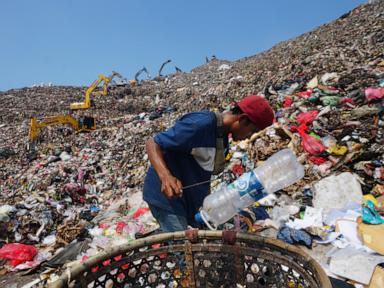
Third, informal waste sectors cannot be regulated out of existence without economic integration. Across developing economies—including major urban centers in Turkey, South Asia, and Latin America—informal waste pickers recover up to 60 percent of high-value recyclables before waste ever reaches municipal trucks. Top-down privatization of waste streams that excludes informal workers destroys existing recovery efficiency, spikes municipal collection costs, and triggers social displacement. Effective zero-waste transitions require formalizing waste picker cooperatives into contracted municipal service providers, paying them directly for verified tonnage diverted.
The Strategic Play for COP31 Negotiators
To transform Turkey’s COP31 zero-waste agenda from a diplomatic showcase into an instrument of measurable emissions reduction, negotiators must abandon broad, non-binding waste reduction pledges and codify three structural mandates into the COP31 outcome text:
- Separate Methane from Materials in Nationally Determined Contributions (NDCs): Require signatory nations to establish standalone, binding targets for organic waste diversion and landfill methane capture, distinct from municipal recycling rates. Direct multilateral climate finance exclusively toward anaerobic digestion, composting infrastructure, and landfill gas capture systems, where every dollar invested yields immediate, verifiable short-term warming reductions.
- Establish Global Harmonized Standards for Eco-Modulated EPR: Transition waste diplomacy from municipal operations to trade and industrial policy. Require participating nations to implement mandatory recycled-content mandates for packaging and durable goods, creating cross-border demand stability for secondary raw materials and neutralizing the price advantage of subsidized virgin petrochemicals.
- Cap Upstream Virgin Polymer Production: Anchor international waste negotiations to the Global Plastics Treaty framework by pairing downstream collection targets with binding upstream production caps and phase-outs of non-recyclable multi-layer packaging. Until the global supply of virgin polymers is constrained at the refinery gate, municipal zero-waste systems will remain overwhelmed by an exponential tide of low-value, unrecyclable material.