Geopolitical posturing often replaces economic reality when states deploy secondary sanctions as diplomatic leverage. Recent statements from Iranian diplomatic officials dismissing United States warnings about bilateral commercial partnerships reveal a fundamental tension between extraterritorial financial coercion and the decentralized mechanics of global trade networks. Evaluating this dynamic requires abandoning diplomatic talking points in favor of a structural cost-benefit analysis.
The Mechanics of Extraterritorial Coercion
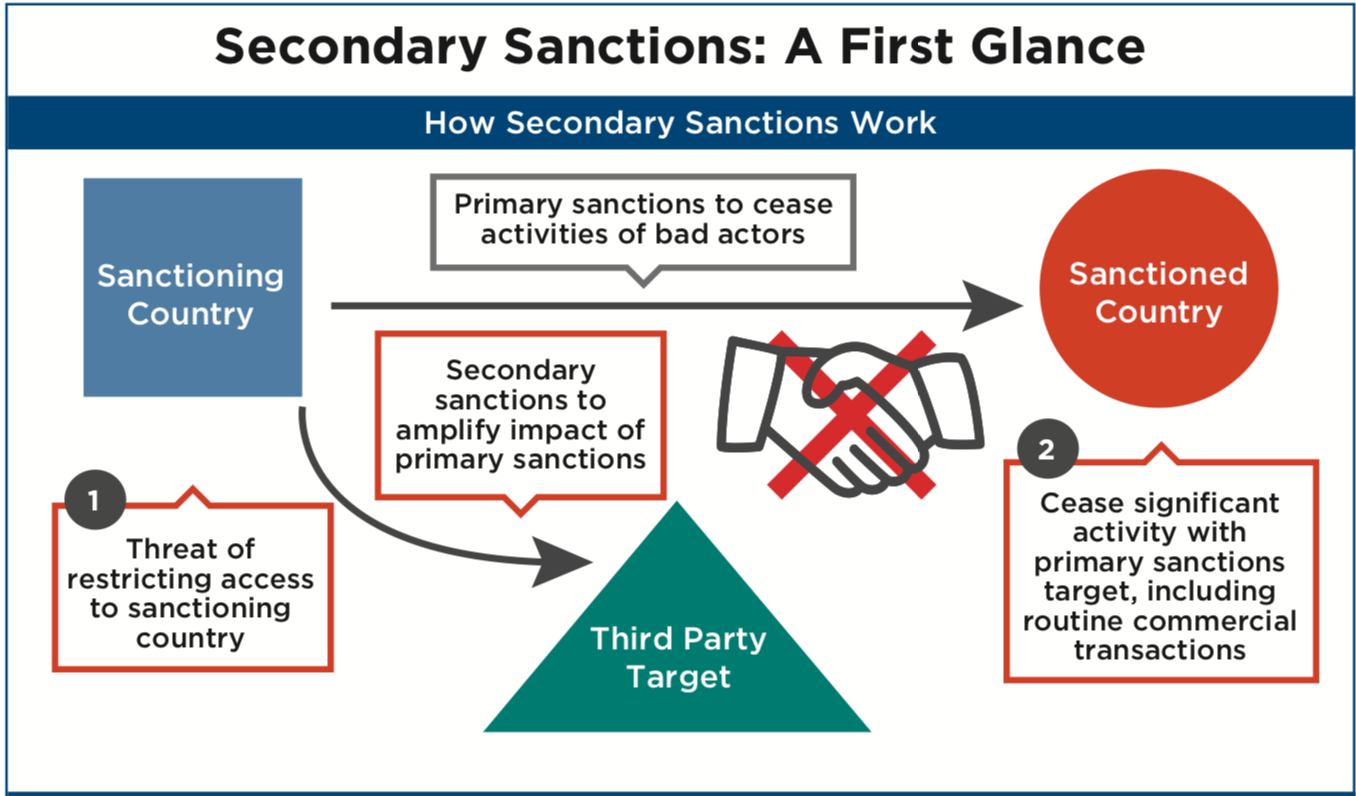
Secondary sanctions operate on a simple yet brutal structural premise: forcing international entities to choose between accessing the United States financial system or trading with a sanctioned jurisdiction. This mechanism relies on the global dominance of the United States dollar and the central clearing role played by correspondent banking networks tied to New York.
When a state threatens secondary penalties against third-party partners, the underlying strategic objective is to create a compliance barrier so high that private commercial actors abandon transactions out of self-preservation. This strategy succeeds not through direct enforcement against the target nation, but through the behavioral modification of foreign corporations, shipping conglomerates, and insurers who calculate that the risk of exclusion from Western markets outweighs the profit margin of bilateral trade.
The Cost Function of Third-Party Compliance
Dismissing these threats as mere signs of weakness overlooks the asymmetric nature of the costs involved. While targeted nations often point to the political rhetoric of defiance, corporate entities operating in cross-border markets face quantifiable risks.
The primary variables in this equation include:
- Direct legal exposure and asset freezing by Western regulatory bodies.
- Loss of access to dollar-denominated liquidity and international clearing systems.
- Increased friction in supply chain logistics due to maritime insurance restrictions.
When third-party partners face these pressures, their response is rarely ideological; it is entirely actuarial. If the expected penalty multiplied by the probability of detection exceeds the anticipated yield of the commercial venture, the transaction ceases. Consequently, public denials of vulnerability by state officials rarely alter the private calculations of commercial risk managers.
Structural Workarounds and Market Adaptation
Targets of secondary sanctions rarely remain passive. Over decades of financial isolation, affected economies develop institutional workarounds designed to bypass dollar-centric architecture.
These adaptations manifest through several distinct channels:
- Bilateral currency swap agreements that settle trade in local units rather than reserve currencies.
- Decentralized maritime shipping networks operating under opaque flags of convenience.
- Non-transparent financial messaging alternatives designed to replace mainstream clearing networks.
While these mechanisms preserve a baseline level of commercial exchange, they introduce massive structural inefficiencies. Operating outside mainstream channels demands higher risk premiums, increases transaction costs, and compresses profit margins for all participants involved. The persistence of trade under these conditions does not indicate an absence of pressure; it demonstrates that the marginal utility of survival outweighs the deadweight loss of economic friction.
Strategic Realities Beyond the Rhetoric
Public exchanges regarding economic threats obscure the long-term structural adjustments occurring across international supply chains. As major economies hedge against financial weaponization, the global monetary architecture fractures into competing zones of compliance and insulation.
The ultimate trajectory of these economic confrontations is dictated neither by diplomatic bravado nor by immediate regulatory penalties. It is determined by the speed at which alternative clearing mechanisms achieve sufficient scale to absorb the shocks of extraterritorial enforcement. Until those alternative networks attain systemic depth, secondary sanctions remain a potent mechanism for altering commercial behavior, regardless of how forcefully targeted states attempt to reframe the pressure as evidence of institutional decay.