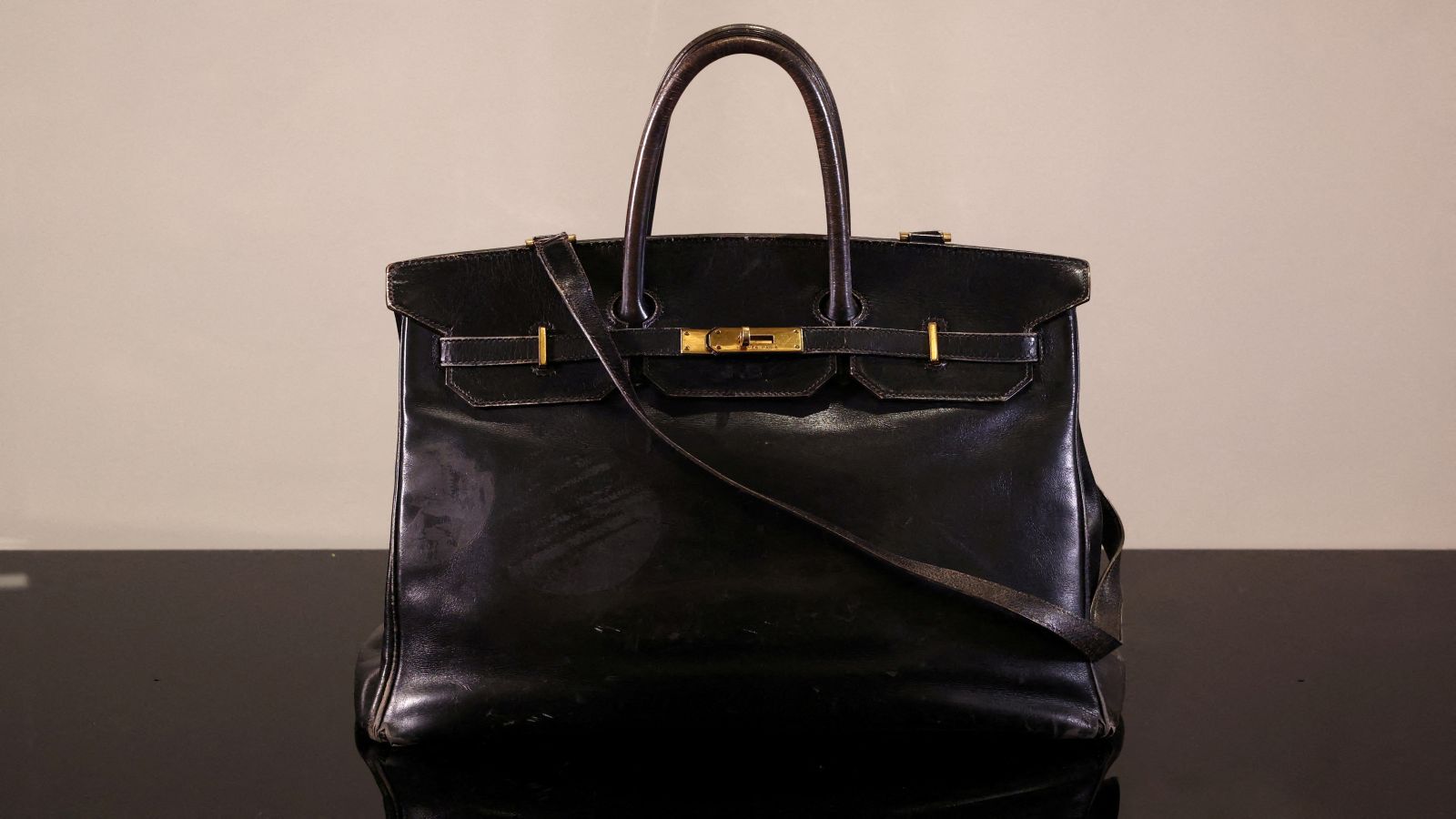
Ultra-luxury handbags priced between $100,000 and $3.8 million operate outside conventional retail economics. While standard consumer goods depreciate immediately upon purchase due to physical wear and technological obsolescence, top-tier leather goods function as illiquid alternative assets governed by engineered supply deficits, Veblen demand curves, and verifiable provenance. A standard listicle of the world's most expensive handbags in 2026 treats these price tags as mere curiosities of excess. That surface-level framing misses the underlying financial architecture. To understand why a structured leather tote commands the price of commercial real estate, analysts must separate intrinsic manufacturing inputs from institutional market-making mechanisms.
The Valuation Equation of High-Horology Leather Goods
Traditional retail pricing relies on cost-plus accounting, where raw materials, labor, and overhead determine the wholesale floor, and brand equity dictates the retail markup. In the ultra-luxury tier, this equation inverts. The retail price is decoupled from the bill of materials, and secondary market clearing prices are dictated by auction liquidity and collector arbitrage.
The valuation model for an ultra-luxury handbag relies on four distinct variables:
- Base Material Scarcity ($M_s$): The biological or geological rarity of the primary inputs, such as albino Niloticus crocodile hides or Type IIa diamonds.
- Artisanal Labor Hours ($L_h$): The non-scalable human capital required to execute saddle stitching, diamond pavé setting, or hand-painted marquetry.
- Institutional Gatekeeping ($G_i$): The non-monetary friction imposed by the maison—specifically quota systems and pre-spend ratios—that restricts primary market access.
- Provenance Multiplier ($P_m$): The verifiable chain of custody, celebrity ownership, or historical prototype status that transfers an object from a luxury commodity to a cultural artifact.
When any single variable approaches infinity—such as a one-of-one prototype or a discontinued hide—the valuation transitions from luxury retail to fine art appraisal.
Tier One The Bespoke Jewelry Hybrids
At the absolute apex of the market sit pieces that are structurally closer to high jewelry than traditional leathercraft. Standard lists routinely rank the Mouawad 1001 Nights Diamond Purse, valued at $3.8 million, alongside the Hermès Kelly Rose Gold and the Ginza Tanaka Platinum Birkin. Grouping these items simply by their seven-figure price tags obscures the structural differences in how their values are anchored.
The Commodity Floor Mechanism
The Mouawad 1001 Nights Diamond Purse incorporates 4,517 diamonds totaling 381.92 carats set in 18-karat gold, requiring 8,800 hours of artisan labor. Similarly, the Ginza Tanaka Platinum Birkin, valued at roughly $1.4 million to $1.9 million depending on spot metal prices, is constructed entirely of platinum and set with 2,000 diamonds, featuring a detachable pear-shaped 8-karat centerpiece stone.
These objects possess a hard commodity floor. Even if the brand equity of the creator were stripped away, the melt value of the precious metals and the wholesale liquidation value of the loose stones establish a baseline worth. However, this reliance on raw bullion and gemstones creates a distinct market limitation: high-jewelry bags rarely outperform their initial retail or appraisal prices at secondary auctions. Because buyers are paying primarily for the spot value of materials and bespoke labor rather than an institutionalized brand ecosystem, secondary liquidity remains thin.
Sculptural Scarcity in Precious Metals
The Hermès Kelly Rose Gold operates on a different mechanism. Designed in collaboration with shoe and jewelry designer Pierre Hardy, this miniature bag is cast in solid rose gold textured to mimic crocodile scales and set with 1,160 diamonds. Only 12 units were produced across three variations.
Unlike the Mouawad piece, the Kelly Rose Gold derives its $2 million valuation not from carat weight—the diamonds total less than 40 carats—but from extreme edition capping by a dominant market maker. Hermès restricted production to a dozen pieces globally, ensuring that institutional collectors and sovereign-wealth buyers would compete for a fixed, non-renewable supply. The physical gold provides weight, while the 12-unit cap creates the pricing power.
Tier Two Exotic Skins and the Biological Bottleneck
Beneath the solid-gold anomalies sits the primary engine of the ultra-luxury secondary market: exotic-skin handbags from established French maisons. Models such as the Hermès Himalaya Niloticus Crocodile Birkin, the Fuchsia Diamond-Studded Birkin, and the Matte White Himalaya Kelly consistently clear between $200,000 and $500,000 at Sotheby’s and Christie’s.
The Grading Friction of Himalaya Hides
The term "Himalaya" does not refer to the geographic origin of the reptile; it describes the gradient dyeing process applied to the skin of the Crocodylus niloticus. Artisans bleach the natural pigment from the hide to achieve a pearlescent white center that fades into smoky grey edges, mimicking snow-capped peaks.
This process introduces severe manufacturing attrition:
- Symmetry Requirements: Because the dye leaves no dark pigment to mask surface imperfections, only hides completely free of scars, bites, or asymmetrical scale patterns can enter the production pipeline.
- Chemical Vulnerability: Removing natural melanin weakens the collagen fibers of the skin. Over-processing ruins the hide, resulting in high scrap rates before a single stitch is placed.
- Hardware Escalation: When a maison pairs a flawless Himalaya hide with 18-karat white gold hardware and pavé diamonds—as seen on the Diamond Himalaya Birkin 30, which has achieved prices exceeding $450,000 at auction—the object represents the highest possible specification tier within a standard production silhouette.
The Quota System and Pre-Spend Arbitrage
To understand why a secondary buyer pays $400,000 for a bag that retails for roughly $65,000 to $120,000 (depending on diamond specification and regional tax structures), one must examine the primary market's hidden cost structure. Hermès does not sell quota bags—specifically the Birkin and Kelly—to walk-in clients.
Acquiring a rare exotic bag at retail requires navigating an unwritten pre-spend ratio. A client must purchase non-quota items—ready-to-wear, homeware, fine jewelry, and equestrian goods—often totaling two to four times the retail price of the desired handbag before a store director allocates a quota piece.
If a collector spends $250,000 on ancillary goods to unlock the right to buy a $100,000 exotic bag, their true acquisition cost is $350,000. Secondary auction houses and private resellers simply monetize the elimination of this friction. The buyer pays a $300,000 premium over the sticker price to bypass the multi-year capital lockup and inventory risk associated with the pre-spend game.
Tier Three Provenance and Non-Replicable Artifacts
The third valuation tier abandons material metrics entirely. In this category, the physical bag is merely a vessel for historical narrative. The definitive example is Jane Birkin’s original black leather Hermès prototype, alongside historic pieces like the Lana Marks Cleopatra Clutch carried on Academy Award red carpets or the Chanel "Diamond Forever" Classic Flap, limited to 13 units.
The Prototype Premium
Jane Birkin’s personal 1984 prototype—distinct from commercial production models due to its non-removable shoulder strap, brass hardware, wider dimensions, and nail clippers attached to the chain—represents a singular historical artifact. When such a piece enters the market, comparative pricing models break down. Analysts cannot run a regression against recent sales of black Box calfskin Birkins because the asset class has shifted from fashion to cultural history.
In these transactions, value is driven by trophy acquisition dynamics. Museums, private foundations, and ultra-high-net-worth individuals bid to secure an unrepeatable piece of design history. The physical condition of the leather—scratches, ink stains, worn corners—paradoxically increases the valuation, as visible wear serves as forensic proof of authentic use by the namesake icon.
Manufactured Rarity vs. Organic Heritage
Contrast the organic provenance of a prototype with the engineered scarcity of the Chanel "Diamond Forever" Classic Flap ($261,000) or the Louis Vuitton Tribute Patchwork Bag ($45,000 at release, frequently exceeding $100,000 in private sales).
Chanel’s Diamond Forever edition utilized standard alligator skin but added 334 diamonds totaling 3.56 carats to the white gold CC lock and chain straps, capping production at 13 pieces worldwide. Louis Vuitton’s Tribute Patchwork stitched together fragments from 15 different seasonal bags into a single chaotic silhouette, limiting availability to 24 units.
Both strategies rely on artificial supply constraints rather than biological bottlenecks. While they command high initial prices, their long-term appreciation trajectories are far more volatile than core Hermès silhouettes. Fashion-driven limited editions suffer from aesthetic obsolescence; an avant-garde patchwork design risks looking dated a decade later, whereas a minimalist tote silhouette retains architectural neutrality across generations.
Structural Risks and Market Limitations
Treating ultra-luxury handbags as infallible financial instruments introduces severe operational and market risks that mainstream lifestyle coverage ignores. Analysts evaluating this asset class must account for four primary vulnerabilities:
- Illiquidity and Transaction Drag: Unlike equities or gold bullion, a $300,000 handbag cannot be liquidated instantaneously at spot price. Selling through major auction houses like Christie’s or Sotheby’s incurs seller commissions and waiting periods of three to six months between consignment, catalog publication, auction execution, and settlement. Selling to private dealers for immediate cash typically results in a 20% to 35% haircut below auction estimates.
- Regulatory and CITES Friction: Exotic skins—specifically Crocodylus niloticus, Crocodylus porosus, and Alligator mississippiensis—are strictly regulated under the Convention on International Trade in Endangered Species of Wild Fauna and Flora (CITES). Crossing international borders with an exotic handbag without valid, original CITES export and re-export permits can result in immediate customs confiscation and destruction of the asset. This regulatory barrier fragments global liquidity, often trapping an asset within a single legal jurisdiction (e.g., inside the European Union or the United States) until costly permitting is cleared.
- Counterfeit Sophistication ("Superfakes"): Advances in supply chain leakage have enabled illicit workshops to source identical European tanneries' hides and machine-precision hardware. While master authenticators still detect microscopic discrepancies in saddle-stitch angles and blind-stamp depths, the proliferation of high-grade replicas forces buyers to rely entirely on trusted institutional intermediaries, further increasing transaction costs.
- Condition Sensitivity and Storage Overhead: A diamond-encrusted Himalaya Birkin is an unstable physical asset. Humidity fluctuations cause exotic skins to crack or warp; improper storage flattens the structural gussets; exposure to skin oils darkens unvarnished handles. Maintaining an investment-grade rating requires climate-controlled vaults, acid-free stuffing, and specialized insurance riders, creating an ongoing negative carry cost.
Capital Allocation Strategy for Collectors and Analysts
Navigating the ultra-luxury handbag market in 2026 requires abandoning emotional aesthetic buying in favor of strict institutional discipline. The market has bifurcated: mass-market luxury brands are experiencing pricing fatigue and secondary market contraction, while the top 0.1% of scarcity-driven assets continue to decouple from broader macroeconomic slowdowns.
To maximize capital preservation and upside potential within this sector, execute the following allocation framework:
- Prioritize Core Silhouettes Over Seasonal Novelties: Concentrate capital exclusively on established, non-seasonal architectures—specifically the Hermès Birkin (sizes 25 and 30) and Kelly (sizes 25 and 28). Avoid avant-garde runway collaborations or heavily embellished novelty shapes, which suffer steep secondary depreciation once the seasonal marketing cycle ends.
- Target Neutral Colorways in High-Barrier Materials: Within exotic skins, natural matte neutrals—such as Gris Tourterelle, Etoupe, Beton, and Himalaya—outperform bright seasonal dyes over ten-year holding periods. Neutral palettes appeal to the widest global collector base, ensuring faster auction clearance.
- Audit the Pre-Spend Ratio Before Primary Acquisition: Calculate the total capital outlay required to secure a quota bag at retail. When the required ancillary spend exceeds 1.5 times the secondary market premium of the target bag, bypass the primary boutique entirely. Acquiring a pristine, store-fresh piece directly from a reputable auction house or vetted secondary broker is mathematically superior to subsidizing low-margin ready-to-wear inventory.
- Verify CITES Documentation Prior to Settlement: Never execute a cross-border purchase of an exotic-skin asset without inspecting the physical CITES certificate and verifying its serial alignment with the item. Treat missing paperwork as a disqualifying defect that permanently impairs the asset's global resale value.