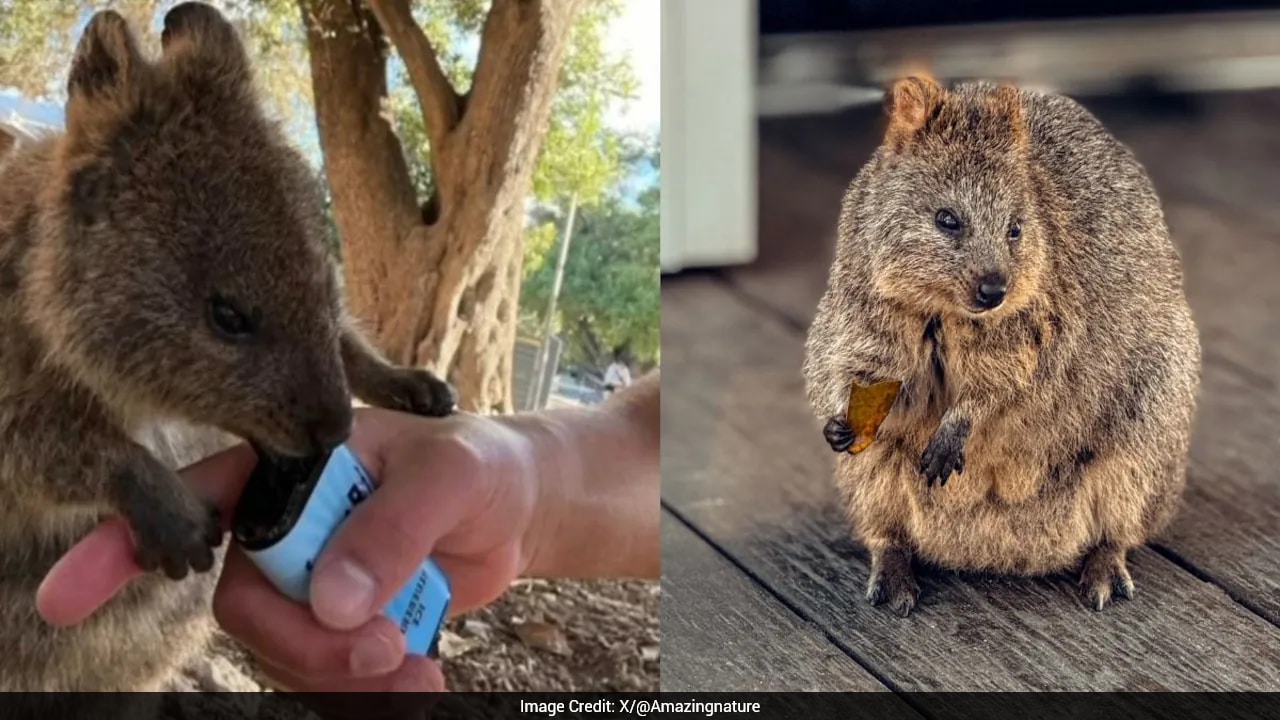
A $200 administrative fine issued to a 29-year-old man on Rottnest Island in November 2026 exposes a structural failure in modern wildlife conservation economics: when the social currency of viral digital content exceeds the financial cost of regulatory enforcement, administrative penalties cease to function as deterrents. While standard news coverage treats the incident—in which a disposable electronic cigarette was pressed against the mouth of a native quokka (Setonix brachyurus)—as an isolated moral failing, an operational analysis reveals a predictable collision between evolutionary naivety, tourism infrastructure, and asymmetric penalty structures.
To understand why high-profile wildlife interference persists despite strict statutory protections in Western Australia, analysts must deconstruct the event across four distinct variables: the evidentiary constraints of digital enforcement, the toxicological mechanisms of nicotine exposure in small marsupials, the behavioral trap of island tameness, and the deterrence gap between statutory maximums and administrative reality.
The Evidentiary Mechanics of Digital Enforcement
The Western Australia Police Force and the Rottnest Island Authority (RIA) face a severe evidentiary bottleneck when prosecuting wildlife interference sourced from social media. On November 2, 2026, a photograph began circulating online depicting a hand holding a disposable vaping device directly against a quokka's snout. By November 9, investigators had traced the digital footprint to a 29-year-old male suspect and issued a $200 infringement notice under the Rottnest Island Regulations 1988.
Standard media reports conflate the act of pressing a device to an animal's face with forced inhalation. In legal and forensic terms, this distinction dictates the entire trajectory of the prosecution. Investigators operating solely from a still photograph encounter three insurmountable evidentiary deficits:
- Absence of Aerosol Verification: A static image cannot prove that the heating coil inside the electronic cigarette was activated at the moment of capture, nor can it confirm that the animal drew negative pressure to inhale vapor.
- Chemical Composition Unknowns: Without confiscating the specific device at the scene, authorities cannot verify whether the e-liquid contained nicotine salts, freebase nicotine, tetrahydrocannabinol, or zero-nicotine flavoring agents.
- Lack of Clinical Pathology: Because the specific quokka returned to the wild population uncaptured, veterinary pathologists could not obtain blood or tissue samples to confirm acute toxicity or mucosal irritation.
Western Australian law maintains a bifurcated penalty structure for wildlife interference. Under the Biodiversity Conservation Act 2016, severe interference or cruelty toward protected fauna carries a maximum judicial penalty of $10,000. Reaching that threshold requires proving physical harm, intent to injure, or substantial disruption to the animal's biological function in a court of law. When the available evidence is limited to a single social media photograph, prosecutors cannot meet the criminal burden of proof required for a $10,000 conviction. Enforcement agencies are forced to default to strict-liability administrative infringements—specifically the $200 on-the-spot fine for touching or interfering with island wildlife. The gap between the publicized $10,000 ceiling and the $200 operational floor creates a massive loophole for bad actors.
Toxicological Mechanisms in Small Marsupials
While the specific clinical outcome for the quokka in the November 2026 incident remains unconfirmed, the physiological vulnerability of Setonix brachyurus to electronic cigarette components is governed by established mammalian toxicology. Evaluating the risk requires separating the acute neurotoxicity of nicotine from the physical hazards of carrier solvents and battery casings.
Adult quokkas weigh between 2.5 and 5 kilograms, placing them at a fraction of the body mass of an adult human. Because toxic thresholds scale with body weight, the median lethal dose ($LD_{50}$) for a quokka is drastically lower than that of a human consumer. Modern disposable vapes routinely utilize nicotine salt formulations at concentrations ranging from 20 mg/mL to 50 mg/mL. Nicotine acts as an agonist at nicotinic acetylcholine receptors (nAChRs) throughout the central and peripheral nervous systems. In a small marsupial, rapid absorption across the oral mucosa or respiratory epithelium triggers an immediate biphasic response: initial sympathetic overstimulation (tachycardia, hypertension, tremors, and hyperthermia) followed by ganglionic blockade, respiratory muscle paralysis, and cardiac arrest.
Beyond acute nicotine poisoning, the carrier fluids—propylene glycol (PG) and vegetable glycerin (VG)—present distinct metabolic hazards to non-human mammals. Propylene glycol is documented to cause Heinz body hemolytic anemia in several mammalian species by inducing oxidative damage to hemoglobin. Because marsupial red blood cells exhibit unique metabolic pathways compared to placental mammals, exposure to concentrated PG aerosols or liquid leaks introduces unquantified hematological risks. Furthermore, quokkas possess strong incisors adapted for grazing tough, fibrous vegetation on Rottnest Island. Had the animal bitten through the polycarbonate casing of the disposable device, the resulting mechanical trauma would have exposed the marsupial to concentrated liquid e-juice and the exothermic thermal runaway risk of a punctured lithium-ion cell.
The Evolutionary Trap of Island Tameness
To explain why a wild mammal allowed a human to press a foreign plastic object against its face without fleeing, one must examine the behavioral ecology of Rottnest Island. Located approximately 18 to 20 kilometers off the coast of Perth, the island has been separated from the Australian mainland for roughly 7,000 years. During this period, the local quokka population evolved in the complete absence of large terrestrial predators, such as dingoes and red foxes, which decimated mainland populations.
In evolutionary biology, this phenomenon is classified as island tameness—the attenuation of anti-predator behaviors when the energetic cost of maintaining high vigilance exceeds the survival benefit. A quokka does not possess the innate neurobiological flight response triggered by approaching humans.
This evolutionary baseline is compounded by two human-driven variables:
- Anatomical Pareidolia: The quokka's craniofacial structure features a short snout and upturned mouth corners, creating a permanent facial configuration that humans interpret as a smile. This triggers anthropomorphic projection, leading tourists to misread a neutral or stressed wild animal as receptive to physical contact.
- Anthropogenic Conditioning: Decades of high-volume tourism—with annual visitor numbers regularly exceeding 700,000—have habituated the island's quokkas to human presence. Despite strict prohibitions against feeding, opportunistic scavenging around settlement areas reinforces approach behaviors, bringing wild marsupials within arm's reach of visitors.
The intersection of evolutionary tameness and anthropomorphic misinterpretation strips the animal of its primary defense mechanism: distance. The quokka becomes a passive target for human manipulation.
The Deterrence Failure of the Current Penalty Matrix
The November 2026 incident is not an anomaly; it is a recurring data point in a multi-year pattern of wildlife exploitation on Rottnest Island. Historical enforcement records document a 2021 incident in which a teenager filmed an attempt to make a quokka inhale from a vape, alongside earlier prosecutions involving tourists kicking, burning, and throwing the animals.
From a behavioral economics perspective, the persistence of these acts demonstrates that the current regulatory framework fails the basic criteria of deterrence theory. Effective deterrence requires three conditions: certainty of punishment, celerity (speed) of enforcement, and severity sufficient to outweigh the perceived reward.
On Rottnest Island, the reward structure for the offender is non-monetary: it is social attention, shock value, and algorithmic engagement on social media platforms. When a user posts an image of a wild animal interacting with a vape, the immediate return is peer validation and viral reach. Against this perceived reward, the state levies a $200 fine—an amount roughly equivalent to the cost of a round-trip ferry ticket and a modest lunch on the island.
For an offender willing to risk public backlash, a $200 administrative penalty is easily absorbed as a trivial transaction cost. The system exhibits high certainty when offenders self-incriminate online, and reasonable celerity, as demonstrated by the seven-day turnaround between the November 2 incident and the November 9 infringement. Yet the severity variable is entirely miscalibrated. By capping routine administrative enforcement at $200 while reserving the $10,000 statutory maximum for cases with exhaustive forensic proof, the regulatory apparatus inadvertently prices wildlife harassment at an affordable flat rate.
Operational Constraints of Tourism Management
Critics frequently demand zero-tolerance surveillance or physical barriers to protect the Rottnest Island quokka population. Any viable conservation strategy must account for the severe operational constraints inherent to managing a Class A reserve that functions simultaneously as a major commercial tourism hub.
Rottnest Island spans roughly 19 square kilometers, with quokkas roaming freely across scrubland, beaches, and commercial precincts. Implementing physical separation between tourists and wildlife is operationally impossible without destroying the core ecological value proposition that drives Western Australia's tourism revenue. Similarly, deploying enough uniformed rangers to monitor hundreds of thousands of annual visitors in real time would require an unsustainable expansion of municipal payroll, funded either by prohibitive landing fees or heavy state subsidies.
The limitation of any regulatory intervention in this environment is the asymmetry between the scale of visitor foot traffic and the reach of physical enforcement. Relying on reactive social media investigations will always lag behind the initial act of harm. Once a photograph is uploaded, the behavioral contagion has already occurred, normalizing wildlife interference for millions of passive viewers.
Realigning the Cost Function
To close the deterrence gap without dismantling the island's tourism economy, the Rottnest Island Authority and the Western Australian government must shift from reactive administrative fines to structural disincentives that target both the financial and social incentives of offenders.
- Tiered Strict-Liability Infringements: The regulatory schedule under the Rottnest Island Regulations 1988 must be amended to decouple physical contact from toxic or hazardous object exposure. Placing any foreign chemical delivery system, combustion device, or electronic nicotine product within a defined proximity of protected fauna should trigger an automatic, non-judicial infringement tier set between $2,000 and $3,500, eliminating the need for prosecutors to prove inhalation or chemical ingestion.
- Mandatory Exclusion Orders: Financial penalties alone fail against affluent or attention-seeking offenders. Every infringement issued for deliberate wildlife interference must carry an automatic, multi-year statutory ban from Rottnest Island, enforced through ferry ticketing integration and maritime entry controls.
- Algorithmic Friction via Platform Partnerships: Because the primary driver of these incidents is digital distribution, conservation authorities must establish direct reporting protocols with major social media platforms to classify non-consensual wildlife interference with hazardous substances as animal abuse under platform terms of service, ensuring rapid demonetization and account suspension rather than organic reach.
Until the statutory cost of using protected wildlife as digital props exceeds the perceived value of online notoriety, administrative fines of $200 will remain an ineffective line item in the cost of bad behavior.
You can watch the news report covering the police investigation and the public reaction in Man fined $200 for putting vape to a quokka's mouth.